
Other cities made a mistake on new LED streetlights. Kansas City is about to repeat it
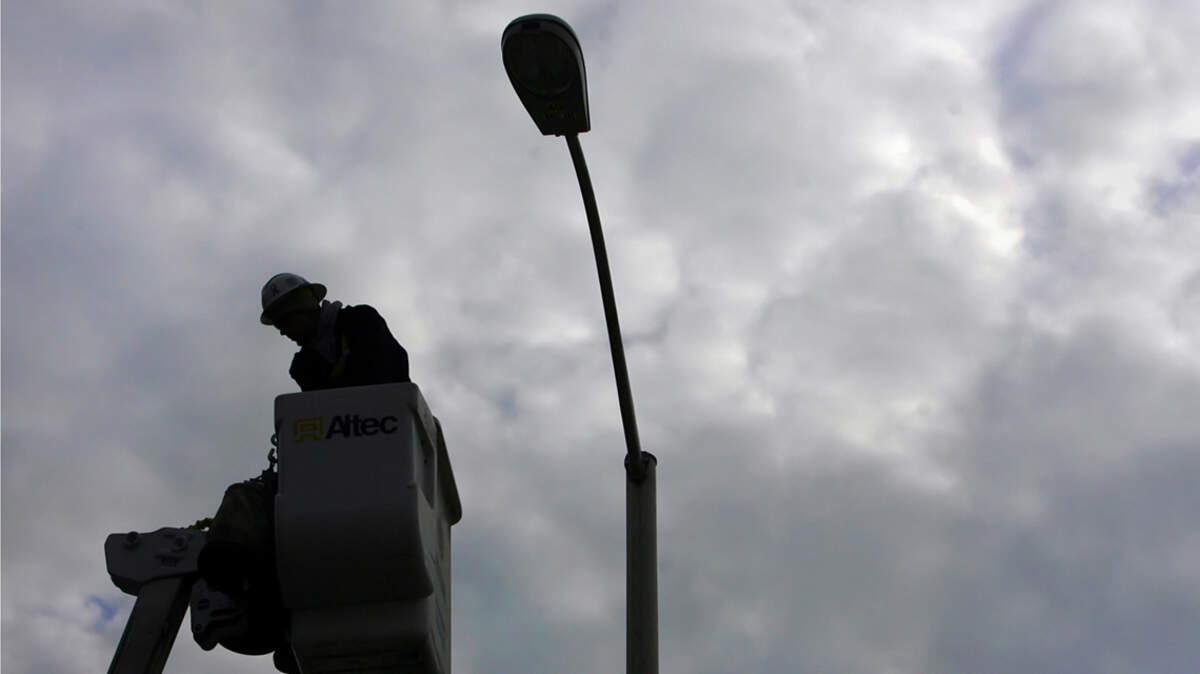
Kansas City is moving forward to complete a citywide streetlight project, replacing outdated fixtures and bulbs with light emitting diode luminaires. LEDs are more energy efficient, last longer and require less maintenance than outdated high pressure sodium lights — a necessary change. When higher quality broad-spectrum LED products are selected, improved visibility and energy savings are realized.
However, other cities have learned the hard way that overlighting with LEDs leads to harmful impacts. Residents in these early adopter cities pushed back on disabling glare and what’s been described as a “sewage treatment plant atmosphere” caused by too much lighting. The mayor of Las Vegas reportedly almost ran over a pedestrian at a crosswalk because of the blinding glare from an LED streetlight. Houston is another early adopter city where crime and pedestrian fatalities are increasing. Houston streetlights are similar to the ones selected for Kansas City.
Kansas Citians want beautiful, efficient lighting, but we also want our voices heard when important decisions that impact our community are made. This choice is too important to have been made without meaningful stakeholder engagement. Other cities such Salt Lake City coordinated robust community engagement conversations to inform their streetlight replacement process.
Why should we care? Exposure to artificial light at night “is known to harm a vast array of species on Earth from the level of the individual up to entire populations and ecosystems,” according to a major report from a large international consortium of scientists convened last fall by the International Astronomical Union, the International Astronomical Center and the United Nations. Current LED products allow for simple and cost-effective mitigation of these threats. Mitigation strategies were not factored in during Kansas City’s closed-door LED product selection process.
In 2016, the American Medical Association recommended streetlights of 3,000 degrees Kelvin or fewer (a measure of light color) and dimming systems to reduce harmful impacts on human and environmental health. Kansas City’s proposed new LED fixtures don’t meet these AMA recommendations.
Phoenix, Arizona, is a large city similar to Kansas City. In 2019, Phoenix completed a citywide conversion with pleasant 2,700-degree Kelvin LEDs on all street types. Other late adopter cities are also selecting 2,700-Kelvin lights in residential areas, and reserving 3,000-Kelvin fixtures for arterial streets. Observers report that “even the people look better” under these residential lights.
Kansas City’s proposed new streetlights are also wasteful of energy compared to those in other cities such as Los Angeles. Kansas City intends to install lights that use 250 watts of electricity where 125-watt LEDs would work for similar street widths. It also aims to put 55-watt LEDs in residential areas, compared to the 27-watt lights other cities have found success with.
A signature of poor lighting design is what’s known as skyglow — the fog of light, familiar around cities, created by poorly shielded lighting. It interferes with the navigation of migratory birds, contributing to disturbing population declines in these animals. Kansas City, located along a principle migratory flyway, is already on the Top 10 list for bird mortality from the Lab of Ornithology at Cornell University in Ithaca, New York. Beneficial wild nocturnal animals, with their amazing evolutionary adaptations, rely on low-light conditions to prey on disease-carrying rodents in the city. Our conversion to high-Kelvin LEDs would add to existing challenges for nocturnal wildlife. Harmful impacts from LED streetlight conversions were easily mitigated in other cities by following AMA recommendations for color temperature and conforming to national standards for light uniformity and illumination, or by adding dimming systems. Dimming of LEDs is not usually noticeable, and is one of the technological leaps LEDs offer.
Chicago, Los Angeles, Seattle, New York and other major cities no longer use LED streetlights above 3,000 degrees Kelvin on any street type. A Kansas City demonstration of color temperature in residential areas underway now offers choices already rejected by other large cities. It’s alarming that Kansas City, a late adopter, chose outmoded, high-glare clunkers that would impair our night vision, reduce pedestrian safety, harm nocturnal wildlife and benefit rodent populations