
Sam Brownback and Kansas get good news, but not nearly enough to avoid deep budget cuts
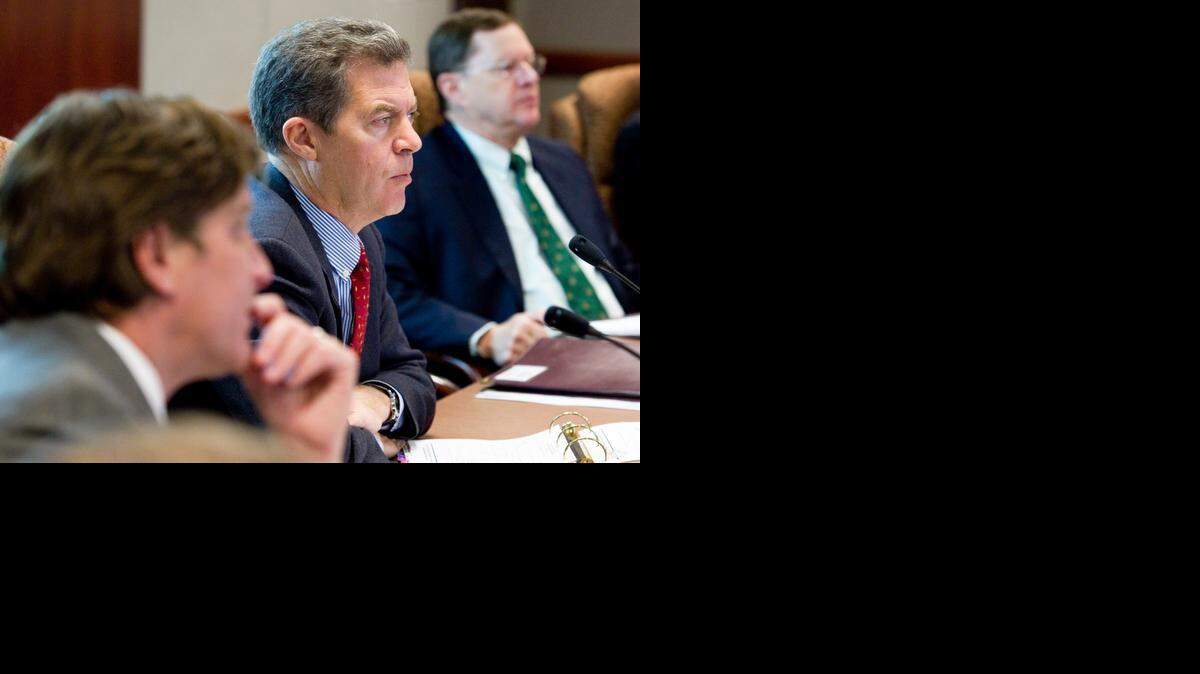
In recent days, Kansans have received bits of encouraging news about tax revenues and job growth. Gov. Sam Brownback and his allies hope this shows their aggressive tax cuts are working to grow the state economy.
Take a closer look, however, and it’s clear that the progress is limited and far from assured to continue. Plus, there’s still the need for Brownback and team to chop more than $715 million from the state budget in the next 18 months, primarily because of continued woeful income-tax receipts.
Among the developments:
▪ State budget officials announced in late November that monthly income tax receipts had come in $4 million above estimates.
That was the first time the state had not reported an income tax shortfall in eight months.
Here’s the downside: The state would have to take in $40 million extra every month until next June to wipe out the need for a $279 million reduction in the current fiscal year’s budget.
That’s not at all likely to happen. Staff members for the governor and other state agencies recently released revised revenue estimates that took into account all the tax cuts, plus the jobs they are supposed to create, to come up with the predicted $279 million cut.
▪ Brownback and others spent time last week discussing the positive fact that Kansas finally had regained all of the private sector jobs lost in the Great Recession.
At the end of October, Kansas reported 1.138 million private sector jobs — just above the previous high in April 2008.
But that accomplishment isn’t extraordinary. The Star last week reviewed private sector employment numbers for all of the states and the District of Columbia for the last decade.
Overall, the United States posted record private sector employment in March 2014, seven months before Kansas reached that level. So Kansas has trailed the national growth rate after the recession.
Also, 21 other states plus the District of Columbia reached record levels of private sector jobs earlier than Kansas. That included neighboring Colorado (July 2013), Nebraska (June 2013) and Oklahoma (August 2013). Missouri is still 1 percent below its previous record.
States with high income taxes posted some of the strongest increases in private sector jobs, including California, Iowa, Minnesota and New York. To be sure, several states with no income tax — such as Texas, Washington and South Dakota — also had faster private sector job creation numbers than Kansas.
Brownback last week repeated his goal that Kansas would create 100,000 private sector jobs in his second term in office. That would be an average of just over 2,000 a jobs a month.
By contrast, during his first term, Kansas has added fewer than 1,400 private sector jobs a month during the biggest national employment boom in more than a decade.
Notably, the pace of private job creation has been almost the same before and after Brownback’s costly tax cuts took effect in January 2013.
Despite the recent upbeat news about state revenues and jobs, there’s no compelling evidence Kansas can avert damaging budget cuts caused by the tax cuts.
This story was originally published December 7, 2014 at 9:00 AM with the headline "Sam Brownback and Kansas get good news, but not nearly enough to avoid deep budget cuts."