
Ferguson pays a high price for mistakes by Prosecutor Bob McCulloch and Gov. Jay Nixon
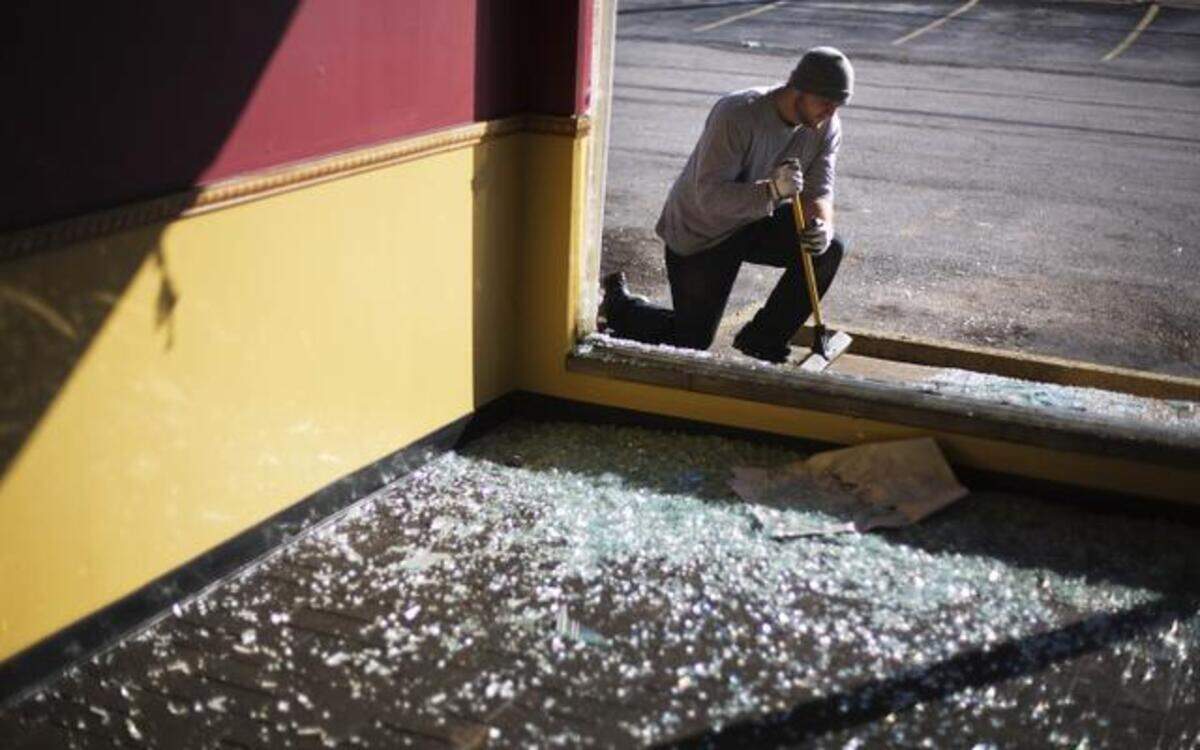
The battered city of Ferguson, Mo., suffered more insult and injury Monday as looters and arsonists took to the streets following an announcement that a grand jury would not indict the police officer who fatally shot 18-year-old Michael Brown on Aug. 9.
At least 12 buildings burned, businesses were looted, vehicles were overturned and gunshots rang out in the night. The mayhem, which quickly overwhelmed more peaceful protests in the area, will create hardships for business owners, employees and residents. It will make it more difficult for Ferguson to get back on its feet.
It is imperative that law enforcement agencies, including the Missouri National Guard, get the situation under control.
Bad decisions have taken center stage from the start of the Ferguson story, and they continued on Monday, beginning with the people who showed up for the express purpose of causing trouble.
Beyond that, St. Louis County Prosecutor Bob McCulloch’s scheduling of an 8 p.m. news conference to announce the grand jury action was inexplicable and foolish. Bad actors prefer the cover of darkness, and McCulloch’s nighttime announcement provided them with a staging point.
Police waited too long to exert a forceful presence in Ferguson’s business district. “I saw police officers just standing back and watching,” said Patricia Bynes, who lives in Ferguson Township and represents it as a Democratic committeewoman.
Gov. Jay Nixon’s decision to confine the National Guard’s role to securing places like the Ferguson police station, a police command post and an electrical substation also turned out to be a mistake. Their presence was needed in the business district.
Nixon called up more guard units on Tuesday and said they would protect homes and businesses. That’s the right move, though late.
In the news conference, McCulloch summarized the evidence that the grand jury had considered, and lived up to his pledge to make the bulk of the evidence and transcripts of the proceedings public on the Internet. But his attempt at transparency raises more questions about the unusual grand jury procedure used in this case.
Grand juries are usually convened to essentially validate a prosecutor’s decision to bring charges against an individual. As a result, they usually only hear testimony favorable to the prosecution’s case, and they almost always decide in favor of an indictment.
This grand jury’s job was closer to what would usually be expected of a trial jury. Jurors were asked to examine reams of evidence and make a judgment about what happened in the encounter between the teenager and the police officer, but without a judge to set boundaries and provide guidance.
Wilson was given four hours to present his version of the case to the grand jury and respond to questioning by two assistant prosecutors, which came across more like prompting than a cross examination.
Witnesses provided conflicting accounts of what happened. Brown, of course, was unable to provide his version.
The commitment and integrity of the grand jury cannot be questioned. But a courtroom trial in public view would seem to provide a better venue to represent both the police officer and the slain teenager.
There are many brave and decent people in Ferguson and elsewhere who still want to turn the horrors of Brown’s death into something good and lasting. But it has not happened yet. A city and nation can’t move forward while they are figuratively and literally putting out fires.
This story was originally published November 25, 2014 at 6:02 PM with the headline "Ferguson pays a high price for mistakes by Prosecutor Bob McCulloch and Gov. Jay Nixon."