
Murders are down in Kansas City, but not by nearly enough
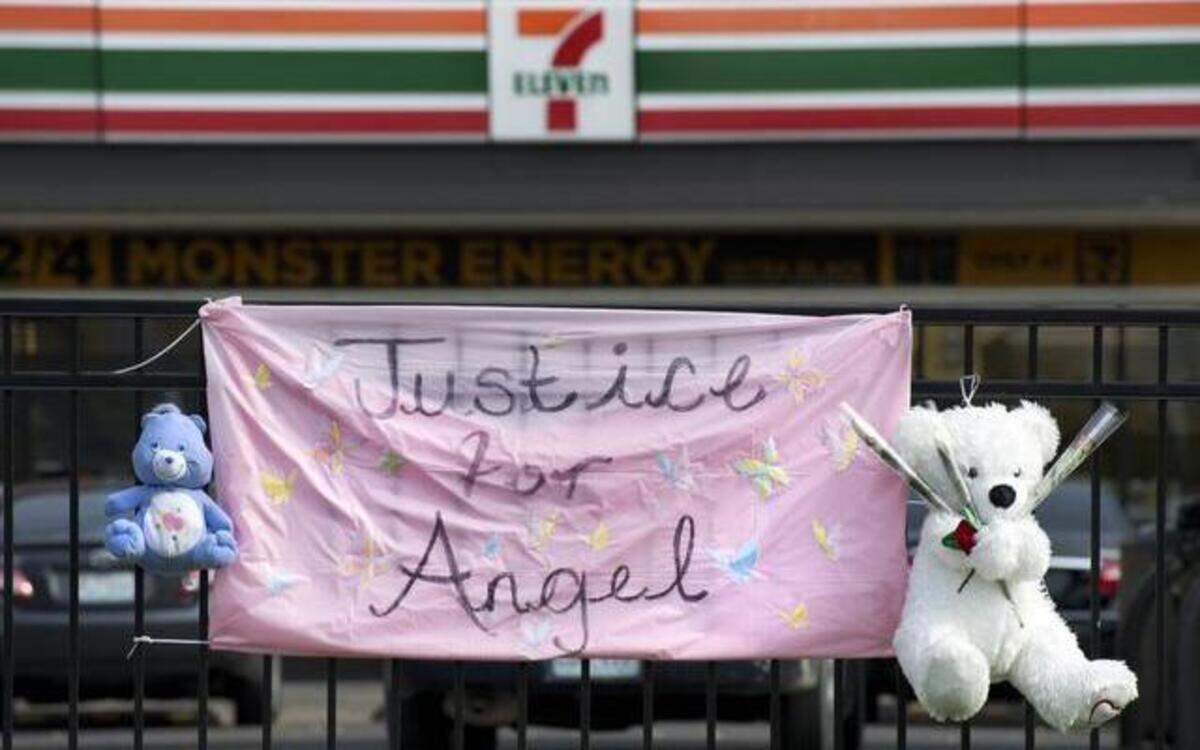
If Kansas City needed any more impetus to lower its still-high rate of homicides, it was provided by the death of 6-year-old Angel Marie Hooper on Oct. 17.
Angel was hit by a bullet from a passing car in the parking lot of a convenience store. Her unsolved drive-by murder outraged the community, as it should. It was a dismal reminder that violence, especially committed with firearms, remains out of control here.
Much attention has been paid to a dip in Kansas City’s homicide count this year, which stood at 63 murders through Friday afternoon. But even if this improvement is sustained through the year’s end, it would do little to bump Kansas City down on the list of the nation’s most deadly cities.
Consider these numbers: Through Friday afternoon, the city still was on pace for about 75 homicides for the full year. That would be far better than the 103 murders the city averaged from 2009 through 2013.
Yet even that “low” total would leave Kansas City with a rate of more than 16 murders per 100,000 residents — which would have finished as 10th among the 50 largest U.S. cities in 2012, the last ranking available. That’s just above Miami and right below Chicago.
That represents an improvement over Kansas City’s actual 2012 ranking, which was fifth among the large cities. But it’s still an unacceptable blot on this city’s reputation for being a good place to live, work and play.
City and law enforcement officials do have some solid reasons to be encouraged as 2014 winds down. A new collaborative effort among local and federal law enforcement agencies, the No Violence Alliance, is up and rolling and showing promising results. But the program could be more successful, and it will require a sustained funding and staffing commitment from all of the partners.
Mayor Sly James, Police Chief Darryl Forté, Jackson County Prosecutor Jean Peters Baker and others involved in anti-violence efforts must focus attention on what has worked so far, while looking for even better ways to cut down on senseless deaths on the streets of Kansas City.
To illustrate that point, look at what has happened in St. Louis.
In 2010, the city suffered 144 murders for a sky-high rate of more than 45 homicides per 100,000 residents. Then the number of killings plunged to 113 in each of the next two years, before bumping up to 120 in 2013.
But after a spate of murders in recent months, the city is on pace to climb back to around 145 through the end of this year.
“The increase in St. Louis is very localized,” said Rick Rosenfeld, a professor of criminology and criminal justice at the University of Missouri-St. Louis.
Rosenfeld recently compared homicides in the city for the first nine months of 2013 and 2014, and found that almost all of the increase had occurred in just three of St. Louis’ 79 neighborhoods. One neighborhood had a staggering 10 additional murders this year over last.
That suggests more illegal drug-related activity could be occurring in the affected neighborhoods, Rosenfeld said.
St. Louis continues to be plagued by gun violence, which is also a bane for Kansas City. At least six of the seven persons to die violently here in October, including Angel Hooper, were gunshot victims.
Luis Alberto-Ortega, 35, was found shot to death on a porch in the 4000 block of East Sixth Street on Oct. 1.
Christopher Mansaw, 37, was killed Oct. 12 in the 3000 block of College Avenue. Witnesses said several men approached him and shot him.
Gary Wortham, 25, was in a car at 34th and Central streets when he was fatally shot about 4:40 p.m. on Oct. 23. Two men who were in the car fled the scene.
The next day, Samuel Hewitt, 39, was shot in the 8600 block of Thompson Avenue.
Ronald Shelton, 39, was killed near 40th Street and Pennsylvania Avenue in the early morning of Oct. 26. Witnesses reported an argument, and then gunfire.
The final homicide was discovered on Friday. Police found a man dead inside a running car near 69th Street and Bellfontaine Avenue around 4:30 a.m. By late in the day, they had not released his identity or how he was murdered.
Seven lives ended abruptly and violently, one of them a first-grader who was walking out of a 7-Eleven with her father on a Friday evening. Yes, there is much work remaining.
This story was originally published October 31, 2014 at 7:15 PM with the headline "Murders are down in Kansas City, but not by nearly enough."