
Pass a small fuel tax to invest in Missouri’s roads and bridges
A big part of Stephen Miller’s job these days is trying to persuade the Missouri General Assembly to spend enough money to maintain the state’s extensive system of roads and bridges.
But Miller, the Kansas City-based chairman of the Missouri Highways and Transportation Commission, is running into roadblocks erected by anti-tax state legislators.
A Senate filibuster has shut down discussion of taking just the Band-Aid approach to more fully caring for this essential infrastructure. That small solution would require approving a 2-cent increase in the state’s gasoline tax, which at 17 cents a gallon is one of the nation’s lowest. It has not gone up in almost two decades.
Some legislators say they don’t want to raise taxes without a vote of the people, especially after they rejected a transportation tax in 2014. Also, too many Republican lawmakers seem determined to stick to their irresponsible pledge to not raise taxes for any reason, even if that eventually punishes the people of Missouri with poorer highways and bridges.
Missouri Department of Transportation officials say they are mired in a full-fledged funding crisis. Within two years, the state could be in position to lose more than $165 million in federal matching transportation revenue, and possibly $400 million annually after that.
Those are tax dollars that Missouri motorists provide Washington through the 18.4-cent federal tax. If Missouri doesn’t have the money to match the funds offered by the U.S. government, that money will go elsewhere. Put simply, Missouri drivers will be paying to fix roads in Kansas, Illinois and other states. That would be an absurd outcome.
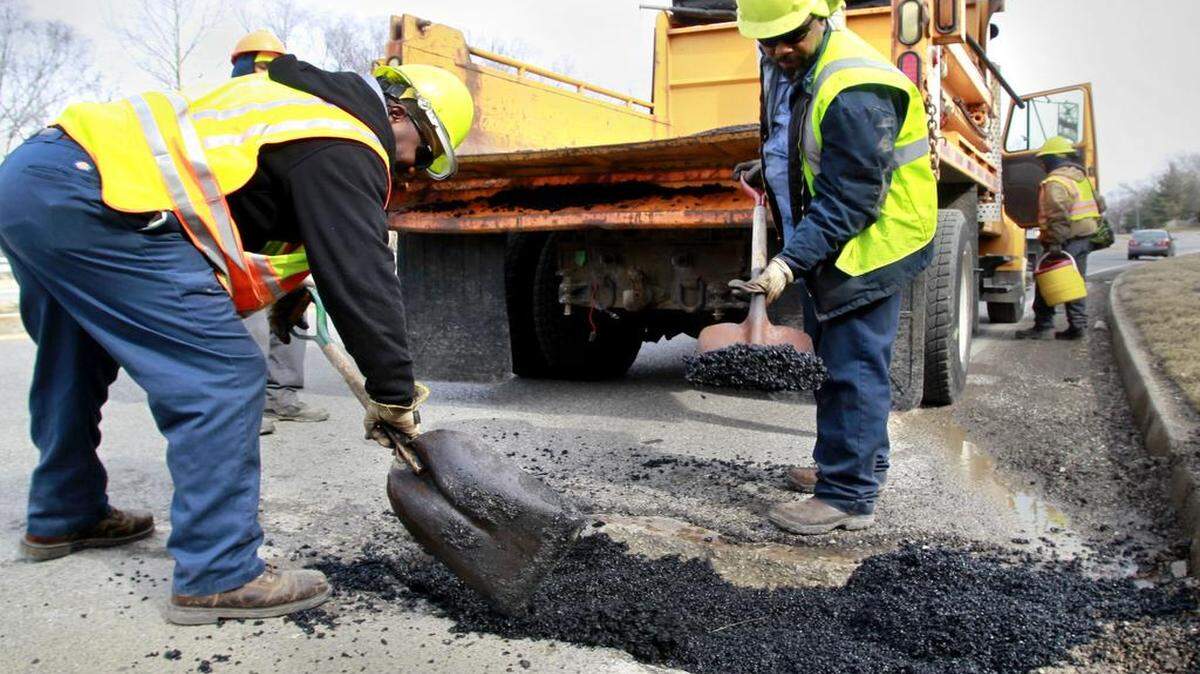
Two months ago, in reaction to its fiscal woes, the state agency put in place a plan that will fully maintain just 8,180 miles of the state’s nearly 34,000-mile road system. Only routine maintenance such as snowplowing and pothole repairs will be provided for most of the state’s roads. No major resurfacing or rebuilding will occur. In the Kansas City area that includes large parts of U.S. 40, Missouri 350 and Missouri 152.
In addition, 110 critical bridges will get the state’s full attention, while 481 others will get only routine care.
And for the record, the state won’t be able to dramatically improve Interstate 70.
Some state legislators have said they could avoid the loss of federal funds by stripping tens of millions of dollars out of the general fund to use as Missouri’s match for U.S. dollars. Miller and other highway officials appropriately recoil at that thought, realizing that could pit them against schools, social services and state agencies that depend on the general fund for operating expenses. Plus, diverting general fund money to the transportation department is not a long-term solution.
The best short-term answer is for the legislature to pass the proposed 2-cent gas tax increase. That would raise about $55 million a year for the Department of Transportation.
Other states are acting effectively. Iowa lawmakers had the backbone to pass a 10-cent tax increase, led by Republican Gov. Terry Branstad’s call to invest in infrastructure.
A small fuel tax increase in Missouri would be the first step toward fiscal solvency, though transportation officials acknowledge the agency would soon be back trying to get more.
Eventually, lawmakers and the people of Missouri must decide whether smooth roads and safe bridges are a high priority. But they need to do that before too much damage is done and the repairs become far more costly.
This story was originally published April 18, 2015 at 10:00 AM with the headline "Pass a small fuel tax to invest in Missouri’s roads and bridges."