
Better pay for low-wage workers would benefit everyone
April 15, the income tax filing deadline, has traditionally prompted protests about that obligation.
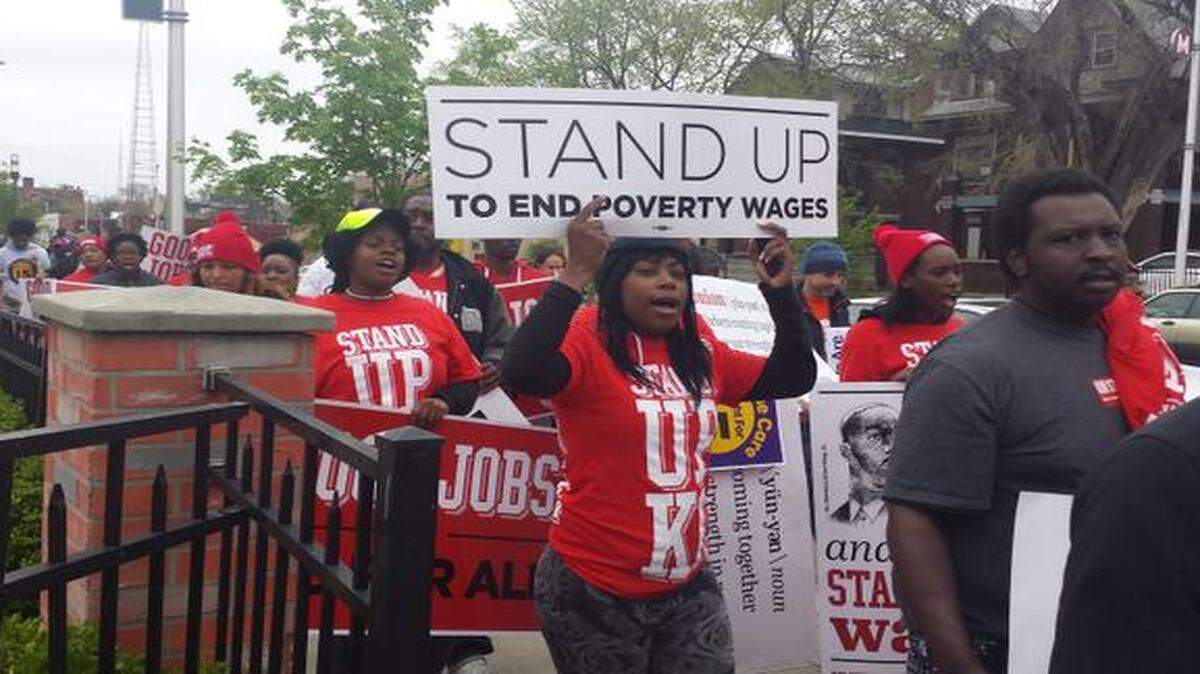
Hundreds of low-wage workers jammed Kansas City sidewalks Wednesday with a different agenda. They want more income to report. Many have been stuck for years in jobs that pay barely above the hourly minimum wage, which is $7.65 in Missouri and $7.25 in Kansas.
Fast-food servers, custodians, hotel attendants and underpaid adjunct college professors all converged on midtown in what may have been the largest show of solidarity since organized calls for fair and livable wages began a couple of years ago.
It’s time for policymakers to get on board. This is an issue that ought to inspire bipartisan support.
Republican lawmakers in Jefferson City and Topeka have been fretting about having to help low-income citizens with food stamps and welfare subsidies. The best way to reduce the need for government aid — and pump more money into the consumer economy — is to make sure people earn enough to pay the bills.
“I don’t make enough for my rent and I still get a light bill and a gas bill and other bills,” said Mimi Thompson, 20, one of the marchers. She recently moved here from Topeka and makes $7.75 an hour at a Taco Bell.
Mayor Sly James and members of the Kansas City Council are considering an ordinance to raise the minimum wage in the city. But the Missouri General Assembly is working on legislation that would make it even harder for cities to set their own wage requirements.
The legislature’s stance is rigid and counterproductive. Lawmakers argue that a higher minimum wage would result in less overall employment and fewer hours. But studies on that subject run both ways. Why not allow Kansas City to become a test case for a higher minimum wage in western Missouri?
The turnout at one midday rally Wednesday was impressive, but the unfairness of unequal wages should prompt even more people to seek change.
Corporate profits have never been higher, and the gap between executive and worker pay has never been wider. Yet unlivable wages force hard-working people onto public assistance rolls. Taxpayers, not corporate executives, end up balancing out the inequities.
That’s an economic model that no one should condone. Cheers to workers at the bottom of the ladder for taking to the streets to highlight the problem.
This story was originally published April 15, 2015 at 5:26 PM with the headline "Better pay for low-wage workers would benefit everyone."