
Cellphone videos enable people to enhance the scales of justice in police shootings
The pervasiveness of video technology in our society is unexpectedly playing a major role at clarifying adversarial and even fatal encounters between police officers and citizens.
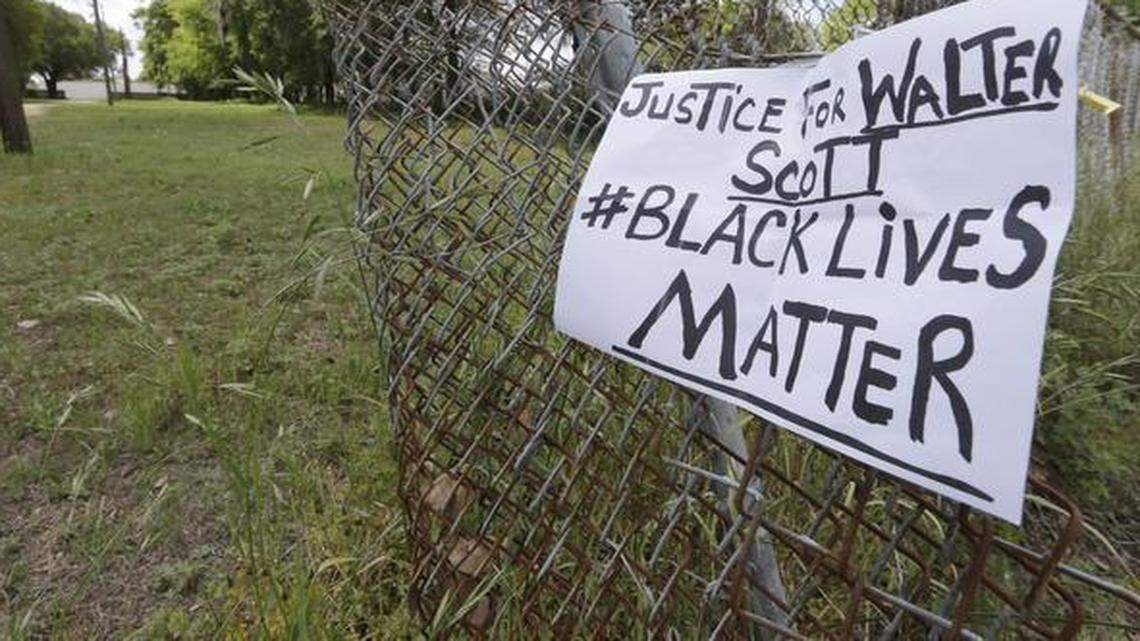
The latest example was in North Charleston, S.C., where a bystander’s video contradicted a police officer’s version of a traffic stop Saturday that resulted in the shooting death of 50-year-old Walter L. Scott. Officer Michael T. Slager, 33, had reported that he pulled Scott over for a broken taillight.
Slager reported that he feared for his life after a scuffle in which Scott took his stun gun and ran. The video shows Slager drawing his gun and firing as Scott is running away. The officer runs back to where the scuffle happened, picked up something from the ground and dropped the object near the body. Scott was black; Slager is white.
In large part because of the video, the officer was charged Tuesday in the slaying and fired on Wednesday. The case joins a string of incidents that have brought police actions to the forefront of a debate over race relations, notably in New York, Ferguson, Mo., and Cleveland. The police chokehold death of Eric Garner, 43, last July in Staten Island was captured on video. A video caught the police fatal shooting of Tamir Rice, 12, in November in Cleveland.
Similarly a cellphone camera recorded the fatal shooting in 2009 of 22-year-old Oscar Grant by a transit police officer in Oakland, Calif.
Many departments are equipping officers with body cameras to promote professionalism and resolve allegations of abuse. But citizens shouldn’t hesitate to also use their cellphones to record encounters. As we have seen this week, video lends clarity when parties’ accounts are conflicting, muddied or downright false.
This story was originally published April 8, 2015 at 10:00 AM with the headline "Cellphone videos enable people to enhance the scales of justice in police shootings."