
Deaths of hostages in Yemen are a reminder that rescue missions often fail
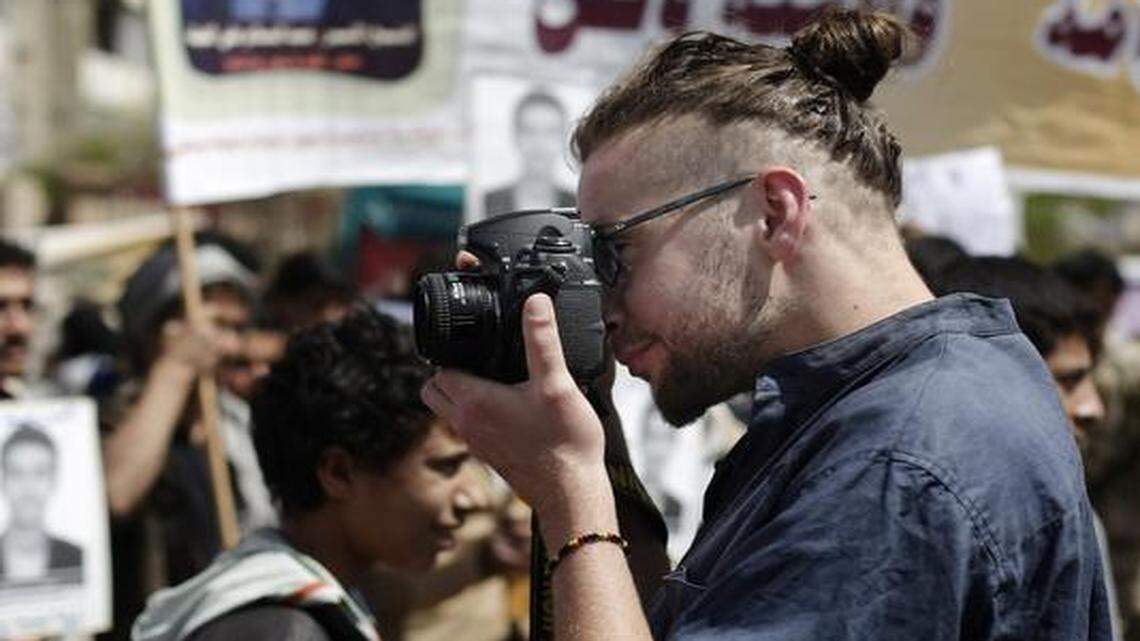
The death of American photojournalist Luke Somers in a special-forces rescue operation Saturday in Yemen was a reminder that such high-risk missions are as likely to fail as to succeed.
U.S. defense officials were trying to determine what went wrong before dawn Saturday when about 40 special operators converged on a building in Yemen’s rugged Shabwa province on a mission that had been designed to surprise. Instead, the kidnappers became aware of the Americans before they could attack — possibly due to a barking dog.
Gunfire broke out, and Somers and a South African hostage, teacher Pierre Korkie, were fatally wounded.
President Barack Obama said that on Friday he had authorized the operation, led by about three dozen U.S. Navy SEAL Team 6 commandos, after concluding that Somers’ life was in “imminent danger.”
“As this and previous hostage rescue operations demonstrate, the United States will spare no effort to use all of its military, intelligence and diplomatic capabilities to bring Americans home safely, wherever they are located,” he said in a statement.
It was the third U.S.-led hostage raid since July that failed to rescue its target alive, underscoring the danger that Americans who have been taken captive by al-Qaida-inspired groups face. Because the U.S. government is unwilling to bargain for their freedom, a military rescue becomes the hostages’ only hope.
The raid Saturday, however, may have doomed an effort by a South African aid group to free Korkie. Gift of the Givers, a South African relief organization that has projects in Yemen, said it had successfully negotiated the teacher’s release, and he had been expected to be freed by the militants today. U.S. officials said they were not aware of those arrangements.
A July 4 raid in northern Syria failed to locate American journalist James Foley, who was subsequently beheaded by the Islamic State in a video that was posted Aug. 19 on the Internet, the first of three American hostages killed by the militant group.
Late last month U.S. special operations forces rescued eight Yemenis from a cave in Yemen’s Hadramawt province, but Somers, the target of the raid, was not there.
A South African charity, Givers of the Gift said it had been negotiating for Korkie’s freedom in return for a $3 million ransom, and there were reports that he was to have been released today. on Sunday. U.S. officials said they were not aware of those arrangements. It was unknown whether U.S. officials knew about the negotiations for Korkie’s release and whether they had coordinated Saturday’s raid with South Africa.
Givers of the Gift founder Imtiaz Sooliman told reporters in Johannesburg that a South African police official who was in Yemen to help arrange Korkie’s release had notified him of the teacher’s death.
“The South African police negotiator in Yemen said they had pictures of Korkie’s body,” Sooliman said, according to the South African Press Association. “But we want to see his body.”
Givers of the Gift had negotiated the release in January of Korkie’s wife, Yolande, who was taken captive with her husband.
Yemen’s national security chief, Maj. Gen. Ali al Ahmadi, linked the timing of the U.S. raid to a video released Thursday by al-Qaida in the Arabian Peninsula (AQAP), al-Qaida’s Yemen affiliate. In the video, Somers pleaded for help while a leader of the al-Qaida group threatened him with death if the group’s unspecified demands were not met.
“Al-Qaida promised to conduct the execution today so there was an attempt to save them,” news reports quoted al Ahmadi as saying. “But unfortunately they shot the hostage before or during the attack.”
In a statement, Defense Secretary Chuck Hagel said Somers and Korkie were “murdered by AQAP terrorists during the course of the operation.”
“On behalf of the men and women of the U.S. armed forces, I extend our condolences, thoughts and prayers to their families and loved ones,” Hagel said.
No U.S. military casualties were reported. Yemeni officials said four members of the country’s counterterrorism unit were wounded in the raid.
Hagel said that “several of the AQAP terrorists” were killed, and reports from Yemen said that at least 10 people had died. Tribal officials in Shabwa province said that the dead included more than half a dozen civilians in addition to at least two AQAP fighters.
Al-Jazeera quoted a Yemeni journalist as saying that the captors had attempted to escape with their hostages when American forces arrived. The kidnappers shot the hostages when they found themselves surrounded, the news site reported.
Shabwa has been the site of frequent airstrikes by U.S. drones.
A senior Defense Department official told McClatchy that the raid began around 4 a.m. in a rugged area that has long been outside the control of Yemen’s central government.
A team of about 40 special operations forces landed in two V-22 Osprey vertical-takeoff aircraft a few miles from the village of Abadan, where officials were “pretty certain” Somers and Korkie were being held, the official said. The U.S. team then walked to the site, the official said, in an effort to maintain an element of surprise.
The planned time on the ground for the operation was 20 minutes, the official said.
But before the Americans were able to mount their attack, the kidnappers became aware of their presence, the official said. How is still unknown, but Bloomberg News reported that a barking dog betrayed their presence.
Gunfire broke out, and the captors shot Somers and Korkie. U.S. forces shot and killed the roughly seven captors, and took Somers and Korkie, who were still alive, back to the Ospreys and took off, the defense official said.
The aircraft landed on the USS Makin Island, which was stationed in the Gulf of Aden off Yemen’s coast and includes a hospital. Somers and Korkie were pronounced dead on the ship, the defense official said.
Somers, a graduate of Beloit College in Wisconsin, had been working as a freelance journalist since 2011 in Yemen and had contributed photographs to the BBC, the British news outlet reported. He was kidnapped in September 2013 outside a grocery store in Yemen’s capital, Sanaa.
Korkie and his wife, Yolande, were kidnapped by the militants in Taiz, Yemen’s second-largest city, in May 2013. At the time of the kidnapping, Korkie was a teacher, and his wife worked in hospitals. She was released Jan. 10 and returned to South Africa on Jan. 13, according to the South Africa Press Association.
How the U.S. government should deal with hostages has been the subject of controversy since the death of Foley and that of two other Americans, Steven Sotloff, a freelance journalist from Miami who was beheaded in a video posted Sept. 2, and Peter Kassig, an aid worker from Indiana whose bloody head was displayed in an Islamic State video posted Nov. 16.
The three men had been held during their captivity with citizens of European nations who were released after their governments agreed to ransom payments.
In a letter last month to U.S. Rep. Duncan Hunter, a Republican from California, the Obama administration said that it was reviewing the way it handles the cases of American hostages, though White House officials emphasized that the longtime U.S. prohibition on ransom payments was not under review.
But others question the wisdom of a blanket prohibition on such negotiations.
“Just addressing the captors, the enticement of paying, even if you have no intention of paying, draws them in,” said a senior congressional aide whose office has dealt with the families of missing hostages. “It keeps them alive.”
Several dozen Americans are being held around the world, according to Hunter’s office.
A senior Defense Department official told McClatchy that the raid began around 4 a.m. local time in the Nisab district of Yemen’s Shabwa province, a rugged area that has long been outside the control of Yemen’s central government.
A team of about 40 special operations forces landed in two V-22 Osprey vertical-takeoff aircraft a few miles from the village of Abadan, where officials were “pretty certain” Somers and Korkie were being held, the official said. The U.S. team then walked to the site, the official said, in an effort to maintain an element of surprise.
The planned time on the ground for the operation was 20 minutes, the official said.
But before the Americans were able to mount their attack, the kidnappers became aware of their presence, the official said. How is still unknown, but Bloomberg News reported that a barking dog betrayed their presence.
Gunfire broke out, and the captors shot Somers and Korkie. U.S. forces shot and killed the roughly seven captors, and took Somers and Korkie, who were wounded but still alive, back to the Ospreys and took off, the defense official said.
The aircraft landed on the USS Makin Island, which was stationed in the Gulf of Aden off Yemen’s coast and includes a hospital. Somers and Korkie were pronounced dead on the ship, the defense official said.
Somers, a graduate of Beloit College in Wisconsin, had been working as a freelance journalist since 2011 in Yemen and had contributed photographs to the BBC, the British news outlet reported. He was kidnapped in September 2013 outside a grocery store in Yemen’s capital, Sanaa.
Korkie and his wife, Yolande, were kidnapped by the militants in Taiz, Yemen’s second-largest city, in May 2013. At the time of the kidnapping, Korkie was a teacher, and his wife did relief worked in hospitals. She was released Jan. 10 and returned to South Africa on Jan. 13, according to the South Africa Press Association.
Special operations are always risk-filled, and even those that are hailed as wild successes, such as the May 2, 2011, raid that ended in the death of al-Qaida founder Osama bin Laden, often hang by a thread.
The bin Laden raid, on a weakly defended compound in Abbottabad, Pakistan, that had been under observation for months, almost was aborted when one of the two helicopters carrying the raiders crash-landed.
A hostage rescue operation is even more delicate, with a success rate, special operators say, of just 50 percent.
The odds against success are enormous. Intelligence about where the hostage is being held is likely to be incomplete or inaccurate. The hostages may be moved by the time the operation is organized and executed. The captors might kill the hostage during the rescue. The rescuers themselves could be killed or they could accidentally kill the hostages during the harried operation.
The last known successful hostage rescue was in 2012, when U.S. special operations forces swooped in on Somali insurgents holding an American and a Dane.
The New York Times contributed to this report.
This story was originally published December 6, 2014 at 11:14 PM with the headline "Deaths of hostages in Yemen are a reminder that rescue missions often fail."