
Prosecutors see chilling result from Kansas court ruling
While being escorted from a Johnson County courtroom in 1996, Patrick Lynn — convicted of rape for the third time in a third state — shouted, “You ain’t seen the last of me.”
A ruling late Friday afternoon by the Kansas Supreme Court could make that return to court a reality, not just for Lynn, but for more than 200 violent career criminals who could see their prison sentences cut dramatically.
Prosecutors across Kansas say it could have a potentially devastating effect on public safety.
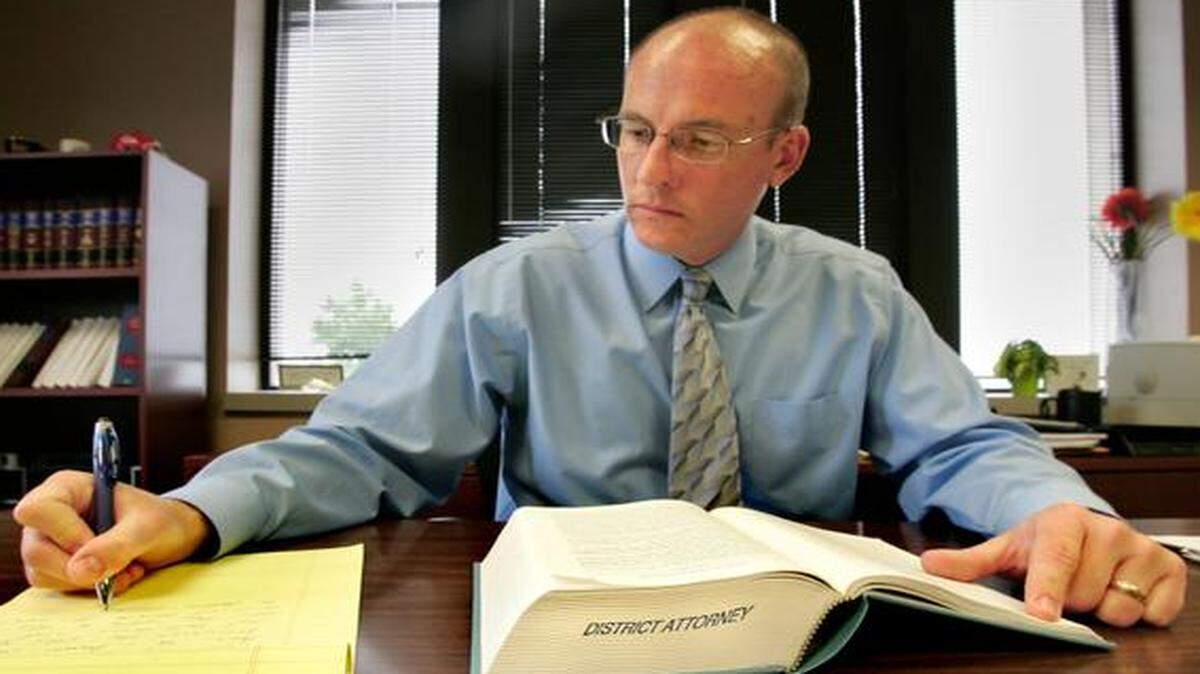
“It’s very disappointing,” said Johnson County District Attorney Steve Howe. “In all likelihood, it will benefit some really horribly dangerous inmates.”
Friday’s ruling helps inmates who had prior felony convictions in states outside Kansas. Authorities estimate that about 235 inmates could benefit, said Scott Schultz, executive director of the Kansas Sentencing Commission.
At issue is how a defendant’s prior felony convictions are classified under state sentencing guidelines in place since July 1, 1993.
Under the guidelines, a defendant’s criminal history factors into his sentence for his new crime. A defendant who previously committed crimes against persons — such as sex offenses, robbery, aggravated assault and murder — receives a lengthier sentence than someone with previous convictions for “nonperson” crimes like forgery and theft.
Four years ago, convicted armed robber Jimmy Murdock appealed the state’s use of the “crimes against persons” classification for his sentencing in a 2010 conviction. The court lengthened his sentence because he had 1984 and 1990 robbery convictions from another state.
Yet at the time of his earlier convictions, Kansas did not have “person” or “nonperson” classifications for felonies, Murdock argued. It didn’t adopt those until enacting its July 1993 sentencing guidelines. Therefore, the state shouldn’t have been allowed to use the “person” classification against him when considering his previous crimes, he argued.
He cited a state law that requires “unclassified felonies and misdemeanors” to be considered as nonperson offenses for sentencing purposes.
In May, the Supreme Court created a firestorm in the Kansas criminal justice community when it ruled in Murdock’s favor. All felony convictions prior to July 1, 1993, should be considered as nonperson crimes for sentencing purposes, it ruled.
That decision essentially cut in half the 19-year sentence Murdock received in 2010 after his most recent robbery convictions in Kansas.
Though the ruling pertained to Murdock’s out-of-state convictions, Supreme Court Justice Eric S. Rosen said in his May dissent that the ruling also would apply to all in-state crimes before July 1993 “regardless of how violent or heinous.”
As many as 900 inmates — about 10 percent of the state’s current prison population — could have been affected if both out-of-state and in-state convictions qualified under the ruling, said Schultz of the sentencing commission.
Alarmed at the possibility of so many inmates with lengthy histories of committing violent crimes being released “prematurely,” the Kansas attorney general’s office asked the Supreme Court to reconsider or clarify its ruling.
Though the court rarely grants such requests for rehearing, it did so. It heard arguments Sept. 12. On Friday, it clarified the previous ruling to emphasize it pertained to out-of-state convictions only.
Prosecutors still worry about the impact.
Inmate Victor Miller, who was convicted in Leavenworth County a decade ago of attempted murder and aggravated kidnapping, could see a significant decrease in his sentence because prior convictions for rape and burglary were in Missouri, said Leavenworth County Attorney Todd Thompson.
“It’s still disappointing,” said Thompson. “But it’s not as bad as it could have been.”
Lynn, who is serving a sentence of nearly 50 years for the sexual assault of an Overland Park woman, is not eligible for parole until 2041. But if his request for re-sentencing is granted because of the Murdock ruling, Lynn could see his sentence cut by more than half.
Howe said that the decision probably will have a bigger impact in counties such as Johnson and Wyandotte because of their proximity to the state line. He also wondered whether, in cases where the sentences were part of plea negotiations, prosecutors could seek to withdraw the plea offer since the sentences they negotiated no longer were available.
“The end result is a lot of appeals are going to be filed,” Howe said.
Shortly after the initial May decision, legislators began researching and discussing possible legislative actions, said state Rep. John Rubin, a Shawnee Republican who is vice chairman of the Joint Committee on Corrections and Juvenile Justice Oversight.
But Rubin, who is also a member of the sentencing commission, said that any action lawmakers take now likely would not be applied retroactively to those now in prison. Any change in the law would apply only for those sentenced after any new law takes effect.
“If there is any way we constitutionally fix it then we definitely need to do that,” he said.
Rubin believes the court’s decision is contrary to prior court precedents and the intent of the Legislature in creating the guidelines.
“Some people are going to be released into society sooner than the sentencing courts had anticipated,” he said. “It’s a heck of a hit on public safety.”
To reach Tony Rizzo, call 816-234-4435 or send email to trizzo@kcstar.com.
Longer sentences
An example of how Kansas sentencing guidelines work: A person with no prior criminal history who is convicted of rape would face a sentence of 147 to 165 months; if that person had one prior nonperson conviction the sentence would range from 184 to 203 months; with a prior person felony the sentence would be 240 to 267 months.
This story was originally published September 22, 2014 at 7:39 PM with the headline "Prosecutors see chilling result from Kansas court ruling."