
Platte County marks 175th anniversary
Platte County is observing its 175th birthday. Its official history begins in 1838, but the Platte Purchase of 1836 was the seminal event that made it possible.
The treaty, which the U.S. government reached with Indian tribes, expanded the state of Missouri.
But the removal of Indians to what later became northeast Kansas and southeast Nebraska was one of many dislocations caused by tribal conflicts and treaties with the United States — some voluntary and some not.
The dislocations were traumatic because Indian culture was tied to the land, said Greg Olson, author of “The Ioway in Missouri” and curator of exhibits and special projects at the Missouri State Archives in Jefferson City.
In recognition of the treaty and what ensued for the tribes, Park University in conjunction with the Platte County Parks and Recreation Department will host “American Indian Experiences, Two Weekends of Discovery, Dialogue and Demonstrations” Aug. 15-16 and Aug. 22-23.
The programs on the university campus are free.
The series begins with the award-winning documentary film, “Lost Nation: The Ioway 2,” produced by Kelly and Tammy Rundle. Subsequently, members of the Ioway of Kansas and Nebraska and the Ioway of Oklahoma as well as other Indian tribes will address the past, present and future of their culture.
Indians wandered America for thousands of years before white settlers arrived, bringing a totally different culture with them.
The tribes’ right to their land was assured by no less an authority than President Thomas Jefferson, who in 1803 promised a Choctaw delegation that its land “shall be and remain the property of your Nation forever, unless you shall voluntarily relinquish or dispose of the same.”
Explorer William Clark, who later became superintendent of Indian affairs, said it more simply at a convocation of tribes in 1825:
“We want nothing, not the smallest piece of your land.”
Five years later the tribes were asked to cede land in western Missouri and in Iowa, a state named for them, and, in 1836, the area between the Missouri River and what was then the state of Missouri.
That Platte Purchase ceded the “fertile valley of the Little Platte” to the United States as part of Missouri.
Acquiring the land required treaties with several tribes, but the most important, according to historians, was the one Clark negotiated with the Ioway and Sac and Fox tribes.
Officially open to white settlers in 1837, the former Indian territory would, by 1845, be divided into six counties, including Platte and Buchanan.
Ioway chiefs White Cloud and No Heart placed their X’s on the treaty, which provided for $7,500 “paid as a present” to the Ioways and band of Sac and Fox.
The tribes were also to receive houses, tilled ground, a farmer, blacksmith, schoolmaster, interpreter, tools, livestock, a mill and a ferry boat.
Four years after the tribe moved to its new home near the present White Cloud, Kan., the money had not been received.
Given the history of broken treaties, why did the tribes sign them?
Lance Foster, tribal historic preservation officer for the Ioway of Kansas and Nebraska, answered succinctly.
They were impoverished and starving, he said. And the white man was going to take the land anyway.
The tribes were deeply indebted to the white traders for essentials, and the Indians, though land-rich, had no money.
In spite of his earlier pronouncement, Jefferson is quoted as saying: “There is perhaps no method more irresistible of obtaining lands from them than by letting them get in debt, which when too heavy to be paid, they are always willing to lop off by a cession of land.”
Chief Frank White Cloud and 13 other tribal members went to Europe to secure money for the tribe, but were not successful. The French and English were more interested in converting them to Christianity, Kelly Rundle said.
When they returned in 1845 they discovered the government had paid $6,000 to the tribe, but Olson said the two Presbyterian missionaries with the tribe built a manual labor school with the funds.
Great effort was made to separate the tribes from their culture and assimilate them into the white culture with varying success.
The American Indian Movement and the Civil Rights Act of 1964 helped create an interest that continues today to recapture traditional ways.
For example, on Aug. 22, Jessie Little Doe Baird will present a documentary about the Wampanoag people and the rebirth of native language speakers.
The Ioway tribe split in the 1880s when a large faction followed Frank Two Hands Kent to Oklahoma Territory.
“The government pushed us out,” said his granddaughter, Joyce Big Soldier Miller, of the Ioway Tribe of Oklahoma. “They wanted more and more.”
On Aug. 16, Miller will explain her perspective on the differences between the Ioway of Oklahoma and those of Kansas and Nebraska, including her opinion of the government Indian school her mother attended.
It is a different perspective than described by those who attended the government Indian school in Highland, Kan., as recorded in the Rundles’ documentary.
“We thrived in Oklahoma,” Miller said. “I love my heritage and I want to leave a legacy.”
Weekends of remembrance
“American Indian Experiences, Two Weekends of Discovery, Dialogue and Demonstrations” will take place Aug. 15-16 and Aug. 22-23 at Park University.
The free programs will be at the McCoy Meetin’ House on the Parkville campus, 8700 N.W. River Park Drive. Highlights:
Friday, 7 to 9 p.m.: Screening/discussion of “Lost Nation: The Ioway 2.”
Saturday, 10 a.m. to 3 p.m.: Discussion with the filmmakers, historian Greg Olson and Joyce Big Soldier Miller of the Ioway Tribe of Oklahoma.
Aug. 22, 7 to 9 p.m.: Screening/discussion of documentary on the Wampanoag people and the rebirth of native language speakers.
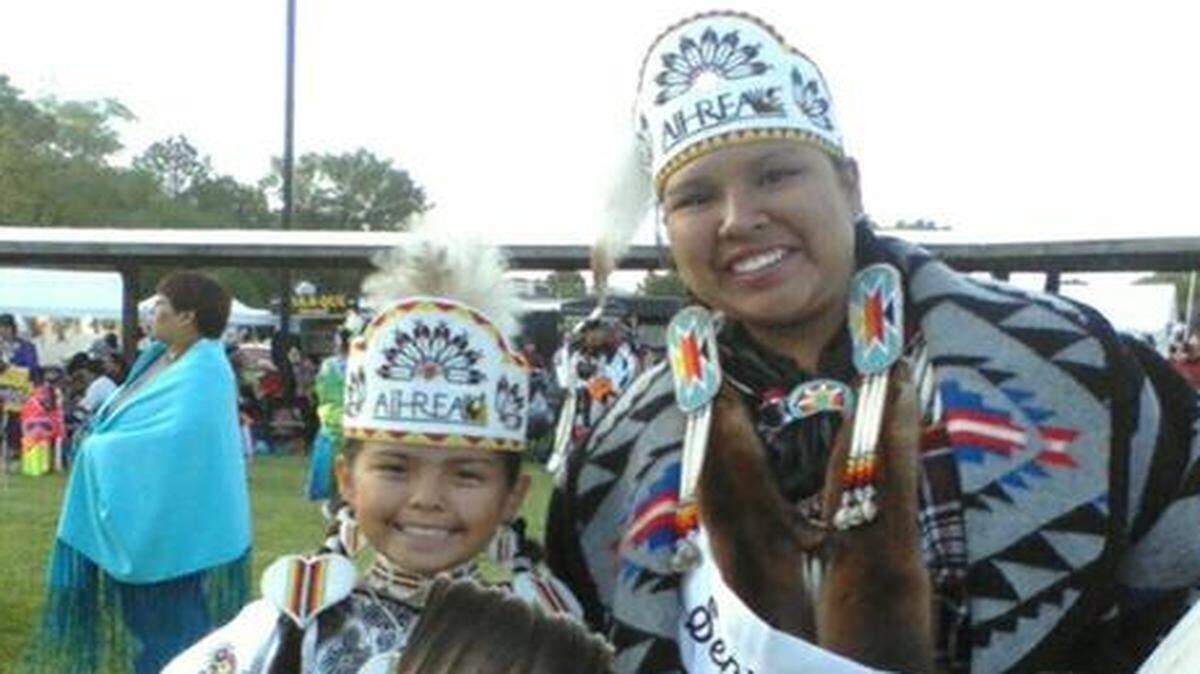
Aug. 23, 10 a.m. to 3 p.m.: Music, dance, discussions, artifacts and artwork. From noon to 2 p.m., members of the American Indian Health Research and Education Alliance will dance and discuss contemporary American Indian issues.
For more information, go to www.platteparks.com or contact Carol Getty at 816-741-7130 or carol.getty@gmail.com.
This story was originally published August 11, 2014 at 4:16 PM with the headline "Platte County marks 175th anniversary."