
KU team helps chart climate change with 3-D map of Greenland Ice Sheet
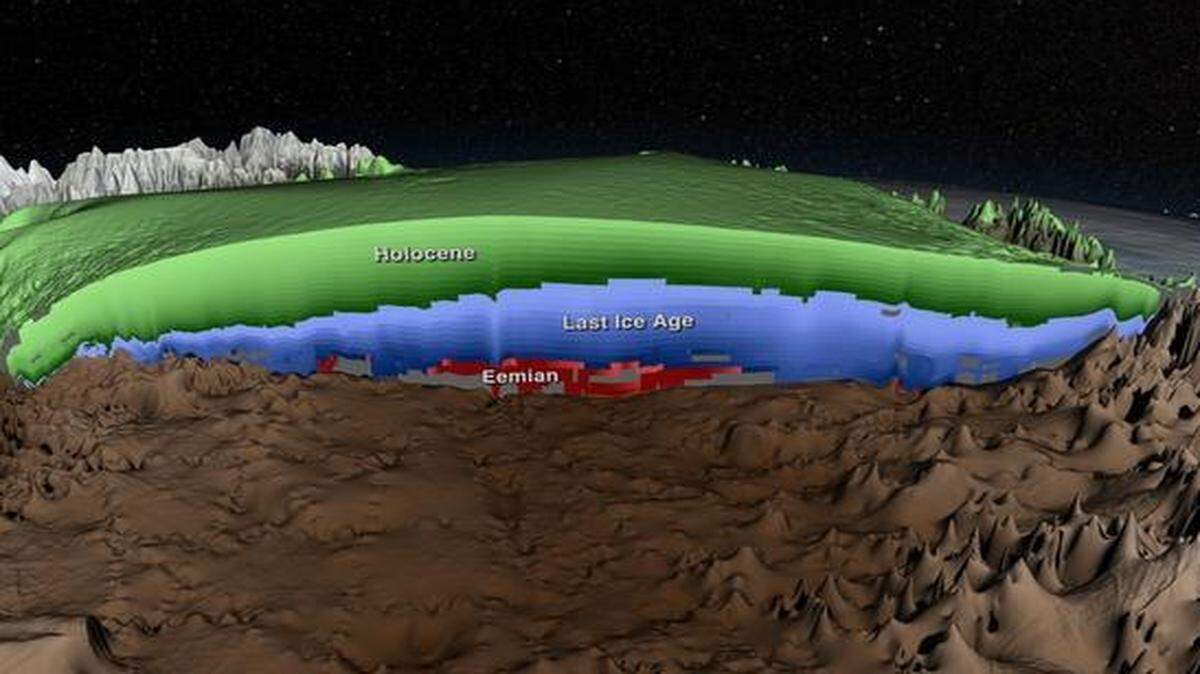
To get a better look at Greenland, climate scientists turned to Kansas.
A team of engineers from the University of Kansas developed ice-penetrating radar that helped create the first comprehensive 3-D map of the receding Greenland Ice Sheet.
And the picture they produced is scary.
The data reveal that the last time the Earth’s climate was roughly as warm as now, the ice sheet retreated to a fraction of what it is today.
“The conclusion is what it is,” said Prasad Gogineni, a professor of engineering and director of the Center for Remote Sensing of Ice Sheets at KU.
That’s alarming because Greenland has the second-largest mass of ice on Earth. If it all melted, sea levels around the world would rise by more than 20 feet. More than 100 million people live within about a 3-foot elevation of the present sea level.
Knowing how the ice was affected by climate periods of the past will help researchers create more accurate models of what is happening now.
“This new comprehensive map of the age of the ice is going to be very helpful to scientists trying to improve estimates of how our current climate warming will affect the ice sheet,” said John Paden, an associate research scientist at KU and signal processing lead for the radar program.
The ice center, headquartered at KU, is supported by NASA and the National Science Foundation. The center has received about $12 million from NASA since 2009 for its work on Operation IceBridge. More than 250 graduate and undergraduate students at KU have worked with faculty there and at other institutions to develop the specialized radar that can “see” the past.
A KU team of students and faculty travels to Greenland every spring to collect more radar data. Gogineni attended a recent NASA conference in Maryland to plan this year’s work.
Using information collected by a series of low-flying craft over Greenland, the team produced data that made possible a 3-D image showing the ice pack during the present Holocene epoch, the last ice age and the preceding Eemian period.
The extremely sensitive radar can detect differences in the composition of the ice at different levels, such as seasonal growth changes as well as electrical properties that correspond to historical events, such as volcanic eruptions.
The Eemian, about 115,000 to 130,000 years ago, saw temperatures that researchers say are comparable to where Earth is now headed because of greenhouse gas emissions.
The Eemian ice layer seems awfully small.
“There is good news and there is bad news in what we’re seeing,” Gogineni said. “The good news is that even under those warm conditions, some ice survived. The bad news is that most of the Eemian ice located in the center melted away, which means water levels rose.”
The sea level is thought to have been 13 to 26 feet higher then because of runoff from Greenland and Antarctica.
Satellite measurements indicate that polar ice melted faster over the last 20 years than during the previous 10,000 years. The pace is accelerating. Greenland ice is melting the fastest. The rate of loss from the Greenland Ice Sheet has increased almost five-fold since the mid-1990s, according to a NASA scientist.
Researchers for years have collected data about past climate conditions by taking ice core samples in Greenland and elsewhere. But the samples are 10 centimeters in diameter and from locations hundreds of miles apart. The ice-penetrating radar produced a more comprehensive map of the bedrock and layers of ice that sit on top of it.
“The radar systems are designed, developed and operated by the University of Kansas,” Paden said. Without them, “there wouldn’t be any data.”
The data were used by a team at the University of Texas at Austin to create the map.
“Prior studies had mapped internal layers but not at the scale made possible by these newer, faster methods,” according to a recent announcement by NASA, whose Operation IceBridge encompasses the radar project.
NASA says the information will be crucial for projecting Greenland’s future contribution to sea-level rises.
“That’s definitely the primary interest in this,” Paden said. “I think that’s the reason there’s a lot of funding. People want to know what’s going to happen. Especially people living close to the coast.”
To reach Matt Campbell call 816-234-4902 or send email to mcampbell@kcstar.com
This story was originally published February 1, 2015 at 7:31 PM with the headline "KU team helps chart climate change with 3-D map of Greenland Ice Sheet."