
Measles likely to hit KC again, doctors warn
With a measles outbreak that started at Disneyland in California spreading across the nation, doctors in Kansas City are readying themselves for the possibility that the highly contagious disease will make its second appearance in the metro area in less than a year.
“We have a volatile situation,” said Mary Anne Jackson, chief of infectious diseases at Children’s Mercy Hospital. “I think it’s just a matter of time before it’s here.”
Since the first of the year, at least 84 people from 14 states have gotten measles, according to the Centers for Disease Control and Prevention. Most of the cases are part of an outbreak that started in December at Disneyland and continued into this month.
“I think we’re going to hear every single day of more states with measles,” Jackson said.
Though measles hasn’t surfaced yet this year in Kansas City, the news coverage of the Disneyland outbreak has many area parents worried. A Children’s Mercy call center staffed by nurses has gotten hundreds of calls from parents asking for information about the outbreak or questioning whether their child’s unusual rash might be measles.
Last year saw 644 cases of measles in the United States, the most in more than a decade. One of the largest outbreaks in 2014 was in the Kansas City area, where, beginning in May, 28 people in Clay and Johnson counties became ill. The outbreak largely was confined to a tight-knit Micronesian community that included many people who had not been vaccinated against measles.
Two of the children, neither of whom was vaccinated, were hospitalized at Children’s Mercy, and 62 people in Kansas City who had been in contact with infected people were quarantined.
“If we hadn’t quarantined them, that could have been a huge outbreak,” said Jeff Hershberger of the Kansas City Health Department.
The measles virus is so contagious that Children’s Mercy had to temporarily close one of its urgent care clinics when it was discovered that a patient was infected.
Both Jackson of Children’s Mercy and the Kansas City Health Department have put out recent advisories to area doctors to alert them to measles symptoms: a fever, cough and runny nose, tiny white spots inside the mouth, as well as a skin rash that appears as large, flat blotches that can merge into each other.
“Most physicians now have never seen measles,” Jackson said.
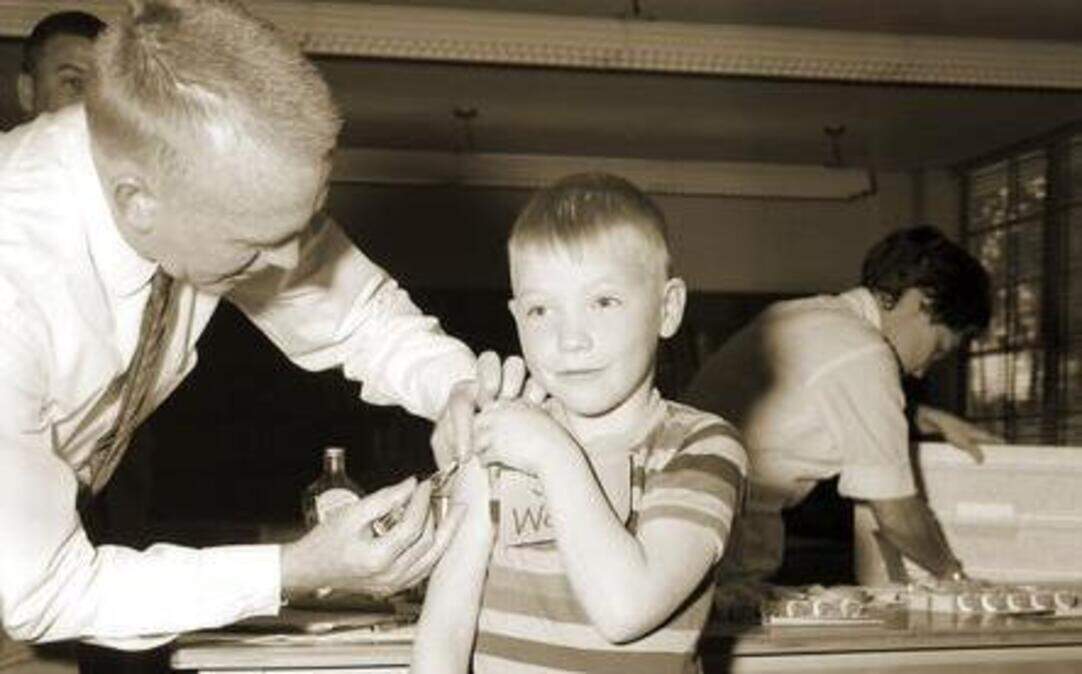
Before a vaccine was introduced in the early 1960s, measles was a common, and often dangerous, childhood illness. Measles can cause serious complications, such as pneumonia or brain swelling that can leave a child deaf or mentally retarded. In the late 1950s, there was an average of 450 measles-related deaths each year in the United States. Tens of thousands were hospitalized.
The vaccine has come close to eliminating measles in the United States. But increasing amounts of travel to and from countries where measles is common, as well as resistance among some parents to vaccinating their children, has kept the disease active and trending higher in recent years.
Parents’ resistance to vaccinations — based on discredited claims linking the shots to autism — has been a growing frustration to public health officials.
Last year, Missouri granted parents the right not to vaccinate children in day care or preschool, Jackson said. “We don’t have any idea how prevalent that is,” she said. “Who is going to die of measles? It’s going to be these little ones.”
At a meeting Thursday at the University of Kansas Medical Center with community leaders, U.S. Surgeon General Vivek Murthy urged parents to vaccinate their children.
“I understand there are concerns,” he said. “Every parent wants to protect his child.”
But there is no link between measles vaccine and autism, Murthy said. “Not everyone has gotten that message.”
To reach Alan Bavley, call 816-234-4858 or send email to abavley@kcstar.com.
This story was originally published January 29, 2015 at 9:42 PM with the headline "Measles likely to hit KC again, doctors warn."