
Highland Cemetery, born of segregation, survives in limbo
Anyone who knows Kansas City jazz knows Bennie Moten.
His band played the swankiest, swingingest joints and was known for going all night.
“Renowned jazz pianist band leader and recording artist,” his tombstone reads, if you can find it.
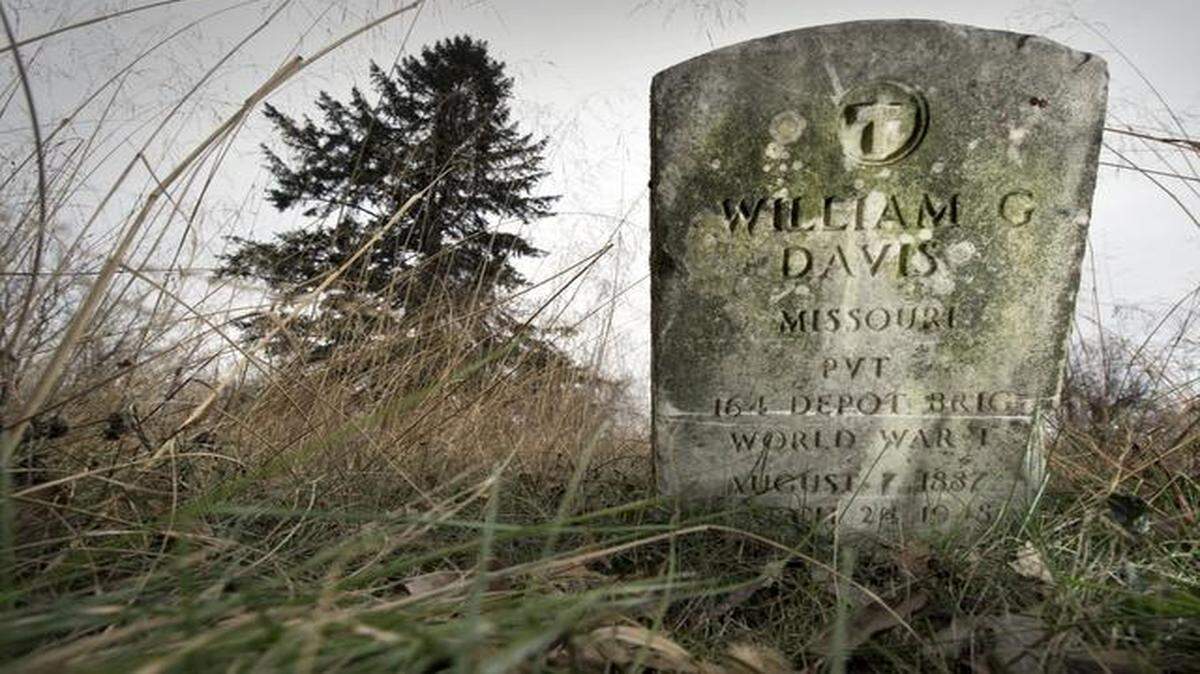
Then you’d have to sweep aside the long, dead grass that dances over the flat marker on a windy day.
People dump trash nearby. Tombstones sit cockeyed, and stray cats run about the brush. The roads through Highland Cemetery are gutted, and dead limbs hang from trees. A mower didn’t disturb the peace all summer, it seems.
Highland is on Blue Ridge Boulevard, past the city limit sign and straight into a different time. Back to horse-drawn hearses and eternal segregation.
“Devoted to the exclusive use of the Negro race,” Highland was billed when it opened in 1909.
It became the resting place for prominent African-Americans from Kansas City’s earliest days — doctors, businessmen and schoolteachers.
“So sad what’s happened here,” Corinne Patterson, 88, said as she walked the grounds in Friday’s early cold.
She’s part of a genealogical group that attempts to restore records to the old black cemeteries. She hadn’t seen Highland for years.
“It disgusts me,” she said. “But I don’t know who to be mad at.”
Highland is owned by the Land Trust of Jackson County, which acquired the property in 2010 because of a tax foreclosure judgment — back taxes. Michael Hunter, the land trust commissioner, said the trust’s purpose is to return thousands of seized properties to the tax rolls.
In other words — sell them so new owners will pay taxes.
That’s fine for houses, vacant land and commercial buildings. But buyers aren’t exactly lining up to buy a cemetery with no endowment or perpetual-care money coming in. Highland has seen only a handful of funerals in recent years and is nearly full.
“It’s not really suitable for private purchase,” Hunter said of Highland. “Somebody would have to bring us something.
“I don’t know what that would be.”
But he was sure of one thing. The land trust’s budget doesn’t include cemetery maintenance.
Part of the problem with Highland could be social progress.
“Integration killed black cemeteries,” said Warren Watkins, a member of the Watkins Memorial Chapel family. “There never was money set aside to take care of the place. The county is going to have to take care of it or somebody is going to have to do something.”
Or things could continue as they are.
“I dug my first grave when I was 12,” Bill Enloe said, sitting in his pickup on a recent day at Highland.
“You know how to dig a grave with a sharpshooter? You start at the head, dig around the outside to make an island. That way your back’s never against the wall.
“I could dig a grave in an hour.”
The story of what happened to Highland Cemetery cannot be told without Enloe, who swears to have dug more than 40,000 graves all over Kansas City and nearby small towns. He’s 76 and still digging, with machinery. His father was a gravedigger and so now is his son.
For 30 years he took care of Highland. Mowing, weed eating, brush hauling, keeping gravel on the roads.
“I thought I owned part of it,” he said. “Turned out I didn’t.”
This is the fuzzy part. Enloe says he was part of a group that owned some cemeteries. The others in the group are dead and the paperwork gone. Enloe said he learned only last year that he never had any ownership in Highland.
“I probably did a half-million dollars worth of work in there,” he said.
But when a funeral home has the rare burial there now, they call him. Enloe will oblige even though he has no ownership or authority to do so. He knows families want to be together. He charges the family “next to nothing,” according to a funeral director.
His attorney recently told him to stay out of there.
Hunter, at the land trust, said Enloe shouldn’t worry.
“He sounds like a public servant,” Hunter said. “If he’s out there doing this on his own, that’s probably not the worst thing that could happen.”
Sallie Powell was the first person buried at Highland. That was June 15, 1909, just a few months after a company had purchased the land for $15,000.
Early on, gravesites were $15. According to a history put together in 2000 by Patterson’s group, the Midwest Afro-American Genealogical Interest Coalition, the cemetery would hold 25,000 graves.
But there was never any plan in place for longtime care.
A woman traveled from her home in Chicago to a class reunion earlier this year in Kansas City. While here, she went to Highland, where she has relatives buried.
“We didn’t even get out of the car because of all the brush,” Chestine Warfield Allen said. “I remember what the place used to look like. I was shocked.”
A comparison could be made to Union Cemetery, which officials say is the oldest public cemetery in Kansas City. It, too, had fallen into disrepair. But now it’s a tourist attraction.
The Union Cemetery Historical Society, formed in 1984, partners with Kansas City for upkeep and maintenance.
Without such effort, said Kevin Fewell, board president of the Union Cemetery Historical Society, cemeteries “just go the way of Highland.”
Highland’s biggest problem could be that it’s not in a city. It sits in unincorporated Jackson County just east of Interstate 435.
Jackson County Legislator Ken Bacchus said he had recently been asked about Highland.
“I’m not certain what if anything can be done,” Bacchus said. “Maybe we can do something like Kansas City did with Union.
“I just know there is serious history out there — it represents a time that no longer exists — and the place is in horrible shape.”
Marion Watkins, another member of the Watkins Brothers Memorial Chapel family, is the person who approached Bacchus. She is in the third generation of the family business and has worked there most of her life.
“I remember the stories of horse-drawn hearses leaving the old chapel on Lydia and going out to Highland,” Watkins said. “I probably know four generations of people buried there, and it’s just a shame what’s happened. I’m not sure a lot of people even know it.
“If they knew, something might get done about it.”
To reach Donald Bradley, call 816-234-4182 or send email to dbradley@kcstar.com.
This story was originally published November 22, 2014 at 5:03 PM with the headline "Highland Cemetery, born of segregation, survives in limbo."