
As chief, Darryl Forté has been ‘a true agent of change’ for the Kansas City police
Building bridges and tearing down walls.
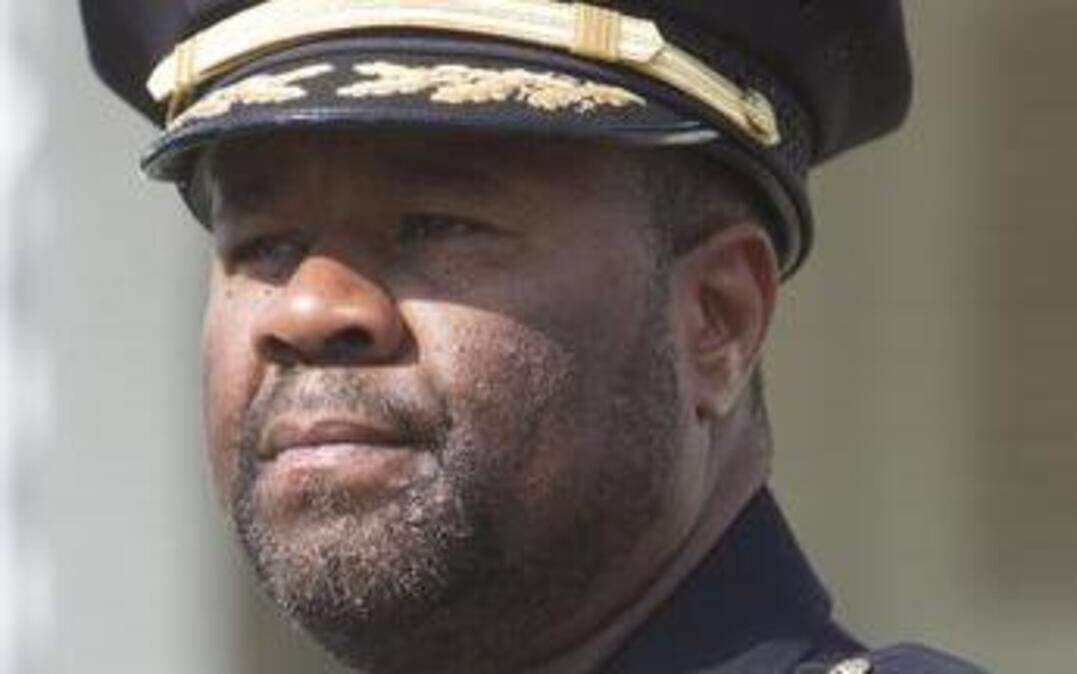
Construction work may not be part of Darryl Forté’s job description, but as Kansas City’s police chief, he is focused on mending a historical disconnect between the department and the minority community.
Three years into his stint as the city’s first black police chief, Forté is succeeding, many say.
“Because of him, more people are comfortable talking to the police,” said Rosalyn Temple, chapter president of Kansas City Mothers in Charge, a group of women who have lost children to homicide and work to prevent more killing.
Forté makes it a point to visit every homicide scene, and he regularly meets with community groups to an extent no previous chief ever did. People see that and see that he cares, according to Temple, who said that has a big impact on the community.
Improving the department’s relationship with the community and reducing violent crime were two of the key parts of the 37-page strategic plan Forté prepared before he interviewed for the chief’s job.
His vision meshed nicely with what the Board of Police Commissioners was looking for in a new chief in 2011.
In Forté, the board tapped a lifelong Kansas City resident who spent his entire 26-year career with the department and who wasted no time in working to reshape the organization. Even before he was sworn in, the new chief reassigned more than 50 of the department’s top commanders.
Three years into his tenure, he said his work to improve police-community relations is the thing he is most proud of so far. He hears it from people everywhere he goes, he said.
“People are coming up to me all the time and say something’s changing about the police,” Forté said.
Mayor Sly James appreciates and respects the effort.
“Over the past three years, Chief Forté has acted as a true agent of change for the Kansas City Police Department,” James said. “He has made changes that have resulted in a more open relationship between the department and the citizens it serves.”
For Forté, better police-community relations is just part of the ultimate goal of preventing violent crime.
His commitment to the Kansas City No Violence Alliance (KC NoVa) is seen as a big reason that the city’s homicide rate in 2014 is trending down toward levels not seen since the 1960s.
“Without Chief Forté, this project doesn’t exist,” said Capt. Joe McHale, project manager of KC NoVa.
Forté is quick to deflect any personal accolade. He emphasizes that decreasing violent crime takes the work of many people and organizations.
Michael Kaste, special agent in charge of the FBI office in Kansas City, said Forte is always more concerned about finding solutions to a problem than who takes credit.
“Some people are about I. He’s more of a we guy,” Kaste said.
Gwen Grant, executive director of the Urban League of Greater Kansas City, said that while there are many factors involved in a reduction of crime, Forte’s leadership has played a major role.
“I think that’s commendable,” Grant said.
His focus on violent crime has led Forté to undertake a major restructuring of the department.
While not without friction or resistance, the effort is designed to work in conjunction with KC NoVa to put maximum resources into the areas hardest hit by crime and to focus enforcement efforts on those identified as the most criminally active.
“He’s made some tough decisions,” McHale said. “But it has resulted in a better fit for our mission of preventing violent crime.”
The two most visible aspects of those changes are the “hot spot” policing initiative and the creation of a violent crime enforcement unit.
Under the initiative, every officer, detective and sergeant in the department who doesn’t work undercover pulls extra duty working the busiest nights in four select high-crime areas.
In the first six months of the year, those extra officers put in more than 7,200 hours, according to department statistics.
In 2012, half of the city’s homicides occurred in two of those areas. At the halfway point of this year, there had been only one homicide in those same areas, Forté said.
“That’s not by happenstance,” he said.
The violent crime enforcement unit is made up of more than two dozen officers who focus on the members of the most active criminal groups identified by KC NoVa and other intelligence sources.
Forté has also established a law enforcement resource center that centralizes the work of crime analysts and information sharing among department members with an eye not only to solving crime but stopping it before it occurs.
Kaste, of the FBI, said that kind of intelligence-led police work is indicative of a forward-thinking department.
“That’s not always the case in larger police departments,” he said.
To Forté, stagnation is the worst thing for any organization.
He believes the police department’s biggest challenge is the recruitment and retention of minorities. Though two of the department’s five deputy chiefs are black men and two are women, Forté said there is a dearth of minority and female captains and majors — the men and women who will lead the department when the current commanders step aside.
For the first time, the department has a diversity officer, a position crucial to the continued improvement in community relations to make the department more reflective of the community it serves, Forté said.
“It’s not the good old boys club anymore,” he said. “It’s everybody’s club.”
Though community activist Ron Hunt has seen an improvement in the department’s relationships with members of the community, he thinks more work needs to be done.
Forté agrees. There still are too many reported incidents of bullying or disrespectful behavior concerning officers, he said.
“We have to step up and say no more,” he said. “We have to be an organization of integrity.”
As far as how long he wants to be chief, Forté says he has no plans to retire any time soon.
“As long as I think I can make a difference,” he said.
To reach Tony Rizzo, call 816-234-4435 or send email to trizzo@kcstar.com.
This story was originally published October 23, 2014 at 10:08 PM with the headline "As chief, Darryl Forté has been ‘a true agent of change’ for the Kansas City police."