
Psychiatrists hired by KC-St. Joseph diocese dispute altar boy’s claims of repressed memory
Two psychiatrists on Thursday attacked a former altar boy’s claims that he was sexually abused by a priest and then repressed the memories of it for decades.
One told Jackson County jurors that there is no such thing as repressed memory. The other called it “pseudo science” and “science fiction.”
“There’s no scientific evidence for that phenomenon,” said Harrison Pope, a professor of psychiatry at Harvard Medical School. “It was a bit of a fad in the 1990s, but now it has largely vanished.”
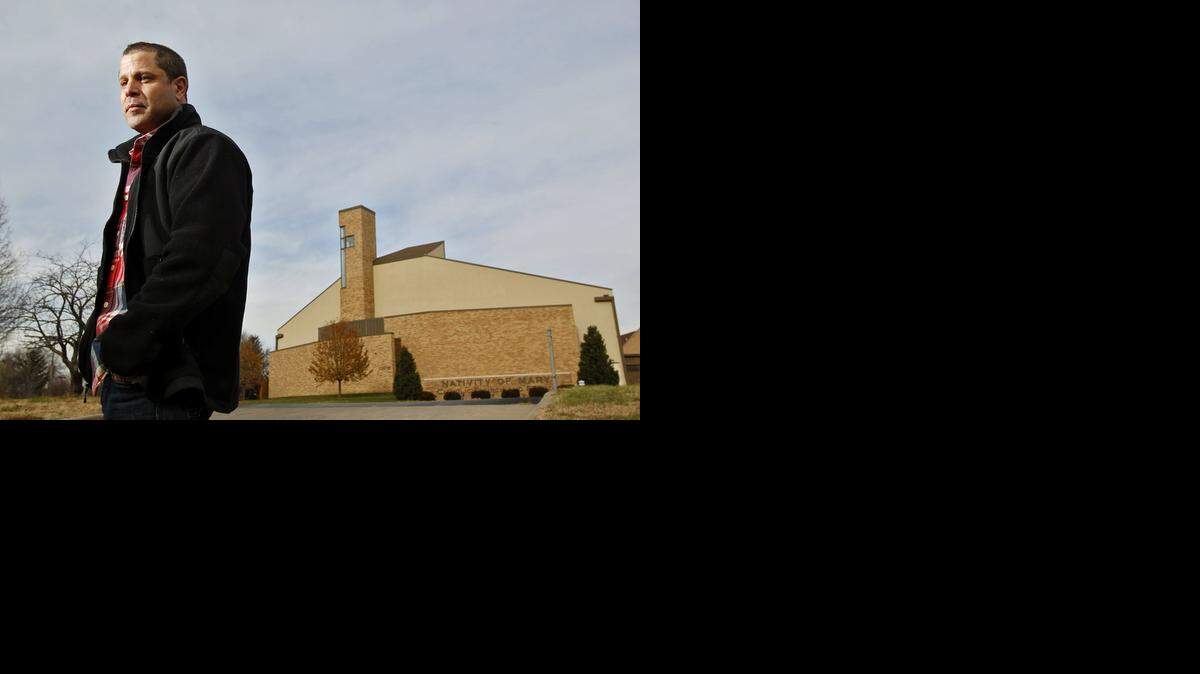
Emotions ran high on the ninth day of a priest sexual abuse trial in Jackson County Circuit Court in Independence. The case stems from a lawsuit filed in 2011 by Jon David Couzens alleging that he suffered sexual abuse by Monsignor Thomas O’Brien when Couzens was a student at Nativity of the Blessed Virgin Mary School in Independence in the early 1980s. Couzens says that the Catholic Diocese of Kansas City-St. Joseph was told repeatedly that O’Brien was a danger to children but failed to prevent the abuse.
O’Brien, who has been the subject of dozens of sexual abuse lawsuits, died last fall at age 87.
Jurors have listened to three days of testimony on repressed memory, including that of a psychiatrist hired by Couzens’ attorneys. He said earlier in the week that Couzens was so traumatized by the abuse that he repressed the memories until 1988, when his mother sent him to see another priest at Nativity for anger issues.
That meeting — in the same rectory where some of the abuse allegedly occurred — triggered fragmented memories and led Couzens to blurt out that O’Brien was “touching us boys,” the psychiatrist said. But those memories were shut back down when the priest dismissed Couzens with a vulgar comment, he said.
On Thursday, the diocese’s two witnesses disputed that explanation.
Pope said there were only two logical explanations for Couzens’ story of sexual abuse.
“Some or all of the abuse did happen, but in reality Mr. Couzens was always able to remember it,” he said, “or some or all of the abuse did not happen and so it wasn’t there to be remembered in the first place.”
Pope said statements made by Couzens to the media in 2011 and to the priest in 1988 indicate that he did not repress memories of the alleged abuse.
“Mr. Couzens made comments on TV that clearly suggested” — telling reporters he’d long been haunted by memories — “that he was able to remember,” he said.
The statement to the priest in 1988 that O’Brien was sexually abusing boys, Pope said, shows that “he was in fact able to remember incidents of abuse at that time.”
Park Dietz, a forensic psychiatrist who said he was billing the diocese $800 an hour for his work, dismissed the notion that meeting the priest in the same rectory where the alleged abuse occurred had triggered Couzens’ memories in 1988.
“That’s nonsense,” said Dietz. “That’s something out of ‘The Exorcist.’”
He also disputed that the priest’s alleged harsh response shut Couzens’ memories back down. “It can’t be re-repressed,” he said.
Dietz and Pope also offered several other explanations for Couzens’ anxiety, depression and anger issues, which others had testified were symptoms of his abuse. They said it could have been because he was taking too much pain medication for a neck injury, which Pope said could affect memory. Or because he had high testosterone levels. Or fibromyalgia, which he could have inherited from his mother. They also said Couzens was struggling with his sexuality and experiencing strains in his marriage. Dietz gave a slide presentation that included detailed information about Couzens’ private life.
On cross-examination, Pope acknowledged that he has been paid hundreds of thousands of dollars testifying as an expert witness for numerous Catholic dioceses around the country. He said the Kansas City-St. Joseph Diocese would pay him about $55,000 for the Couzens case.
Pedro Irigonegaray, an attorney for Couzens, asked Pope what he would do if a patient came for an appointment and said he had been sexually abused and that the memories were returning.
“Is there anything a patient could tell you that would make you believe that it is possible for them to have repressed memory?” Irigonegaray asked. “Anything they can to do convince a man who makes at times $400,000 a year?”
Pope said his primary goal would be to treat the person who is suffering, not to use them as a research subject.
Irigonegaray also asked Pope why he told jurors that his belief that repressed memory doesn’t exist is an accepted view in the scientific community when even some of his own Harvard colleagues believe that it does exist.
“Yes,” Pope said, “there are credentialed people on both sides of the debate.”
To reach Judy L. Thomas, call 816-234-4334 or send email to jthomas@kcstar.com.
This story was originally published October 9, 2014 at 8:54 PM with the headline "Psychiatrists hired by KC-St. Joseph diocese dispute altar boy’s claims of repressed memory ."