
KC man claims sex abuse by Red Sox employee more than 40 years ago
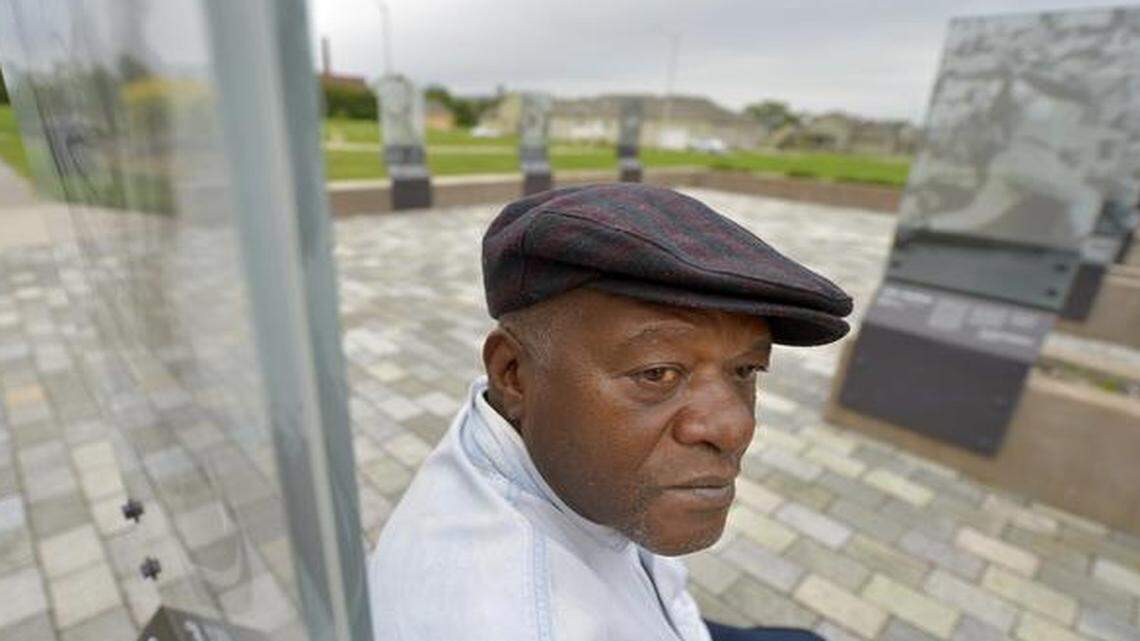
Almost from the start, the middle-aged man seemed to take a liking to Gerald Armstrong.
As an 11-year-old clubhouse attendant for the Kansas City Athletics in the mid-1960s, Armstrong routinely found himself surrounded by professional ballplayers and team personnel, and among them was a man named Donald Fitzpatrick, a then-clubhouse manager for the Boston Red Sox. Fitzpatrick seemed kind, courteous. Not once, Armstrong says, did he ever hear a four-letter word leave Fitzpatrick’s mouth.
“And in baseball,” Armstrong says now, “that’s a rarity.”
More than four decades later, however, the 59-year-old Armstrong of Kansas City has become one of the public faces of a 23-person group seeking compensation for the sexual abuse they say they suffered at the hands of Fitzpatrick.
On behalf of the 23 men, Boston-based attorney Mitchell Garabedian has issued a financial demand to the Red Sox of $115 million — $5 million for each alleged victim — though, as a result of a number of factors, no lawsuit is currently pending that would legally oblige the team to pay.
But even with the statute of limitations long passed, and with some of the alleged incidents dating back to the 1960s, the Red Sox have a moral obligation to pay the victims, Garabedian said.
The Red Sox and their lawyer, Dan Goldberg, did not return multiple messages seeking comment. But the team has said it didn’t learn of any allegations until 1991 and knew no specifics about Armstrong’s claims.
Forty years after the fact, Armstrong can offer no proof of the allegations. Just his word, and the disturbing details of what he says he suffered at the hands of the clubhouse manager, who died in 2005 at the age of 76 after pleading guilty to four counts of attempted sexual battery against boys younger than 12.
When Armstrong first began working for the Athletics — he had brothers, he says, who also worked for the team — he could hardly believe his good fortune.
He was making more from his clubhouse tips, he figured, than local high school kids working normal after-school jobs. More than money, the job brought prestige. He got to walk on the field. Toss the ball around with players. When he’d go pick up barbecue for visiting team members, the men behind the counter knew he was schlepping for pro ballplayers.
And “Fitzy,” who Armstrong says came to town two or three times a year when the Red Sox played in Kansas City, made it even better with his generous tips and willingness to make gifts of team gear.
Even at that age, though, Armstrong sometimes wondered about his interactions with Fitzpatrick. It was odd, he says now, how Fitzpatrick would ask Armstrong to put him in headlocks, and how the man’s hand would seem to end up on the boy’s genitals or buttocks. How they’d end up together in one of the areas off the visitor’s clubhouse, alone.
Over time, Armstrong says, it grew even more bizarre. Fitzpatrick would ask Armstrong to come to his hotel room to pick up gifts. According to Armstrong, Fitzpatrick would end up performing oral sex on him on three separate occasions.
The abuse stopped, Armstrong says, after he visited Fitzpatrick in his room at Kansas City’s Muehlebach Hotel, ostensibly to receive a Red Sox hat. When Fitzpatrick made an advance, Armstrong says he forcefully declined.
In the years that followed, Armstrong never spoke of the experience. Part of him felt shame and guilt, like he was somehow responsible for the things that had happened. It didn’t help that sexual abuse was a taboo subject in those days.
So he kept it to himself.
“You’re tempted to” tell someone, he said, “but your survivor skills come into play.”
Instead, as he struggled to make sense of what he’d experienced, he sought relief elsewhere.
By his junior year at Central High School, he’d begun drinking heavily, the start of a yearslong battle with alcohol and drugs.
As Armstrong put it, “I wrote my own prescriptions.”
As the years passed, he did his best to bury the memories somewhere deep. He went on to have five kids. He lived in Alaska, working in logging and construction. Other times, he wandered across the country, living in Oakland, in Seattle, in small towns, doing small jobs. For a short while, he was homeless.
Then, while living in Kansas City in 2011, he saw a short article in The Star about Fitzpatrick and the others who’d alleged he had preyed on them.
For the first time, he realized he wasn’t the only one who’d been abused by Fitzpatrick.
He called the lawyer representing the alleged victims, told him that he, too, had a history with the man.
Since then, he’s become a voice for those who allege abuse at the hands of Fitzpatrick.
He has spoken publicly about his experience, for a Boston Globe story in 2012. This summer, at the Major League Baseball All-Star Game in Minneapolis, Armstrong joined Charles Crawford, another alleged Fitzpatrick victim, to hand out fliers outside the stadium before the game. The two were also at Kauffman Stadium earlier this month, when the Royals hosted the Red Sox in a four-game series.
“I can’t tell you how courageous he is to step forward at the age he was,” said Robert M. Hoatson, who runs Road to Recovery, a New Jersey-based nonprofit for victims of sexual abuse. “He just came out and said, ‘It happened to me, too.’ This is an inner-city, African-American kid who probably thought he’d never talk about it. And he’s just been so open and honest and courageous.”
So far, however, there has been little in the way of tangible results.
Although seven individuals who claimed to have suffered sexual abuse by Fitzpatrick reportedly settled a lawsuit seeking $3.15 million with the organization shortly after it changed ownership in 2002, the Red Sox, according to Garabedian, have declined to come to any kind of monetary settlement with his clients.
“The Boston Red Sox, through their counsel, have informed me that they have absolutely no desire to resolve these claims and therefore help these victims heal and move on with their lives,” said Garabedian.
In the 2012 Boston Globe story about Armstrong and the other alleged victims, Goldberg, the Red Sox attorney, made this statement: “The Red Sox have always viewed the actions of Mr. Fitzpatrick to be abhorrent. When the team, then under a previous ownership group, became aware of the allegations against Mr. Fitzpatrick in 1991, he was promptly relieved of his duties.
“The club is unaware of any specifics regarding the matters brought forward recently by this particular individual whose claim dates back to the 1960s. Given the sensitive nature of the matter, we will not have further comment.”
The idea that no one inside the Red Sox organization knew anything, however, is rejected by Garabedian.
“Given the detailed and organized team that the Red Sox organization runs, it’s hard for my clients to believe that somewhere along the line during the sexual abuse that at least a group of supervisors didn’t know that these individuals were being sexually molested,” he said.
But at this point, that is not scheduled to be heard in a courtroom.
Though coming forward has offered some relief, Armstrong says, it has also been a struggle. His secret is public now. It has also dredged up decades-old memories that he had tried hard to suppress.
“All the alcohol and drugs that you’ve taken to repress that — that’s all a waste, because the thing you feared the most is now upon you,” he said.
He believes that counseling, back when he was younger, could have helped. Now? He’s not so sure.
“Fear of the unknown, I guess,” he said.
Today, Armstrong leads a simple life. He lives with his 91-year-old mother, cooking for her, doing laundry, taking her to doctor’s appointments. He works nights, picking his grandkids up from school during the day.
His goals now, too, are simple.
The first — and he initially felt shame for saying this — is that he wants to be compensated for what he’s been through. He thinks it’s right, and that at some point the Red Sox will ultimately do the right thing.
But he also wants to make sure that others aren’t forced to struggle with the type of secret he struggled with for so many years.
“I have no power to stop (sexual abuse), because there are so many predators out there,” he said last week. “But by telling my story, maybe somebody else can tell theirs.”
To reach Dugan Arnett, call 816-234-4039 or send email to darnett@kcstar.com.
This story was originally published September 25, 2014 at 10:17 PM with the headline "KC man claims sex abuse by Red Sox employee more than 40 years ago."