
Legal Aid of Western Missouri marks a half-century of helping those most in need
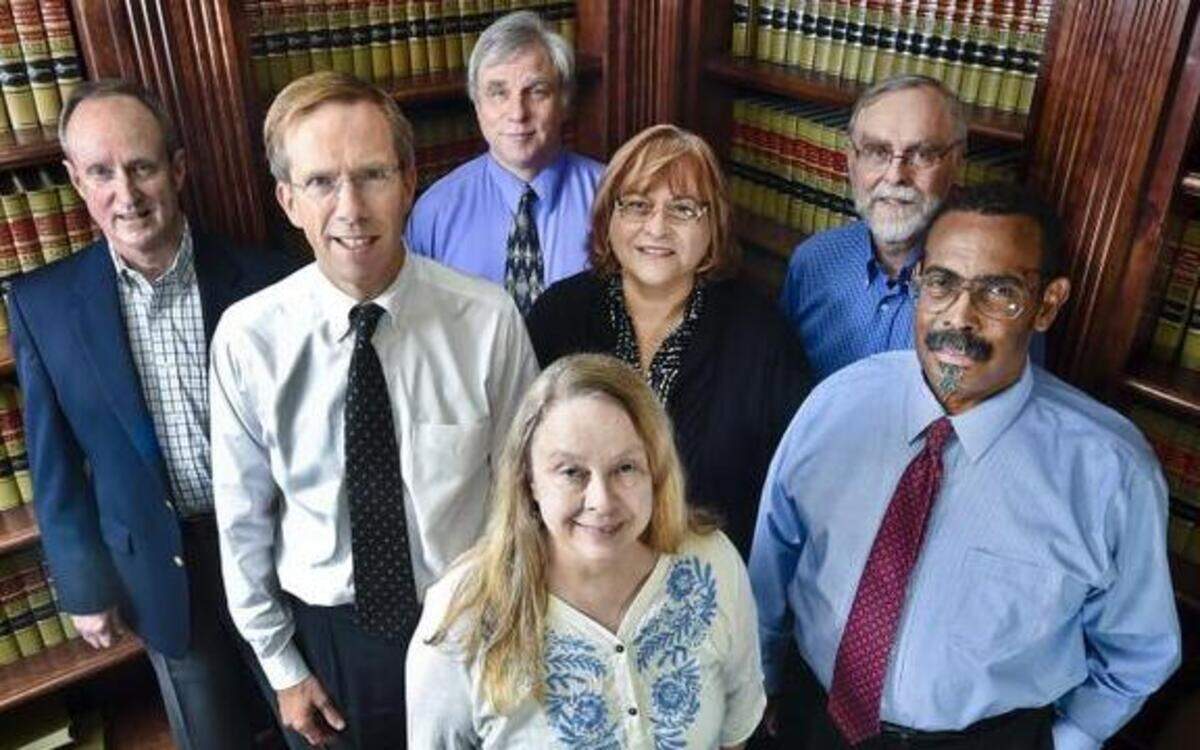
Working for Kansas City’s eighth-largest law firm is kind of a low-glamour affair.
Its downtown offices are respectable, but not like the palatial digs that some others sport. And most of the firm’s 56 lawyers spend their time doing legal work that seldom comes in the door at the pricier addresses.
Such as helping poor people get health care when they are denied coverage. Keeping indigent clients in their homes while a landlord-tenant dispute plays out. Standing up for a domestic abuse victim as she fights for custody or child support.
That is what Legal Aid of Western Missouri has done for a half-century now: Provide legal services at no cost to the region’s neediest residents.
Pat McLarney, a retired managing partner at Shook, Hardy and Bacon, said that for 50 years, Legal Aid has helped level the playing field between those who can afford lawyers and those who can’t.
Legal Aid’s waiting room in its office at 1125 Grand Blvd. tells the story, he said.
“The phone rings every 15 seconds, and you just see the people,” McLarney said. “Really, Legal Aid is the only thing standing between them and something really bad, such as losing a house or losing a child to an abusive spouse. It is a huge service.”
Legal Aid also has emerged as an innovator in other social problems that strike hardest at the indigent, its supporters say.
For example, in 2005, well before the real estate bubble burst three years later, Margaret May began seeing more blighted and abandoned homes in the Ivanhoe neighborhood.
May, the executive director of the Ivanhoe Neighborhood Council, found that many people living in those homes didn’t actually own them. They had simply taken them over when their parents died without a proper will. But without clear titles, the children couldn’t sell the homes or even borrow money for repairs.
As a result, the homes just got shabbier until they became unlivable.
“Quite often, their parents had lived there and not taken care of business as they should,” May said. “We couldn’t help them unless Legal Aid could unravel that.”
The solution was simpler than you’d think, said Gregg Lombardi, Legal Aid’s executive director. Lawyers from his office periodically camp out at Ivanhoe and help older residents prepare two-page beneficiary deeds, which dictate who gets title to a house after the death of its owner. Those deeds then are filed with the county recorder.
The underlying problem was more troubling, Lombardi said. Without proper trust and estate planning, too many Kansas City families were losing the opportunity to transfer wealth from one generation to the next.
With a home standing as a working family’s largest asset, more than $300 million in urban core wealth was in danger of simply vanishing, Lombardi estimated.
“It’s like you took the money, put it on a table and burned it,” Lombardi said. “Nobody gets the value of a generation of work and savings.”
With grants in hand from two local foundations and a bank, Legal Aid now is taking its work on beneficiary deeds to other neighborhoods, Lombardi said.
One pillar accomplishment of Legal Aid in its first 50 years has been the revitalization of affordable public housing in Kansas City.
Though lawyer Julie Levin had been working on public housing cases for a decade, the direction of her career changed profoundly in the late 1980s when she walked through the Theron B. Watkins housing project with some of its residents.
Almost half of the 288 units were open to the elements or occupied by drug dealers and squatters. For a year, she tried without success to persuade the Housing Authority of Kansas City renovate the units.
Finally, in January 1989, she sued the authority, an action that ultimately led to the agency being managed for 20 years by a court-appointed receiver.
Under the direction of a federal judge, the authority spent more than $175 million to renovate or replace every public housing unit in the city.
The authority went from an occupancy rate of less than 50 percent in 1989 to more than 90 percent today, Lombardi said. And federal court records show that serious crime dropped 44 percent in Kansas City housing projects during the receivership.
Levin retired from Legal Aid just weeks after the authority emerged from receivership in April.
“That was the bulk of my career,” Levin said. “Kansas City is the only city in the country that has not lost any public housing. Elsewhere, housing authorities have been allowed to tear down public housing without replacing it one-for-one unit. We did not lose any.”
And as Legal Aid looks to its next 50 years, the agency is finding new ways to serve those with the least.
Deputy executive director Alicia Johnson will launch a project this fall to help Missouri probation and parole officers register inmates with mental health issues for Medicaid and get them treated before they are released.
The program at first hopes to assist up to a dozen inmates a month, she said, but that probably is a fraction of the need.
“They’ve been incarcerated, but they’re not taking steps to get on Medicaid,” Johnson said. “These are offenders being released into the community and they need help with therapists and medications.”
The need always is there, said May. Legal Aid helped young couples in her neighborhood get out from under a bogus rent-to-own homes program and is helping her rehabilitate 15 properties in Ivanhoe, May said.
“It’s a blessing to have this relationship with Legal Aid,” May said.
To reach Mark Morris, call 816-234-4310 or send email to mmorris@kcstar.com.
This story was originally published September 13, 2014 at 5:10 PM with the headline "Legal Aid of Western Missouri marks a half-century of helping those most in need."