
KC University of Medicine and Biosciences plans to open campus in Joplin
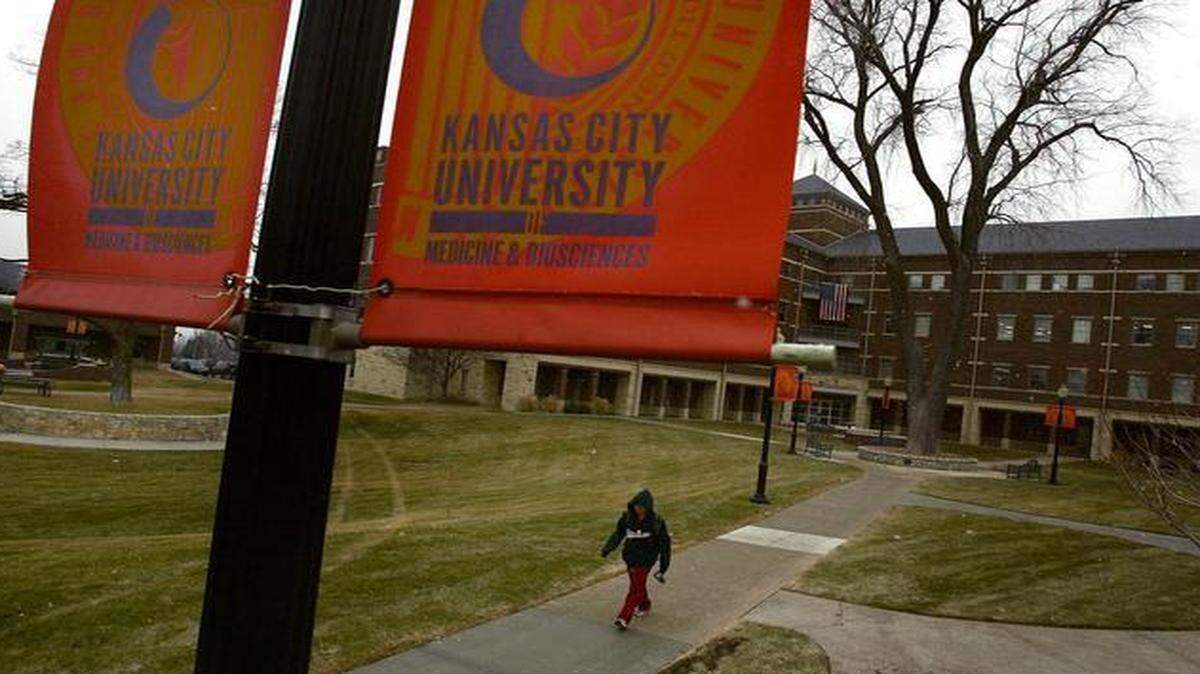
The Kansas City University of Medicine and Biosciences announced Thursday that it plans to open a campus in Joplin that will enroll up to 150 students per class and turn the unassuming institution on Independence Avenue into what may become the largest medical school in the nation.
The new campus, set to open in 2017, is aimed at turning out large numbers of primary-care doctors who will practice in rural areas where health care providers often are in short supply.
“This will be a rural medical school for rural America,” said Marc Hahn, president of KCU, an osteopathic medical school. “The southwest part of Missouri is a great place for that.”
The school’s enrollment has been growing steadily over the past decade. This school year, its total enrollment for the four-year program for a medical degree was just over 1,000 students. Such numbers make KCU the largest medical school in Missouri and one of the largest nationally, university officials said.
“We’ve quietly had an impact on not just medical care, but on access to medical school,” Hahn said.
If KCU adds a total of 600 students at the Joplin campus, the school’s enrollment will exceed that of such mammoth medical schools as Indiana University and the University of Illinois. They both enroll slightly more than 1,400 medical students and currently rank as among the largest.
The civic and medical communities in Joplin had been trying for at least seven years to persuade a medical school such as KCU to open a campus in the city.
“We knew that where health care was going, we needed to attract more physicians,” said Gary Pulsipher, president of Mercy Hospital Joplin.
KCU also was being courted by Springfield at the time. But discussions sputtered. When Hahn assumed the university presidency in July 2013, talks were renewed and quickly progressed.
Key to the agreement was Mercy Hospital’s offer to put the new medical school campus in a 150,000-square-foot building that was constructed as a temporary facility after the hospital was destroyed by the tornado that ripped through the city in 2011. Mercy opened its new, permanent hospital over the weekend.
Another factor in KCU’s decision was its longstanding relationship with another hospital system in southwest Missouri, Freeman Health System. Freeman operates hospitals and other health care facilities in Joplin and has provided clinical training to third- and fourth-year students from the university.
Freeman also has residency programs in internal medicine and several other specialties, which will offer KCU graduates in Joplin opportunities to continue their training.
“That will be a very essential piece of the medical school’s success,” said Freeman CEO Paula Baker. Baker said Freeman will cover the cost of expanding its residency programs to accommodate the university graduates. “We consider that a great investment.”
Rural areas have long found it hard to recruit physicians and other health care professionals, who prefer the lifestyle attractions, more regular schedules and professional opportunities of cities and suburbs. While 38 percent of Missourians live in rural areas, only 18 percent of the state’s physicians practice there.
“They want a life. They don’t want to be on call all the time,” said Mary Becker of the Missouri Hospital Association. “It’s a continual challenge for hospitals. They have a difficult time recruiting physicians to live in a rural area.”
Physicians practicing in rural areas of Missouri also tend to be older than their urban counterparts. “We’re not gaining any ground,” Becker said.
Baker of Freeman said she expects a medical school in Joplin “will be a huge boost to recruitment and retainment of physicians.” She expects many of the students to come from southwest Missouri.
“It will be a path for many students who wouldn’t otherwise go to medical school because of limited resources,” she said.
Only about 3 percent of students now entering medical school say they plan to practice in rural areas. But studies have shown that medical students who grew up in underserved rural and urban areas are much more likely to practice in such communities. There’s now a trend toward locating new medical schools in places such as Joplin.
Columbia University’s medical school in New York City opened a rural medicine track in upstate Cooperstown, N.Y. In 2011, the University of Kansas School of Medicine opened a campus in Salina. With just eight students, it’s considered the smallest four-year medical program in the nation.
The University of Missouri has plans for a campus in Springfield that would train an additional 32 medical students in their third and fourth years. The university also has programs that provide advance admission to medical school to promising college students from underserved rural and urban areas and that provide medical students with training opportunities in rural practices.
Osteopathic medical schools like KCU, which grant a Doctor of Osteopathic Medicine degree, provide essentially the same education as the more numerous allopathic schools, which grant a Doctor of Medicine degree But osteopathic schools have a greater tradition of producing physicians who go into primary-care specialties, such as family medicine and pediatrics, that treat patients for a broad array of conditions. They are in particular demand in rural communities that can’t support specialists who focus their practices more narrowly.
More than half of KCU’s graduates are in primary care, and 40 percent of its graduates who practice in Kansas or Missouri are in rural areas, Hahn said.
Because Mercy is a Catholic hospital, final approval of the donation of its temporary facility awaits approval from the Vatican. Once that is obtained, the university will begin renovations to add lecture halls and laboratories.
Hahn expects KCU to hire about 50 to 100 staff members. It also will recruit hundreds of physicians from the Freeman and Mercy health systems to provide students with clinical training at the hospitals and community-based practices.
The Joplin campus will be the first new medical school location in Missouri in 44 years, university officials said.
To reach Alan Bavley, call 816-234-4858 or send email to abavley@kcstar.com.
This story was originally published March 26, 2015 at 6:04 PM.