
Rep. Emanuel Cleaver and others say federal funding for heating aid won’t cover the need
In the depths of the Great Recession, the federal government more than doubled the funds for a program that helps impoverished families pay their energy bills.
Since then, the program’s budget has decreased 30 percent, by $1.7 billion over five years.
But demand for the aid continues to outstrip supply, even with recent lower oil prices — a stark reminder that many of the poorest Americans have been left out in the cold as the country’s economy heats up.
President Barack Obama sought no increase in his 2016 budget plan last week for the Low Income Home Energy Assistance Program. The allocation of $3.4 billion fell far short of the $4.7 billion requested in a recent joint letter-writing campaign by members of Congress, mayors from 20 states, utility companies and advocates for the poor. They argue that limited funds and a first-come, first-served application process mean that many more people need the aid than receive it.
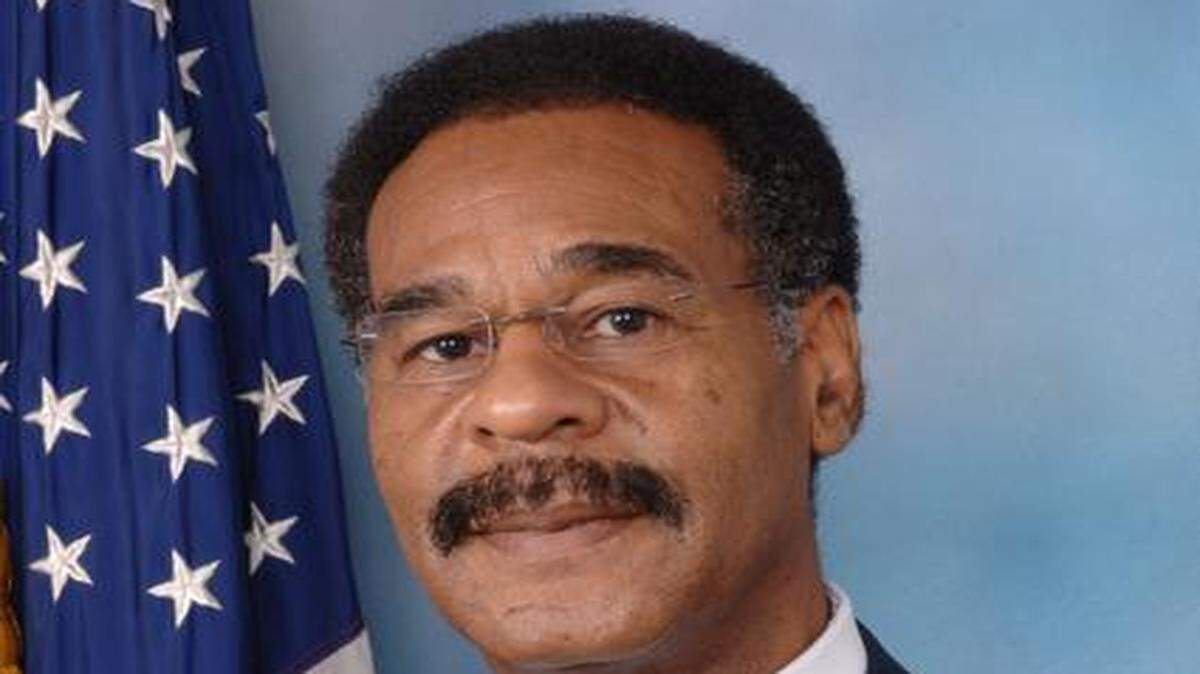
“There are real human beings behind the budget numbers,” said one of the letter-writers, U.S. Rep. Emanuel Cleaver, a Democrat from Kansas City. “The economy is healing, but the one place the economic growth is lacking is in jobs and income. The need is as real today as it has ever been.”
In an interview last week, Cleaver was careful not to criticize Obama. But he made it clear he thinks more needs to be done to help families in need. Missouri received $71 million from the energy assistance program last year, down from $107 million in 2010.
“I don’t want to make light of $3.4 billion in discretionary funds,” Cleaver said. “That is a significant chunk of money. But I think we need a bit more than that, and I think the president is perhaps trying to put a figure in there that he thinks the Republicans will purchase.”
Under the president’s plan, $1 billion in additional funds could become available for the program based on significant increases in the number of low-income households, the price of fuel or extreme weather.
But the additional money would have to be approved by a Congress controlled by cost-conscious Republicans, many of whom are eager to trim spending on energy assistance and other safety-net programs that grew to record levels during the recession.
Some Republican lawmakers already have indicated they’re not inclined to boost funding for the program because they’re concerned that it’s rife with fraud and abuse.
A 2010 report from the Government Accountability Office found that some people had succeeded in receiving benefits despite listing dead relatives on their applications, or criminals who were ineligible because they were in state prisons.
“I would not propose we eliminate the program outright, because there are certainly families who need assistance to stay warm during the winter and pay their electric bills,” said Sen. Pat Roberts, a Republican from Kansas.
“But until HHS can prove to me that they’ve addressed and corrected the problems laid out by the GAO and congressional oversight committees, I would not be in the camp of legislators looking to increase funding for this program.”
Kansas distributed about $26 million in benefits from the program in fiscal year 2014, compared with about $40 million in fiscal year 2009, when the recession was in full force, according to the Kansas Department of Social and Rehabilitation Services.
In Missouri, where temperatures over the past month fell into the teens and single digits, the maximum grant for heating from the program is $450 per household for the winter. At the program’s peak in 2010, the average grant was $510. Last year it was almost $100 less.
For people at or below the poverty level, the money “makes a difference of an eviction notice, or that makes a difference of having the gas shut off when you have four kids in the households and no place to go,” said Holly Grimwood, assistant director of the nonprofit Raytown Emergency Assistance Program.
The number of households applying for help with their utility bills through the program has fallen in Missouri in recent years, from 195,660 at the height of the recession in 2010 to 162,783 in 2014, according to statistics from the state’s Department of Social Services.
But even with applications down, more than 22,000 Missourians who applied for benefits last year didn’t receive any.
Applicants in Missouri must have annual incomes at or below 135 percent of the poverty level, or $26,716 for a family of three, and no more than $3,000 in bank accounts, retirement accounts or investments. In Kansas, households at 130 percent of the poverty level qualify for the energy assistance program.
Only about a third of eligible households nationwide actually get the benefit, said Brandon Avila, director of the nonprofit Campaign for Home Energy Assistance in Washington.
“This isn’t an entitlement,” Avila said. “It really serves as a bridge to get through the year, those couple of months when you see your bills really spike. These folks can’t pay it. It just gets to a point that it’s beyond their fixed budgets.”
Critics say it’s the energy companies that really benefit from the assistance program.
“I don’t think anyone in the country, whether it’s a state or federal government, wants to shut the lights off or shut the heat off on low-income households,” said Nick Loris, senior policy analyst at the Heritage Foundation, a conservative research center.
That’s why states have laws that make it difficult for utilities to do that, he said.
To reach Lindsay Wise, call 202-383-6007 or send email to lwise@mcclatchydc.com. Twitter: @lindsaywise.
This story was originally published February 7, 2015 at 7:55 PM with the headline "Rep. Emanuel Cleaver and others say federal funding for heating aid won’t cover the need."