
Ferguson grand jury evidence: Conflicting, confounding accounts of what happened
The dispute over what actually happened here in August started moments after police officer Darren Wilson shot and killed Michael Brown.
“We had different stories,” an eyewitness told authorities after seeing the shooting from a car with a sibling and their parents. “We talked about it on the way home.
“It looked like (Brown) was stumbling,” the transcript reads. “Someone else said (no, it) looked like he was charging.”
Those discrepancies, and similar disagreements contained in hundreds of pages of interviews released by authorities Monday evening, illustrate how witnesses to the same chaos can walk away with sincere and differing recollections.
Transcripts of witness interviews show generally broad agreement on the outline of the incident. But crucial specifics — information suggesting whether Wilson acted inside or outside the law — remained frustratingly obscure and contradictory.
A St. Louis County grand jury spared the officer of state criminal charges with a ruling Monday that set off a riot in Ferguson and drove angry protests around the nation. At the same time, Wilson’s defenders say the decision reinforces the importance of facts in a criminal inquiry.
The Star examined dozens of interviews shared with the grand jury, including Wilson’s account. The documents show general agreement with much of the known narrative:
▪ Wilson confronted Brown and a companion for walking in the middle of a Ferguson street.
▪ Brown, who was black, and Wilson, who is white, scuffled through the window of the officer’s vehicle. The officer was punched and a shot, or shots, was fired from inside the police SUV.
▪ The unarmed 18-year-old walked or ran away from the vehicle, stopped briefly, then turned to face the officer, who had emerged with his weapon drawn.
▪ Several more shots were fired. Brown fell dead on the street.
Beyond those facts, though, issues critical to the case — including Brown’s willingness to surrender — remained in dispute.
Some witnesses wept as they struggled to recall details. Others changed their stories over several weeks or largely recanted their original accounts. Still others admitted their view of the incident was partially obscured.
Some of the disputes seemed trivial. Some witnesses recalled a police car, others a police truck. It was a Chevrolet Tahoe. They couldn’t agree on the direction of the stopped vehicle — or whether Brown had leaned through the window to engage Wilson.
One witness insisted Wilson tried to subdue Brown with a Taser. Wilson didn’t carry a Taser.
Even such minor witness disagreement can make it harder to prosecute a case — and make it harder for grand jurors to push forward charges that would be contested at trial.
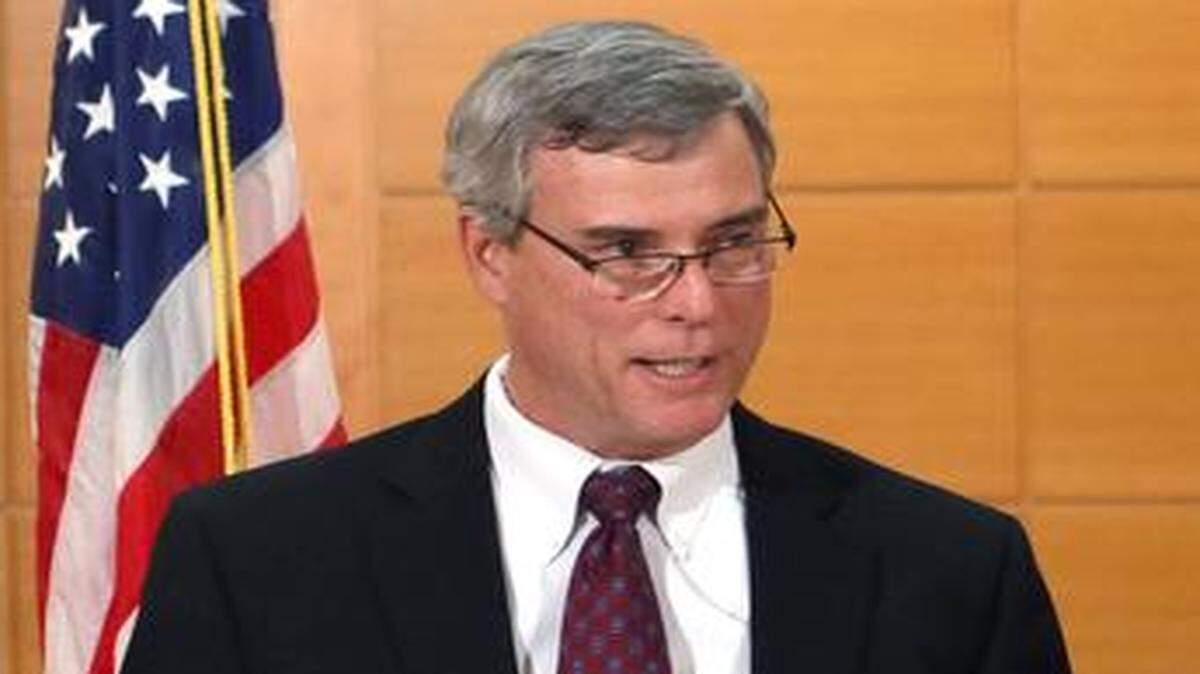
“In a trial, everything gets magnified,” said Platte County Prosecutor Eric Zahnd. “Even a small discrepancy can become a major issue.”
But there were major witness differences too. Accounts of Brown’s actions after he and Wilson scuffled through the window of the police department’s cruiser were widely contradictory.
“He just ran down in the middle of the street and the officer just gets out the car and shoots,” Witness 12 told investigators. “I guess when he hit the first and the second time the guy, he kinda stopped and turned around facing the officer. … The officer let out, what three, maybe four more shots to the guy and that’s when he hit the ground and, um, and that was it.”
A different witness also recalled Brown facing away from Wilson when the rounds were fired.
Running away? “Yeah, with his back to the officer,” the witness said.
Yet later autopsies showed Brown suffered no entry wounds from the back. That suggests other witnesses were closer to the truth when they recalled Brown walking or running away from Wilson’s car, pausing to examine an injured hand, then turning to face the officer.
“All of sudden, the young man, he turned around and started coming back towards the officer,” said Witness 34. “Then the officer shot him a couple times.”
One witness — identities were scrubbed from what’s been released publicly — submitted a journal entry. A paragraph apparently written the morning of the shooting talked of going to the neighborhood “to understand the black race better so I stop calling blacks” the usual slur.
“I heard (the officer yell) lay yo stupid ass down,” the entry reads. “The big kid turned around had his arms out with attitude. … Dang if that kid didn’t start running right at the cop like a football player. Head down. I heard three bangs.”
Witness 41 saw something quite different.
“Michael Brown’s on his knees with his hands up and he was being shot up,” he said.
And another: “The officer got out, kinda gave him a chase and that’s where I see (Brown) slow up and throw his hands up. And the officer, like, patiently walked towards Mr. Brown, and that’s when I see another two, three shots fired at point-blank range.”
Witness 44 talked of Brown facing Wilson, backing up with his hands raised.
“He was, like, ‘I give up,’” the transcript reads. “‘I got shot once …You can take me to jail.’ That’s basically what he looked like. Like he was scared.”
There also was sharp disagreement over a central issue: Did Brown raise his hands in an attempt to surrender?
A witness, one critical of Wilson, offered an explanation that might simply suggest confusion: that a wounded Brown staggered toward the officer in a way that might be misinterpreted as aggression.
“He didn’t have his hands all the way up. He never opened his mouth,” Witness 14 told police. “But he was trying to see what the hell was going on ’cause he was shot. He was trying to see where he was shot at. And he was staggering forward a couple of times.”
Witness 35, who described himself as Brown’s best friend, said he ran to a nearby window after hearing the first gunshot.
He said Brown had his hands in the air and yelled, “Please don’t shoot me.” Wilson got out of his cruiser at that point, the witness said, and “shot him in the head and then he shot him eight more times. It was four gunshots, then it was a ten-second pause, then there was four more.”
How close was Wilson, the detective asked? “Point-blank range.”
Witness 41 saw no such encounter.
She saw Brown charge Wilson with his hands “balled up in fists like he’s running with his hands close to his chest.”
Wilson told him to stop “at least three times,” she recalled. “And the boy wouldn’t stop, (the officer) fired three rounds, the dude kept running, fired four more rounds and then he finished off the rounds I guess, and he fell on the ground dead.”
Another witness said Brown raised his hands as he walked away from Wilson but dropped them as he turned around.
An interview with Wilson by detectives, with the officer’s attorney present, is perhaps the easiest to follow. It also comes from the man in the best position to know how things played out, but also with the most at stake in the retelling.
He told detectives that Brown was pummeling him through the open window before Wilson ultimately pulled out his pistol — a .40-caliber weapon with 12 rounds in the ammunition clip and another loaded in the chamber — and fired two rounds. (Photographs of Wilson after the shooting show redness on his face, but no serious injuries.) Brown, he said, retreated only after the second shot.
Then, Wilson said, he got out of the vehicle and followed Brown.
“I was yelling at him to stop and get on the ground. He kept running and then eventually he stopped,” he said in the interview the day after the shooting. “When he stopped, he turned, looked at me, made like a grunting noise and had the most intense, aggressive face I’ve ever seen on a person.”
Next, Wilson said, Brown hopped slightly as if to start running at the officer.
“During his first stride, he took his right hand put it under his shirt and into his waistband. And I ordered him to stop and get on the ground again. He didn’t. I fired, a, multiple shots. After I fired the multiple shots I paused for a second, yelled at him to get on the ground again, he was still in the same state. Still charging, hands still in his waistband, hadn’t slowed down. I fired another set of shots. … He gets about eight to 10 feet away, he’s still coming at me in the same way. I fired more shots.”
Legal experts say differing recollections are common in criminal cases. Stress, bias, mental health, even peer pressure can change memory.
Witnesses aren’t necessarily lying. They simply see and remember events differently. In Ferguson, that made the grand jury’s tough job all the harder. People in the police interviews often remarked what they’d heard from neighbors or through news media. Several were adamant that friends and neighbors not know they were talking to detectives.
“People wanted to boil it down to two narratives,” Zahnd said. “Michael Brown’s narrative and Officer Wilson’s narrative.
“It’s actually more complex than that.”
To reach Dave Helling, call 816-234-4656 or send email to dhelling@kcstar.com.
This story was originally published November 25, 2014 at 9:22 PM.