
Senate hearing on air bags draws apologies from Japanese company and U.S automakers
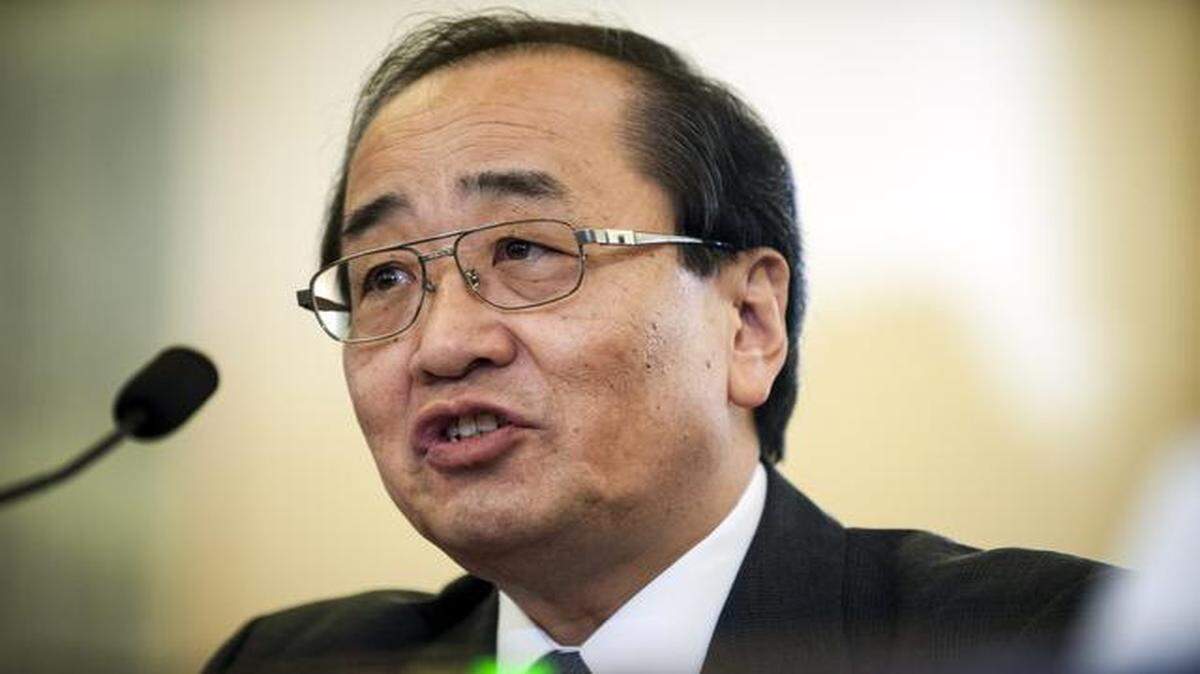
Senior executives for Takata Corp. and two U.S. automakers apologized Thursday for deaths and injuries caused by exploding air bags.
But, speaking at a tense hearing before a Senate committee, they stopped short of endorsing a nationwide recall despite heavy pressure from lawmakers.
More than 10 automobile manufacturers and 7.8 million vehicles in the United States have been affected by recalls of air bags made by Takata, a Japanese company. At least five people have been killed and dozens injured when the air bags exploded too forcefully, hurling shrapnel into the victims.
This week the National Highway Traffic Safety Administration called on automakers to expand the recall from a few high-humidity states — including Florida, Georgia, Louisiana, Mississippi and Texas — to the entire country.
Takata’s own investigation indicates that the root causes of the problem involve a combination of three factors: the age of the air bag, the device’s exposure to high humidity and production issues that Takata is working to correct, said Hiroshi Shimizu, the senior vice president for global quality assurance at Takata.
“We are deeply sorry about each of the reported instances in which a Takata air bag has not performed as designed and a driver or passenger has suffered personal injuries or death,” Shimizu said.
A company statement Wednesday said the evidence did not support a nationwide recall. Pressed at the hearing, Shimizu wavered: “It is hard for me to answer yes or no.”
“It is not hard for you to answer yes or no,” shot back Massachusetts Sen. Edward Markey, a Democrat. Markey said Shimizu’s indirect reply was the equivalent of a no.
Republican Sen. Dean Heller of Nevada became similarly frustrated when he asked Shimizu whether Takata took full responsibility for five reported deaths involving the company’s faulty air bags. Shimizu consulted with a translator for a few moments and then asked the senator to clarify.
Finally, Shimizu said that two of the deaths were still under investigation.
Shimizu testified alongside Scott Kunselman, senior vice president of vehicle safety and regulatory compliance for Chrysler Group, and Rick Schostek, executive vice president of Honda North America. Like Shimizu, neither man would publicly commit to expanding the recall.
Heller asked Schostek whether his daughter was safe driving a 2007 Honda Civic that wasn’t part of the recall. Schostek paused for several moments before answering.
“A large majority of these issues are occurring in Southern areas,” he said. “We are trying to understand if there is any additional risk out there.”
Democratic Sen. Bill Nelson of Florida, chairman of the hearing, was appalled. He said Schostek’s pauses should be noted in the hearing’s official record.
“Perhaps based on Mr. Schostek’s response, you’d better tell your daughter not to drive south in her Honda,” Nelson told Heller.
Nelson complained that the drivers of recalled vehicles remain in danger because not enough replacement parts are available. He extracted promises from Kunselman and Schostek that their companies and dealers would provide customers whose vehicles are on the recall list with loaner cars or rentals until new air bags can be installed.
“The owners should have a right to expect that the cars that they drive are as safe as possible,” Nelson said.
Sen. Claire McCaskill of Missouri, a Democrat, took Honda and Chrysler to task for the inconsistent way they had handled recalls of the air bags: Some were classified as safety recalls, she said, while others were merely “service” recalls. She said that sent a confusing message to consumers.
“Senator, I think there is confusion here and the regulatory framework we’re operating under here has different terms,” Schostek replied. “I’ve asked the very same question: What is the difference to the customer? I’ve been told none.”
He said that while he would have to double-check he thought the recall notifications were very similar, whether it was a safety recall or service recall.
McCaskill said consumers were more likely to ignore a service recall notice, especially if the risk wasn’t spelled out.
“If I get a letter saying, ‘Hey, you could have a piece of shrapnel embedded in your eye and if your daughter’s sitting in the seat next to you, she could die,’ that’s a lot different from, ‘Hey, we’re doing an investigation. Will you please bring it in?’” McCaskill said.
Shimizu said Takata was working closely with automakers and the federal government and had devoted additional resources to producing replacement kits as soon as possible. He said the company was committed to being fully transparent with regulators and investigators.
“We are confident that the air bags Takata is producing today, including the replacements for recalled units, are safe,” he testified.
This story was originally published November 20, 2014 at 7:06 PM with the headline "Senate hearing on air bags draws apologies from Japanese company and U.S automakers."