
American Royal threatened lawsuit before developer withdrew Kemper Arena project
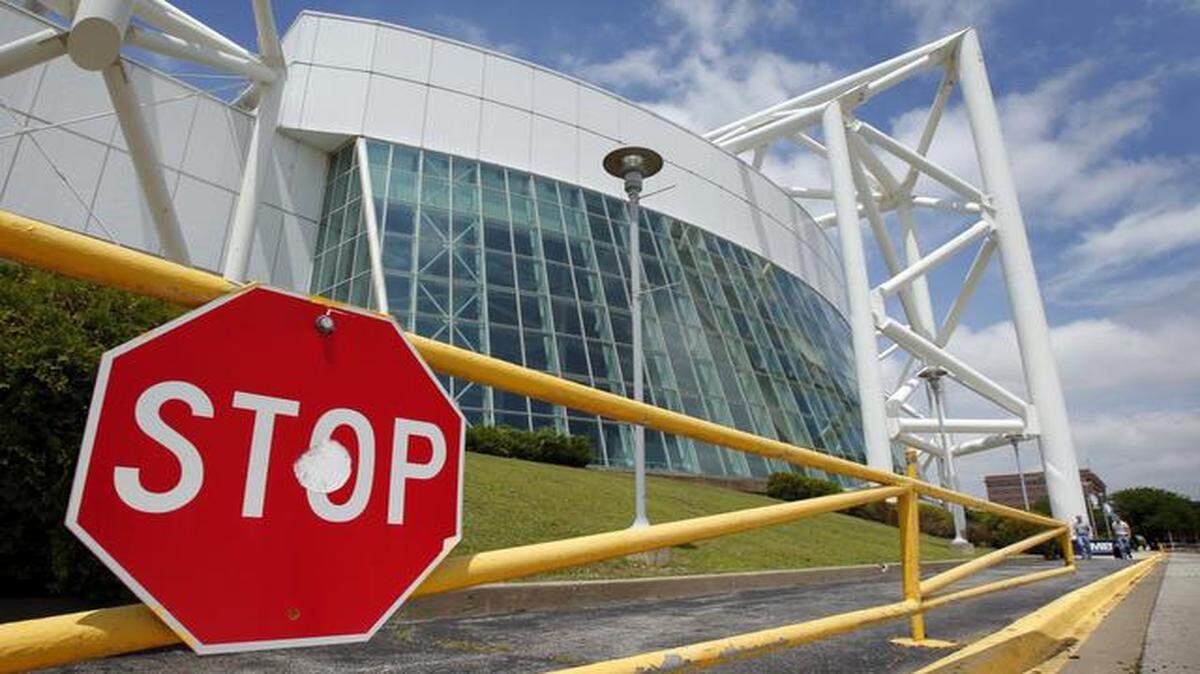
Foutch Brothers’ sudden decision last week to drop its plan to redevelop Kemper Arena came after the American Royal sent a letter threatening a lawsuit.
In an Oct. 17 letter obtained by The Kansas City Star, Chase Simmons of the Polsinelli law firm, representing the American Royal, warned Foutch to “cease and desist” from its efforts to have Kemper Arena declared a historic structure, which would have helped with the financing for its proposed project.
For months, Foutch and the American Royal have pitched rival plans for the future of Kemper Arena. While the American Royal has advocated demolishing Kemper and replacing it with a smaller multipurpose building, Foutch argued for preserving the arena and turning it into a regional youth sports facility.
But the American Royal Association felt Foutch was interfering in a detrimental way with its lease with the city, which extends through 2045 for the American Royal Complex, including Kemper Arena. The letter reinforces that message.
“We demand you cease your efforts with respect to the historic designation applications you filed over the city’s objection,” said Simmons’ letter to Foutch’s lawyer, John Fairfield. “While we have high confidence you will not be successful, those applications impair and impact property which my clients helped to finance and which we have under lease for the next several decades.”
After receiving the letter, Foutch Brothers abruptly announced it was dropping its plan. Company representatives declined at the time to elaborate on the decision, except to say that it was prompted by “circumstances beyond their control.”
On Monday, neither Fairfield nor Foutch Brothers CEO Steve Foutch could be reached for comment about the letter. A representative for the American Royal said the letter speaks for itself.
But City Manager Troy Schulte said Steve Foutch had shown him the letter, which was the reason the development firm withdrew.
Foutch’s decision to drop out of the running came as the Kansas City Council’s Planning, Zoning and Economic Development committee was trying to determine the best option for the city. Committee members have said repeatedly that the status quo serves no one because Kemper has lost nearly all its events to the Sprint Center and is mothballed for much of the year.
Foutch’s withdrawal means Kemper’s demolition is more likely because an effort to preserve the arena through national historic designation has been halted.
Elizabeth Rosin, a Kansas City historic preservation consultant, had been pursuing an application with the National Park Service on Foutch’s behalf, but Rosin said Monday that Foutch asked her about 10 days ago to stop work on that application. Rosin said she understood Foutch’s request came because “they had received a cease and desist letter from the attorney for the American Royal.”
Rosin said that until that point, she had been optimistic that Kemper Arena could get historic designation, which would help it qualify for historic tax credits to finance the renovations for youth sports.
While Kemper Arena is only about 40 years old, Rosin said the building could qualify as historic because of its significance as a local cultural and sports arena that had hosted the 1976 Republican National Convention, numerous championship sports competitions and concerts.
A representative of the National Park Service had recently toured the arena with an eye toward the application for historic designation.
“We were very encouraged,” Rosin said Monday, but now, the application process has stopped.
“I’m disappointed on the one hand that we can’t see our part of the process to its conclusion,” she said. “It would be a shame to lose this venue because it has a lot of viable life in it.”
The letter from Simmons threatened a lawsuit if Fairfield and Foutch didn’t back off and allow discussions between the city and the American Royal to proceed. It suggested that Foutch’s plans constituted “tortious interference with a valid contract,” and could be subject to monetary damages.
It urged Fairfield to confirm by Oct. 23 that it had withdrawn the applications for historic status or legal action would begin.
Foutch’s decision opens the door for the city to negotiate solely with the American Royal, which has asked for $30 million toward a $60 million plan to demolish Kemper, build a smaller multipurpose building and enhance the rest of the American Royal Complex. The American Royal has raised $10 million privately for the construction (plus $5 million for a maintenance endowment) and would also seek $20 million in state tax credits.
After Foutch withdrew last week, Ed Ford, chairman of the planning committee, recommended that the city consider providing $20 million to the American Royal, not the $30 million it is seeking.
American Royal officials said that was a good starting point for negotiations. A public hearing on the proposal is expected by Nov. 13.
The American Royal plan is strongly endorsed by 75 prominent Kansas City business executives, including Mariner Kemper of UMB Bank, Neal Patterson and Cliff Illig of Cerner Corp., and Terry Dunn from JE Dunn Construction. Kemper is the chairman of the American Royal board. They argue that a smaller, custom-designed building would better serve the community and be cheaper in the long run than trying to upgrade Kemper Arena to a usable condition.
Some West Bottoms advocates and historic preservationists strongly oppose demolishing Kemper and still believe the Foutch Brothers plan holds more promise.
Bill Haw, who owns the Livestock Exchange Building and has invested $20 million in the West Bottoms, believes strongly that the Foutch youth sports concept would bring far more vitality to the area than the American Royal, which city records show sold fewer than 7,500 tickets to its events at the American Royal Complex in 2013, not counting the World Series of Barbecue.
Haw said Monday he had toured Kemper and it was not in a shoddy condition. He also said he didn’t believe the Royal has standing to threaten a lawsuit under its lease with the city. He has read the lease and said it requires any disputes to be resolved by arbitration, not a costly lawsuit.
Others say that before the city hands over $20 million to the Royal, it should do considerably more due diligence about the needs and best design possibilities for the West Bottoms neighborhood, as the city is now doing with its airport feasibility studies.
To reach Lynn Horsley, call 816-226-2058 or send email to lhorsley@kcstar.com.
This story was originally published November 3, 2014 at 5:57 PM with the headline "American Royal threatened lawsuit before developer withdrew Kemper Arena project."