
Neighborhoods, schools, churches wrestle over digital signs
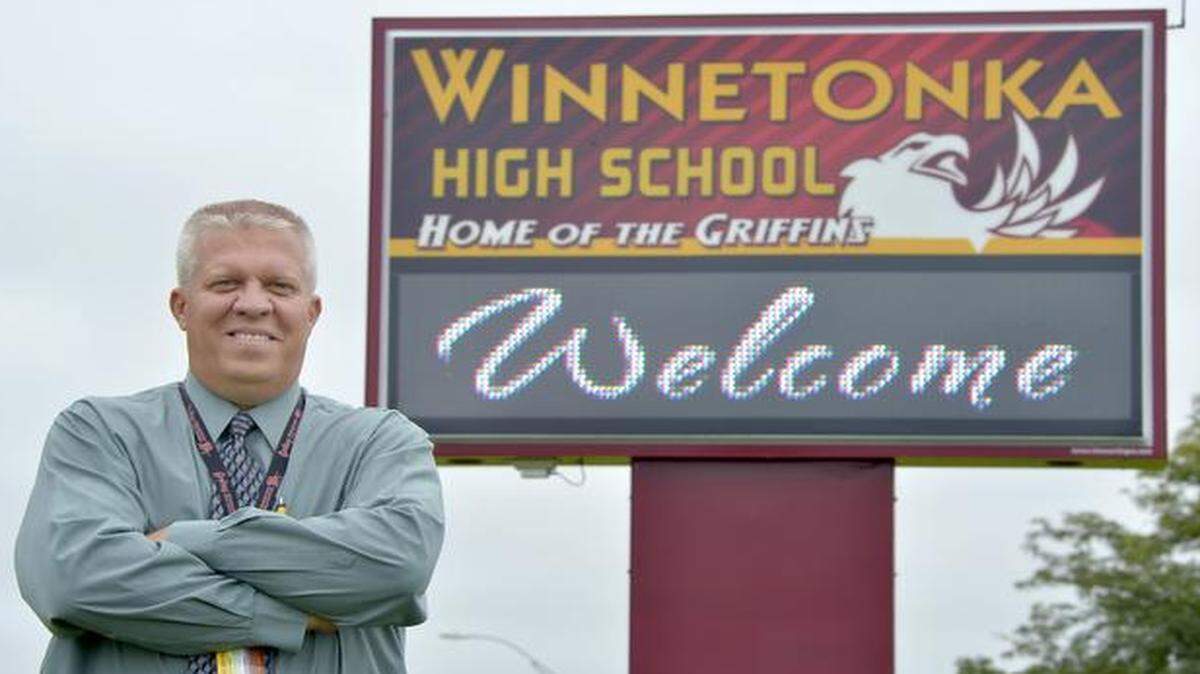
Kansas City is in a tizzy about digital signs. And the debate itself is a sign of changing times.
It’s a battle between groups who want the most modern communication tools versus people trying to preserve the traditional ambiance of areas where they live.
While these real-time message boards, using the latest electronic technology, are allowed at downtown locations like the Sprint Center and high-density commercial areas, they are banned in Kansas City’s residential neighborhoods.
But after several schools and at least one church inadvertently installed them where they weren’t allowed, the City Council is considering regulations that could permit at least some digital signs in residential areas. And that has ignited a spirited argument among pro-sign and anti-sign constituents.
“It’s horrible. It just commercializes,” said Carol Winterowd, a longtime south Kansas City neighborhood advocate who says she can support a modest compromise for some schools but believes allowing them for churches would go too far.
“Digital signs are aggressive,” said south Kansas City activist Terrence Nash, who worries a compromise will open the floodgates to everyone. “It degrades the neighborhood. We’re looking like Las Vegas and it’s going to be all over the place.”
Give schools a chance, retorts Allan Markley, superintendent in Raytown, where voters in April passed a $22 million bond issue that included several hundred thousand dollars for electronic signs. Nine schools within the Raytown city limits already have theirs, but seven district buildings in Kansas City can’t have the signs.
“Frankly, it dresses up the school,” Markley said. “We’re always trying to encourage parents and patrons to be involved in their schools.”
The Hickman Mills School District wants a digital sign for Ruskin High School, and several Northland churches say they shouldn’t be left out. One church has even sued over the right to have a digital sign.
Some people who have attended recent meetings on the issue can see both sides.
“I’m trying to keep an open mind,” said Rianna Deselich, vice president of the Kansas City Neighborhood Advisory Council, who has educated herself about how the signs work and ways to mitigate light pollution. “They’re here. We’ve got to live with them.”
Deselich suggests ways to regulate the brightness, frequency of messaging and hours they are lit while boosting enforcement. But so far she is pessimistic about chances for a compromise that won’t leave at least one group angry and upset.
Rogue signs
The debate got going in earnest earlier this year after Northland Councilman Ed Ford learned that the North Kansas City School District had installed non-conforming signs at three of its schools — Oak Park and Winnetonka high schools and New Mark Middle School — within the Kansas City city limits.
Booster clubs had raised thousands of dollars to replace old, broken signs, and the district didn’t realize they weren’t allowed until it was alerted by a city codes official.
“From my position, no one had complained about these signs,” Ford said. “The signs were disseminating useful and helpful information to patrons of the schools, and it just seemed to be a waste to require them to take the signs down.”
So he introduced an ordinance in May that would have allowed the Board of Zoning Adjustment to grant a special-use permit for a school or church situated on at least six acres to install a digital sign on an otherwise allowable monument sign. The message would change no more than once every 24 hours and would not be lit at night, among other restrictions.
Dan Clemens, assistant North Kansas City school superintendent for administrative services, said the signs continue to operate while the debate persists.
They are a great way, he said, to inform parents and community members without children about such things as football and volleyball games, theater productions and volunteer opportunities.
“We’ve not heard anything from our neighborhoods up here about our signs,” Clemens said.
But Frances Semler, a longtime Northland resident, worries about signs marring the area’s natural splendor.
“I see all this beauty, which we need for our souls,” she said. “I am concerned about the digital signs, that it will proliferate more and more.”
Some other neighborhood leaders like Winterowd are especially worried about the proliferation among churches because there are more than 1,000 of them in the city, many surrounded by houses, especially south of the Missouri River.
The ordinance went to City Plan Commission on July 1, but commission members postponed a vote, urging interested parties to try to reach consensus. Another commission hearing is scheduled Oct. 7.
Since July, Ford has proposed taking churches out of the mix, and a recent proposal would allow these signs only for secondary schools on at least 30 acres.
But Raytown still wants elementary school signs, with messages more frequent than one per day.
And if they’re allowed for schools, what about churches?
Northgate Baptist Church at 800 N.E. Vivion Road wants to install a digital sign to replace a sign that’s decades old. Digital would allow the secretary to change the sign from the office, instead of trudging outside in the rain and snow to change the lettering.
“We have tried for years to get permission to put a sign out there. We always run into a roadblock,” said Don Class, the church’s finance chair. Class understands the hesitation south of the river, but said churches are often set far back from houses north of the river.
Antioch Community Church at 4805 N.E. Antioch Road has even sued Kansas City’s Board of Zoning Adjustment over its refusal to allow a digital sign on a major thoroughfare.
The lawsuit, awaiting a Clay County circuit judge’s ruling, makes a First Amendment argument.
The church put a digital display in an existing monument sign several years ago with an $11,426 bequest from a parishioner’s estate. The lawsuit argues some stores along the same stretch of Antioch Road have digital displays, creating disparate treatment for commercial and non-commercial speech.
“It is patently unconstitutional to allow the Phillips 66 on Antioch Road to convey on its digital sign the commercial message of $3.16 per gallon of gas, while forbidding the Antioch Community Church from conveying on its digital sign the religious, noncommercial message of John 3:16 from the Bible,” attorney Bernard Rhodes wrote.
Assistant City Attorney Maggie Moran says the church is in a single-family residential district, where the city has never allowed digital signs.
Differing laws
The laws on digital signs are all over the map in the metro area.
Lee’s Summit passed an ordinance a year ago allowing them even in residential areas after a sign manufacturer pitched them as the new wave in advertising and communication. No neighborhoods have complained, said Bob McKay, that city’s director of planning and codes administration.
Independence, North Kansas City, Blue Springs, Liberty and Grandview are among metro cities that allow them, as do Wichita, St. Louis, Des Moines and Omaha, said Tony Hicks, regional sales manager for Watchfire LED Signs, a national manufacturer.
But many cities on the Kansas side, including Leawood and Prairie Village, prohibit them. Overland Park only allows time and temperature signs and interior store signs that say “open” or “closed.”
“The cities with higher property values do not have them,” said Nash, the south Kansas City neighborhood advocate who wants to keep the ban.
Ford and Northland Councilman Scott Wagner say they are ready to proceed with a proposal to include secondary schools but not elementary schools or churches. If the Plan Commission wants to broaden that definition on Oct. 7, Ford said, that’s fine. Just get something to the council next month, and the debate can continue.
As Wagner notes, it’s possibly a debate without end.
“I don’t think,” he said, “we’re in a situation where we’re going to be able to do something for everybody.”
To reach Lynn Horsley, call 816-226-2058 or send email to lhorsley@kcstar.com.
This story was originally published September 15, 2014 at 7:31 PM with the headline "Neighborhoods, schools, churches wrestle over digital signs."