
Supreme Court’s Obamacare decision could increase premium costs in Missouri and Kansas
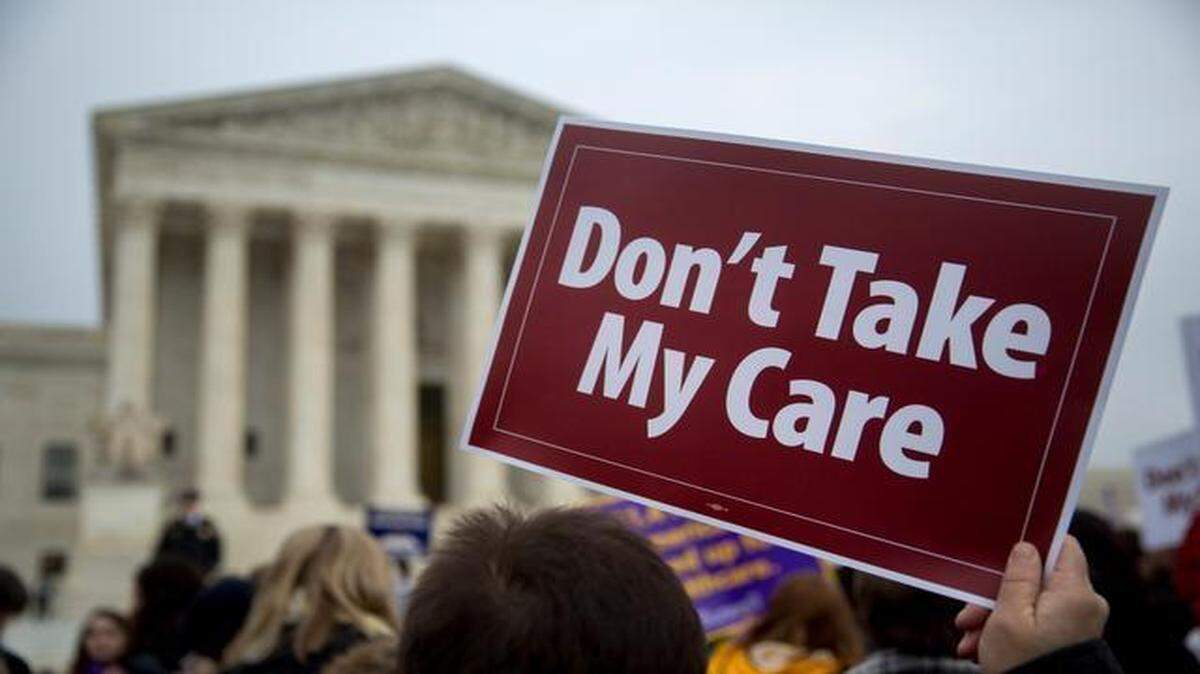
Tens of thousands of people in Missouri and Kansas could see their health insurance premiums double or triple if the U.S. Supreme Court declares the tax credits they receive through the Affordable Care Act illegal.
Such a ruling could send both states’ insurance markets into a “death spiral,” a nightmarish scenario of skyrocketing premiums and a financial crisis for hospitals, health policy experts say.
More than 7.5 million Americans — including 300,000 people in Kansas and Missouri — could lose their insurance subsidies. Thousands more could get slammed with higher premium bills, according to the U.S. Department of Health and Human Services.
Lawmakers in Congress and statehouses can act to mitigate any fallout. But so far, no alternative plan — or even a short-term fix — is anywhere close to passage.
Time is running out.
“The reality is that there are no plans in Congress to do anything that would repair or correct the language in question,” said U.S. Rep. Emanuel Cleaver, a Kansas City Democrat.
“I don’t think the average person has any idea about what’s going on with the Supreme Court until they wake up one morning and find out that they can’t afford their insurance anymore,” Cleaver said.
The court is expected to decide by the end of June whether to discontinue tax credits in states where the federal government operates the health insurance marketplace.
Plaintiffs in the case, King v. Burwell, argue that language in the 2010 Affordable Care Act — also known as Obamacare — restricts the payment of tax credits to only those people who live in the 16 states, and the District of Columbia, that have established their own insurance marketplaces.
The plaintiffs point to wording in the health care law that tax credits can only be obtained on coverage purchased “through an exchange established by the state.”
Kansas and Missouri are among 34 states that never set up their own health care exchanges, so consumers in those states use the federal marketplace at HealthCare.gov instead.
Kansans who purchased health coverage on the government-run site for 2015 qualified for an average tax credit of $211 per month, Health and Human Services data show.
In Missouri, the average credit was $281 per month.
If the high court ruling declares those credits illegal, more than 223,000 people in Missouri who signed up for insurance through the federal exchange would see an average premium increase of 330 percent, according to Avalere Health, a health care consulting firm.
The average increase for nearly 77,000 people in Kansas would be 228 percent.
But the pain wouldn’t just be felt by those receiving tax credits.
Premiums also would rise dramatically for anyone who is covered through private, nongroup insurance in Missouri, Kansas and other affected states, regardless of whether they qualified for any subsidies.
Recent studies by the Urban Institute, a centrist think tank, and Rand Corp., a federally funded research center, estimated that unsubsidized premiums would spike between 35 and 47 percent if the high court denied tax credits to people in states that don’t have their own exchanges.
Those who receive coverage through their employers’ group plans likely would not be affected.
The problem is that insurance markets need balanced risk pools — a mix of young and old, sick and healthy people — to keep premiums down.
About 40 percent of those who signed up for coverage through the marketplace in Missouri and Kansas this year were under 35, according to Health and Human Services.
If those relatively young and healthy people lose their subsidies, insurance companies expect the vast majority will drop their health plans, said Matt All, senior vice president and general counsel at Blue Cross and Blue Shield of Kansas.
“It’s very likely that many, if not most of them,” All said, “would not be able to afford coverage.”
That leaves a disproportionate number of older, sicker patients in the insurance risk pools, driving up costs.
“Premiums are going to skyrocket,” said Ron Pollack, executive director of Families USA, a national organization for health care consumers. “Most analysts believe we will see a ‘death spiral’ of health insurance in the states because the premiums will increase enormously.
“And as more and more people drop out, they will go up even more.”
Many insurance companies might decide not to do business in the affected states, he said.
And hospitals would suffer financially, especially in low-income communities.
“They’re going to have more and more patients coming to them who don’t have health insurance and can’t pay the bill,” Pollack said. “In rural, lower-income communities, a lot of those hospitals may wind up having to go out of business.”
The likelihood that Congress will fix the problem is slim to none, he said.
“Congress could amend the statute to ensure that people continue getting these subsides,” Pollack said. “But then you have to take a look at this Congress and remember that every Republican that ran for office ran on the platform that they were going to kill the Affordable Care Act, so why would they vote to extend the subsidies?”
Republicans say they’re working on a solution that would completely replace the health care law.
Rep. Fred Upton of Michigan and Sens. Orrin Hatch of Utah and Richard Burr of North Carolina, all Republicans, unveiled the outline of a proposal in February that would eliminate the requirement that everyone buy coverage and would stop the expansion of Medicaid.
Their proposal — the Patient Choice, Affordability, Responsibility, and Empowerment (CARE) Act — would keep some popular provisions of the Affordable Care Act. For instance, it would still allow children to stay on parents’ policies until age 26, although states would be allowed to opt out.
Under that Republican plan, states also would have more control over deciding which benefits insurance must offer. People with pre-existing conditions could not be charged more as long as they kept continuous coverage. And those within 300 percent of the poverty line — about $35,000 for a single person — would be eligible for tax credits to help pay premiums.
The proposal is far from finalized, not yet drafted into a formal bill.
The lack of progress worries Linda Sheppard, senior analyst for the Kansas Health Institute, a policy research organization in Topeka.
“It’s scary,” Sheppard said. “I haven’t seen a widespread jump (by lawmakers) to get on board, or even to start debating some of these alternatives. June is not that far away, so the question is when are those discussions going to start in earnest?”
As a stopgap measure, Sen. Ben Sasse, a Nebraska Republican and ardent Obamacare critic, introduced legislation last month that would cover 65 percent of enrollees’ premium costs for 18 months if a Supreme Court ruling makes them ineligible for credits.
In a Wall Street Journal opinion piece, Sasse warned that Republicans could face a “crippling” political backlash if the high court ends the subsidies.
“Chemotherapy turned off for perhaps 12,000 people, dialysis going dark for 10,000. The horror stories will be real,” he wrote. “What will happen next is predictable: a deluge of attacks on Republicans for supposedly having caused this.”
He fretted that many states would succumb to pressure to “adopt” Obamacare and open their own exchanges.
His bill, Sasse argued, would give Republicans time to come up with a long-term solution.
Cleaver commended Sasse for taking initiative, but he said the proposal seems imprudent.
“What will happen after the 18-month transition, when we are right back where we started?” Cleaver asked. “These are people’s lives, after all, and my colleagues in Congress have had years to come up with an alternative. Why should we take them at their promises when their practices speak volumes?”
To reach Lindsay Wise, call 202-383-6007 or send email to lwise@mcclatchydc.com. On Twitter: @lindsaywise.
States that rely on the federally run health insurance marketplace
Missouri, Kansas, North Dakota, South Dakota, Montana, Wyoming, Utah, Arizona, Texas, Oklahoma, Arkansas, Nebraska, Iowa, Illinois, Wisconsin, Michigan, Indiana, Louisiana, Tennessee, Mississippi, Alabama, Florida, Georgia, South Carolina, North Carolina, Virginia, West Virginia, Ohio, Pennsylvania, New Jersey, New Hampshire, Maine, Alaska, Delaware
This story was originally published April 9, 2015 at 3:40 PM with the headline "Supreme Court’s Obamacare decision could increase premium costs in Missouri and Kansas."