
Sen. Claire McCaskill of Missouri pivotal, but so far noncommittal, on bill to block pact with Iran
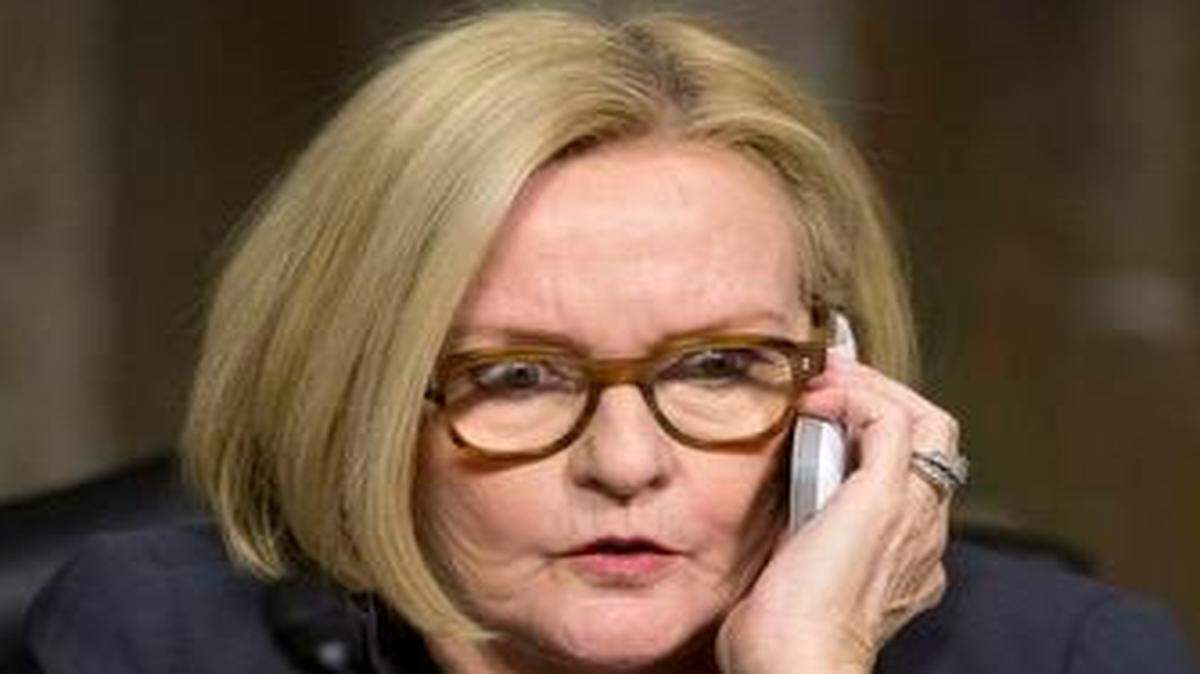
Sen. Claire McCaskill of Missouri could cast a pivotal vote on a bill that the White House has said violates President Barack Obama’s right to conduct foreign policy and could effectively kill a deal to restrict Iran’s nuclear program.
Introduced by Senate Foreign Relations Committee Chairman Bob Corker, a Tennessee Republican, and Sen. Bob Menendez, a New Jersey Democrat, the legislation would require congressional review of any nuclear deal and prohibit the lifting of sanctions against Iran for at least 60 days.
White House chief of staff Denis McDonough warned in a letter to Corker last month that the bill could have a “profoundly negative impact on the ongoing negotiations” and “potentially prevent any deal from succeeding.”
The bill now appears to be one vote shy of a veto-proof majority in the Senate. McCaskill, a moderate Democrat, is on the fence.
The tentative agreement reached last week calls for strict limits on Iran’s ability to enrich uranium and conduct other nuclear activities. In return, the U.S. and other nations would lift economic sanctions that have crippled the Iranian economy. The parties have agreed to a June 30 deadline for a final accord.
McCaskill is one of a handful of centrist Democrats who has bucked her party before on votes crucial to Republicans’ agenda in the Senate — or to Democratic efforts to block the GOP.
She recently sided with Republicans in a failed attempt to override Obama’s veto of a bill approving construction of the Keystone XL Pipeline.
Republicans need 13 Democrats to vote with them to reach the 67-vote threshold to overcome a presidential veto.
So far, eight Democrats and one independent who votes with the Democrats, Sen. Angus King of Maine, have signed on as co-sponsors of the Iran bill. Three more Democrats have indicated they would support it: Sens. Mark Warner of Virginia, Ben Cardin of Maryland and Christopher Coons of Delaware.
McCaskill is waiting to see a final draft of the legislation before committing, her spokesman said, a position that could make her the target of intense lobbying from Republicans and the Obama administration.
“Without knowing what legislation will come out of the Foreign Relations Committee, Claire’s reserving judgment until we see that product,” said John LaBombard, McCaskill’s spokesman.
LaBombard said McCaskill thinks Congress needs to have a role in the process, but she also believes “that we should refrain from any action that could disrupt the negotiations prematurely and give the Iranians an excuse to abandon these talks and blame the U.S.”
Democrats who are wary of scuttling the nascent deal with Iran could negotiate changes to the bill before a scheduled vote by the Foreign Relations Committee next Tuesday. After that, the bill is likely to go before the full Senate for a vote late this month or next. Negotiators have until June 30 to hammer out the final details of an agreement with Iran.
Obama told The New York Times in an interview Saturday that he’s concerned the framework of a deal with Iran is vulnerable to “backtracking and slippage and real political difficulties, both in Iran and obviously here in the United States Congress.”
His hope, he added, “is that we can find something that allows Congress to express itself but does not encroach on traditional presidential prerogatives and ensures that, if in fact we get a good deal, that we can go ahead and implement it.”
The White House has “reached out very aggressively” to members of Congress to make the case that Iran has committed to curtail — and in some areas roll back — the scope of its nuclear program, White House spokesman Josh Earnest said Monday in a news briefing.
“We want members of Congress to consider possible action based on the merits of the agreement,” Earnest said. “We’re confident that if they do, that they will respect the purview of the president’s authority.”
He accused Republicans of trying to undermine the deal, but acknowledged that some Democrats want Congress to have the opportunity to weigh in.
“What we have said is, ‘Look, it is clearly within the purview of the president of the United States to conduct foreign policy, and we do believe that Congress should play their rightful role in terms of ultimately deciding whether or not the sanctions that Congress passed into law should be removed,’” Earnest said.
Lesley Clark of McClatchy Newspapers contributed to this report.
To reach Lindsay Wise, call 202-383-6007 or send email to lwise@mcclatchydc.com. Follow her on Twitter: @lindsaywise.
This story was originally published April 6, 2015 at 5:15 PM with the headline "Sen. Claire McCaskill of Missouri pivotal, but so far noncommittal, on bill to block pact with Iran."