
Study: St. Luke’s cuts radiation in heart scans by 60 percent
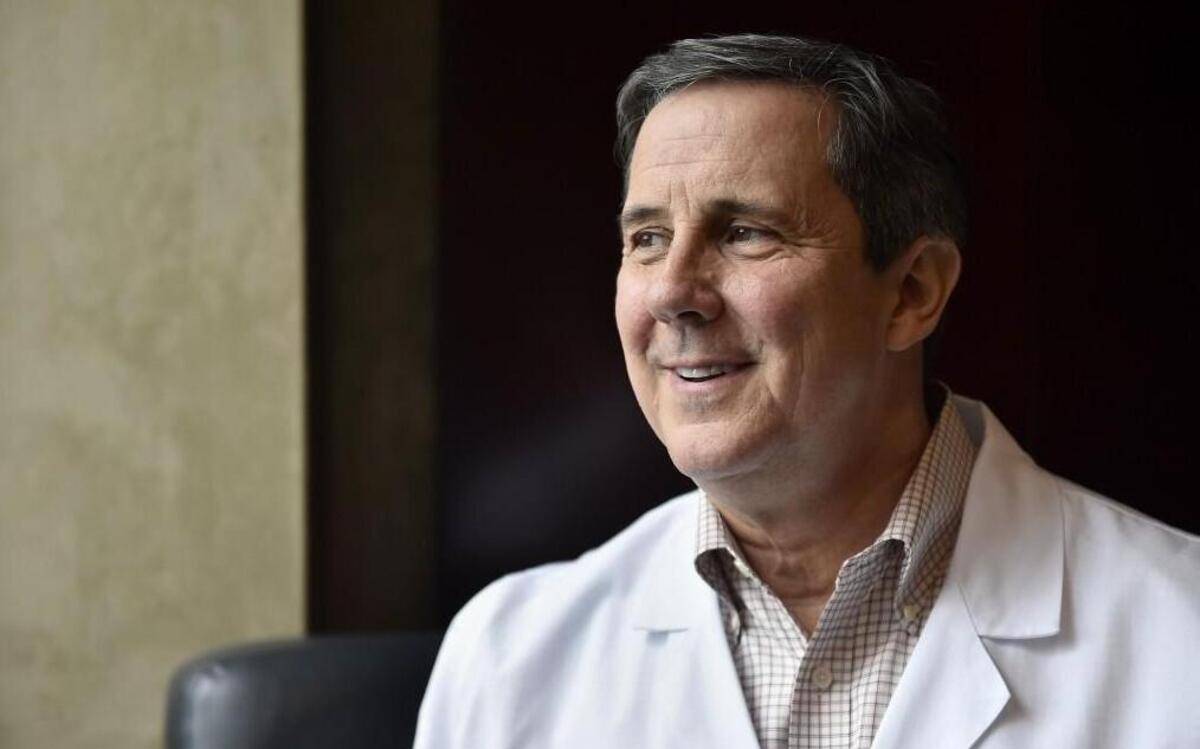
Cardiologists at St. Luke’s Mid America Heart Institute say they have cut patients’ radiation exposure from a common heart scan by 60 percent by upgrading technology and changing protocols.
Randall Thompson, a cardiologist at the institute, presented the findings of an almost eight-year study Sunday at the International Conference on Nuclear Cardiology and Cardiac CT in Vienna, Austria.
He said Wednesday that the study has changed the way the institute performs single-photon emission CT myocardial perfusion imaging, or SPECT MPI scans, which uses radioactive material to detect blockages in blood vessels near the heart before and after bypass surgeries.
“The (change in the) amount of dose we give is quite dramatic compared to what we did a few years ago and what most people do now,” Thompson said.
Thompson emphasized that even at the former dosage levels, the risk of developing cancer from the radiation was very small — about 1 in 1,000 patients after 20 years in a worst-case scenario.
But he said it’s still worth reducing.
“If you’ve got a heart problem the benefit almost always outweighs the risks, but there’s so many scans — people getting X-rays from medical sources — that folks have gotten concerned about just general population dosage and it makes sense,” Thompson said. “The common principal is to do this at as low a dose as possible.”
To that end, Thompson said St. Luke’s upgraded its cameras and image processing software about five years ago to get better scans with less radiation and also moved to a multistep process that scans patients with a “stress” test — measuring blood flow after exercising — and then moving to a “rest” test scan only if the first shows abnormalities. The two tests used to be performed in tandem.
The reductions in radiation exposure were “striking,” Thompson said, even though St. Luke’s was seeing a large number of obese patients, who sometimes require higher-radiation approaches to get a good heart scan.
“The dose is still lower than it used to be in obese patients,” Thompson said.
The researchers’ findings, based on more than 18,000 scans from January 2009 to September 2016, were published this week in the Journal of the American College of Cardiology.
Thompson said the research was well-received at the international conference and he’s been asked to write an expanded paper.
“The leaders of our specialty of the medical society have recently taken on an effort to get folks to move more toward the lower radiation approaches, so it was quite timely,” Thompson said. “… Our imaging community has not moved fast enough in lowering radiation dosage. Not as fast as we should.”
Thompson said he’s hopeful the approach St. Luke’s has taken will spread.
There are obstacles. The new equipment costs money and the new protocols consume more physician time.
But Thompson said it’s worth it.
“It makes sense to have as little radiation as you can,” he said.
Andy Marso: 816-234-4055, @andymarso
This story was originally published May 11, 2017 at 1:58 PM with the headline "Study: St. Luke’s cuts radiation in heart scans by 60 percent."