
New Laura Ingalls Wilder book tells the real ‘Little House’ story
Shocking news, “Little House” fans: Jack the brindle bulldog got left behind in Kansas.
We’re learning this and other Laura Ingalls Wilder revelations now because Wilder has a new book out, 85 years after she wrote it.
And good luck finding a copy, by the way.
“Pioneer Girl: The Annotated Autobiography” marks the first time the author’s truly true story in her own words has been published. Until now, the unedited, written-in-pencil memoir was available only on microfilm.
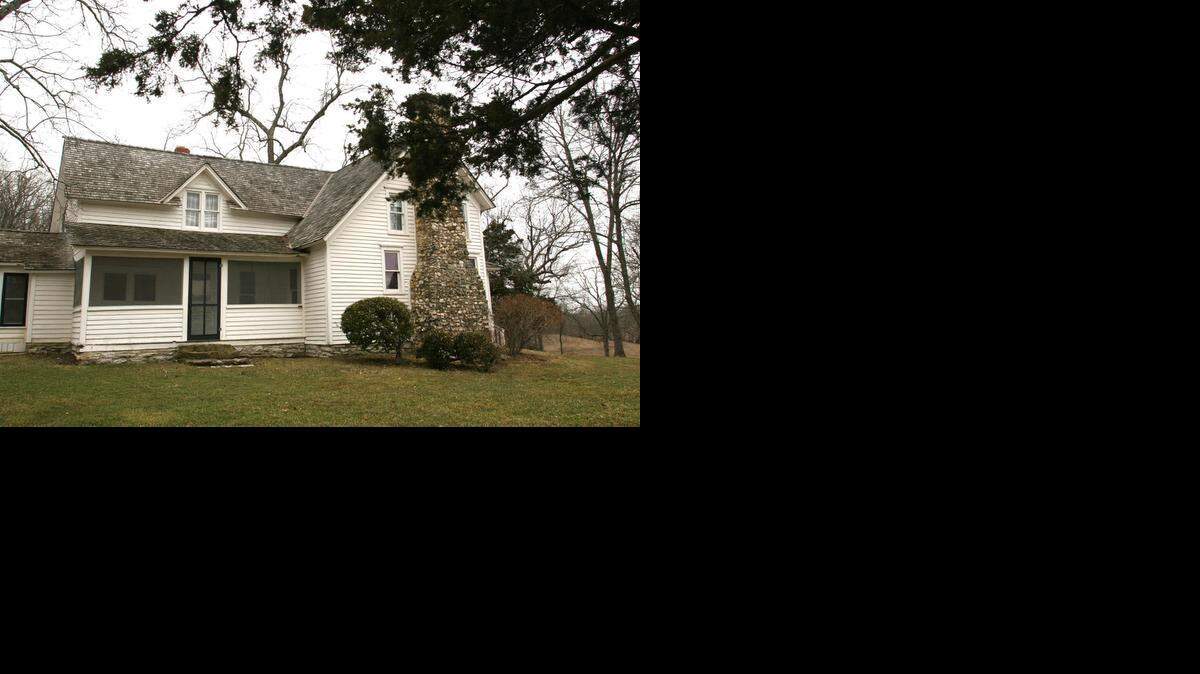
Apparently motivated by the death of her big sister Mary in October 1928, Wilder wrote it in 1929-30 at her Rocky Ridge Farm in Mansfield, Mo., about 50 miles east of Springfield. From that story of her life between ages 2 and 18 would eventually spring the beloved “Little House” series of eight fictionalized children’s books.
Maybe you diehard fans have heard that some salacious tales can be found in “Pioneer Girl” — a married shopkeeper’s infatuation with a female employee! A love triangle involving a young doctor! That stuff, however, turns out to be mostly town gossip from when the Ingalls clan lived in Burr Oak, Iowa, running a hotel (a period that didn’t make it into the kids books) and in Walnut Grove, Minn.
Among other material that didn’t show up in the “Little House” books: the death of Laura’s baby brother, Freddie, and, during “The Long Winter,” the presence of another family sharing the Ingalls’ home.
There were certainly dark moments in the children’s books, but “Pioneer Girl” paints a coarser, more realistic picture.
What surprised the editor of this new Wilder book as she was researching the manuscript and Wilder’s life?
Yep, the fate of the loyal bulldog, for one. Turns out that Charles Ingalls exchanged the pooch and some ponies for a pair of horses.
“I couldn’t believe that Pa traded Jack off,” Pamela Smith Hill says by phone from Portland, Ore. “I had to read that a couple of times.”
So Jack is “essentially a fictional creation,” not part of his pioneering family’s trek West in the late 1800s.
Something Hill found “charming” in Wilder’s manuscript was that real-life Laura was much more interested in the opposite sex than her “Little House” character — and that she certainly had more beaus than just Almanzo, her eventual husband.
The first of Wilder’s children’s books was “Little House in the Big Woods.” Of Wisconsin.
If we could do footnotes in a newspaper story, we’d do one here to say that, yes, Wilder was born in Wisconsin (in 1867), but she starts her autobiography in “Indian Territory” (specifically near Independence, Kan.). That’s where the family lived in 1869-71 before returning to the land of cheese.
The Ingallses of the children’s books, however, don’t get to Kansas until the next installment, “Little House on the Prairie.”
And if we could do another footnote, we’d add that when the family lived in Kansas, they were squatting illegally on Indian land.
But we digress, and so does this new book. The heart of it is Wilder’s manuscript, a rough draft of “Pioneer Girl” including misspellings and even one “not to be used” anecdote for the family’s eyes only. (It was the tale of Pa being surrounded by wolves on the Kansas prairie, which did end up getting published.)
Wilder’s memoir is printed alongside Hill’s detailed footnotes. Hundreds of them.
For instance, three notes elaborate on Wilder’s first sentence — Once upon a time years and years ago, Pa stopped the horses and the wagon they were hauling away out on the prairie in Indian Territory. One discusses changes later made to the opening phrase, one is a mini-biography of Charles Ingalls and one is about Indian Territory.
“It’s kind of like reading an encyclopedia on Laura Ingalls Wilder,” says Hill, whose book “Laura Ingalls Wilder: A Writer’s Life” was published by South Dakota Historical Society Press in 2007. She and staffers there spent four years on the “Pioneer Girl” project.
Hill grew up just outside Springfield. From the moment she picked up her first “Little House” book as a kid, she was “intrigued by the idea that the Laura Ingalls in the books grew up to become Laura Ingalls Wilder, who wrote them.”
She already knew she wanted to be a writer, but until then she’d thought writers lived in New York or California. Seeing Wilder’s handwritten manuscripts at the farmhouse in Mansfield “gave me hope, and made the act of writing seem real, even possible.”
In addition to photos, maps and images of pages from Wilder manuscripts, the book also includes a 45-page introduction (with footnotes, too). Hill illuminates how Wilder, in her early 60s, went from former columnist for the Missouri Ruralist farm paper to wildly successful children’s author.
Fans probably already know much of that story, but for anyone else the annotated version is “a great way to learn almost everything there is out there in one fell swoop,” says Wendy McClure, author of the 2011 memoir “The Wilder Life: My Adventures in the Lost World of ‘Little House on the Prairie.’”
Hill’s introduction tries to explain the working relationship between Wilder and her author daughter, Rose Wilder Lane. At a minimum, Lane acted as editor and mentor for her mother.
Beyond that, Lane deserves credit for being the person who got the wagon wheel rolling on the “Little House” books. After Wilder presented her “Pioneer Girl” manuscript — intended for an adult audience — to her daughter, Lane worked on the draft and shopped it around to publishers.
When she found no takers, she decided to use several stories that had been trimmed from “Pioneer Girl” for a “juvenile” book, which she also shopped around.
Without telling her mother.
Later, just as “Little House in the Big Woods” was coming out in 1932, Lane confessed she’d secretly used her mother’s “Pioneer Girl” story as the basis for her own new novel “Let the Hurricane Roar,” even down to main characters named Charles and Caroline (the name of Laura’s mother).
“I think that Wilder felt betrayed by this,” Hill says. “Her well-known daughter had published a book using ‘Pioneer Girl’ material, and I suspect Wilder felt that her daughter’s book would undercut the popularity” of her own book.
Hill says the two of them worked through that crisis, however, and went on to collaborate on the rest of the “Little House” books.
Hill also makes the point in her introduction that as Wilder molded episodes from “Pioneer Girl” into the “Little House” novels, “she grew both as a writer and ultimately as an artist, creating dynamic characters, building more suspenseful stories and manipulating her themes more masterfully.”
Lane’s greater gift to her mother, Hill concludes, might not have been the time she spent editing and coaching her. It might have been in realizing that within Wilder’s autobiography “were stories and characters with intrinsic and universal appeal to children.”
McClure, also a children’s book editor and writer (the “Wanderville” series) in Chicago, found this version of Wilder’s story “a different reading experience.” It was in some ways “a little warmer than the typed version I’d seen that had already gone through a couple of edits.”
If all this Wilder talk has you itching to tuck in to the big book, we counsel patience. It can be hard to find.
South Dakota Historical Society Press printed just 15,000 copies last November, which were quickly snapped up. Hill heard from someone the other day who pre-ordered his copy last August from Amazon and still hadn’t gotten it.
A third printing is underway now. (No date has been set for releasing an e-book version, which will be complicated given all the footnotes and such.)
McClure, in addition to reviewing “Pioneer Girl,” wrote a blog post on the 19th century “dreamy dudes” pictured in the book (who knew young Manly Wilder was a hottie?). Obviously, she says, there are a lot of “Little House” geeks out there.
“It seems really amazing,” McClure says, “that a $40 hardcover book that is mostly footnotes would be in such demand.”
To reach Tim Engle, call 816-234-4779 or send email to tengle@kcstar.com. On Twitter @tim_engle
HELLO, HALF-PINT
Here’s the first reference in “Pioneer Girl” to Laura Ingalls as “Half Pint” — and what she was a half pint of:
(Pa) would come in from his tramp to his traps, with (icicles) on the ends of his whiskers, hang his gun over the door, throw off his coat and cap and mittens and call “Where’s my little half pint of cider half drank up?” That was me because I was so small. …
A footnote explains that when Wilder introduced her nickname in Chapter 2 of “Little House in the Big Woods,” it had become “little half-pint of sweet cider half drunk up.”
WILDER HISTORIC SITES NEARBY
▪ Laura Ingalls Wilder Historic Home and Museum in Mansfield, Mo., “where the ‘Little House’ books were written,” is the site of the Wilders’ Rocky Ridge Farm. Laura and Almanzo Wilder and their daughter, Rose, moved to Mansfield from South Dakota in 1894. The historic site claims the most comprehensive collection of Ingalls/Wilder memorabilia, including the school tablets Laura Wilder used to write “Pioneer Girl.” Opens for the season March 1. lauraingallswilderhome.com
▪ Little House on the Prairie Museum in Independence, Kan., includes a reproduction one-room cabin like the one the Ingalls family lived in (1869-71), plus a well Charles Ingalls dug. Opens for the season April 1. littlehouseontheprairiemuseum.com
LECTURE AND ONLINE CLASS
▪ Pamela Smith Hill, Wilder biographer and editor of the annotated “Pioneer Girl,” will speak at 7 p.m. Monday in Springfield, at Missouri State University’s Meyer Alumni Center, 300 S. Jefferson Ave. Her books (including “Pioneer Girl”) will be for sale. Free and open to the public. 417-836-8803.
▪ Hill also teaches a free online Wilder course through Missouri State. Almost 7,000 people signed up for the first part. Part 2 starts April 6. More info: outreach.missouristate.edu/wilderlateryears.htm or call the number above.
This story was originally published January 23, 2015 at 12:28 PM.