
Black playwrights fill seats beyond traditional theater establishment
As respected as black playwrights August Wilson, Lorraine Hansberry, Suzan-Lori Parks and Lynn Nottage are in the nonprofit theater world, none of them attracts African-American viewers in big numbers.
To see that, you have to look elsewhere.
There’s a generation of African-American playwrights whose work is seldom, if ever, produced in regional nonprofit theaters. Instead, their work can be seen in for-profit tours that play some of the biggest theaters in each market, fueled by TV spots and promotions in black churches.
Case in point: “Mrs. Independent,” which can be seen in three performances Friday and Saturday at the Music Hall.
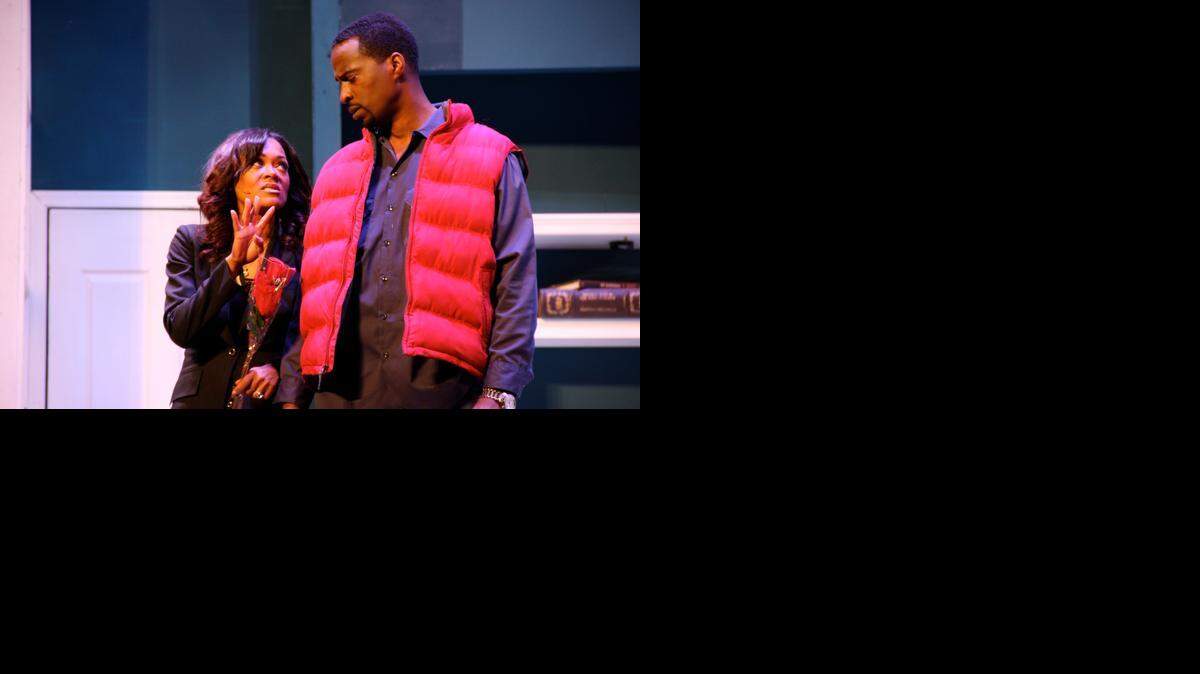
Playwright/producer Priest Tyaire expects to sell thousands of tickets in Kansas City. He wrote and directed “Mrs. Independent” and assembled a cast of seasoned actors and singers, including Robin Givens in the title role.
Tyaire, who also performs in the show, is a self-taught dramatist and a learn-by-doing producer who has found commercial success on a circuit that’s virtually invisible to the mainstream theater world.
But he’s not the first and likely won’t be the last.
The show’s tour route follows what we now call the urban theater circuit — big venues where plays that are not musicals are rarely performed. The urban circuit has its origins in what was referred to as the “chitlin’ circuit,” now considered a derogatory term. These theater circuits catered exclusively to African-American audiences during segregation.
“My mother took me to see my first stage play at the age of 14,” said Tyaire, a native of Wilmington, Del. “I didn’t want to go because I thought plays were for girls. But I’ve been hooked ever since.”
Tyaire wrote his first play, “Tears of a Teenage Mother,” in 2006 as a tribute to his mom, who was dying of cancer. His only goal was to write his mother’s story, who had two kids by the time she was 15 but went on to earn a master’s degree when she was 52.
Tyaire knew almost nothing about how to write and produce a play, but he located actors and singers through his church and put the show up. Sadly, his mother passed away two weeks before opening night. But the show became a surprise hit. After selling out several performances, Tyaire had to consider the possibilities.
“I just wrote it to honor her,” he said. “I never looked at it as a business venture. But I changed from writing a tribute to my mother to being a playwright.”
Tyaire is trained as an electrician and owns a detailing shop in Wilmington, but he’s now riding the crest of a full-fledged show business career. He hopes to move into TV and films. To do so would be to follow a trail blazed by other African-American playwrights, such as Je’Caryous Johnson, David Talbert and, most notably, Tyler Perry.
A successful screenwriter, director and producer, Perry began by writing plays and taking them on tour. He created his signature role of Madea, a tough, older black woman who is the central figure in several of his plays and movies.
And it was to Perry he turned when Tyaire needed to learn how to write a play.
“When I first wrote ‘Tears of a Teenage Mother,’ I went and purchased every Tyler Perry DVD on the shelf,” he said. “And I learned a lot about timing and blocking. But I have my own identity. We have similar paths but different writing styles. That’s how he made his mark, writing plays, but I didn’t study his writing style. I had no idea how to structure a play but learned a lot from his (DVD) commentaries.”
Tyaire’s plays appear to be an outgrowth — or refinement — of so-called gospel musicals that matched music with storylines that mixed comedy and melodrama capped with an uplifting message.
Tyaire said he’s trying to do something different. His plays, he said, are expressions of his own experiences. “Mrs. Independent,” for example, is based on a relationship in which his girlfriend made more money than he did, which became a sore point between them.
“It’s not going to be the stereotypical ‘Mama, I Burned the Chicken,’” he said. “‘Mrs. Independent’ is actually based on a real story. Women aren’t stay-at-home moms anywhere, whether it’s Kansas City or any other place.”
Still, Tyaire’s description of the play suggests that in some ways it follows the gospel musical model. He said there’s a clear spiritual message and the production includes seven songs, six of which he wrote or co-wrote. And the cast includes gospel star Dottie Peoples.
“I would love to consider this play a musical but unfortunately Broadway wouldn’t consider it a musical,” he said.
Tyaire said he would welcome a more diverse audience.
“I would say, as of right now, 90 to 95 percent of my market is black women,” he said. “That’s not to say we haven’t crossed over to some white women and white men.”
Rashida Z. Shaw, an assistant professor at Wesleyan University, spent about four years studying the urban theater circuit and the playwrights who have found success as she earned a doctorate from Northwestern University. It was research for her dissertation, “Theatrical Events and African American Audiences: A Study of Contemporary ‘Chitlin Circuit’ Theatre,” which she hopes to rework into a book.
“It’s been successful since the ’80s,” Shaw said. “And I think Tyler Perry … sort of blew it out of the water, because he created a brand out of this subgenre of African-American musical theater. Tyler Perry is not the only millionaire but he is the go-to person because of the brand he created.”
Shaw said she decided to learn more about urban theater after seeing a bootleg video of the stage production of Perry’s “Diary of a Mad Black Woman.”
“I was blown away by the production quality that equaled Broadway productions,” she said. “It had a functioning two-level set and you could hear the audience responding on the tape. I was very cognizant that African-Americans were filling the seats more than two weeks after opening night.”
Since few of the plays from the urban circuit have been published, Shaw had no choice but to begin attending performances. Lots of them. She was also freelancing for Time Out Chicago and had opportunities to interview some of the playwrights.
The productions proved to be variable in quality, which she said reflected the eagerness of inexperienced producers or concert promoters who saw the monetary success of some playwrights.
“Some of the shows I attended didn’t even materialize,” Shaw said. “It is such a lucrative field of entertainment, there are producers and artists who aren’t actually involved in theater. I’ve actually been sitting in the auditorium when the the lights don’t work, the sound doesn’t work and the door on the set doesn’t open.”
In terms of cultural awareness, Shaw said the African-American playwrights vaunted in the nonprofit theater world are unknown to most of her young black students.
“As someone who has been teaching this for a number of years, I’m not surprised,” she said. “When I ask them about their exposure to African-American theater, it’s Tyler Perry unless they happen to have gone to a school where August Wilson is included in the syllabus.”
Tyaire seems to be enjoying his success so far, but he’s got an eye on the future.
“I think theater is going to be looked at as my breakthrough,” he said. “I love theater. I love breaking the fourth wall with the audience. But I’m going to have to cross over into movies and television.
“You have some people who just don’t go to stage plays but they do go to movies. I’m not trying to reinvent the wheel because it’s not broken. I can walk the path that he (Perry) has paved.”
Harvey Williams, an actor, director and playwright, had a new kind of theater in mind when he founded Melting Pot KC, which performs at Just Off Broadway Theatre. His goal was to reflect diversity by cultivating new plays that depicted a cross section of American society, including contemporary African-Americans. He wanted to get away from the model of August Wilson or Lorraine Hansberry, whose plays are viewed through the gauze of history — which, more or less, is what Tyaire wants to do.
But Williams said it made sense to market to the churches — although traditional churchgoers might not necessarily feel comfortable with hard-hitting contemporary drama.
“Churches are still probably the No. 1 conduit for reaching the urban audience, so to speak,” he said. “It really depends on how you want your overall image to be.”
Onstage
“Mrs. Independent” plays Friday and Saturday at the Music Hall. Call Ticketmaster at 800-745-3000 or go to www.ticketmaster.com.
This story was originally published October 1, 2014 at 7:00 AM with the headline "Black playwrights fill seats beyond traditional theater establishment."