
Kronos Quartet creates multifaceted work for World War I centennial
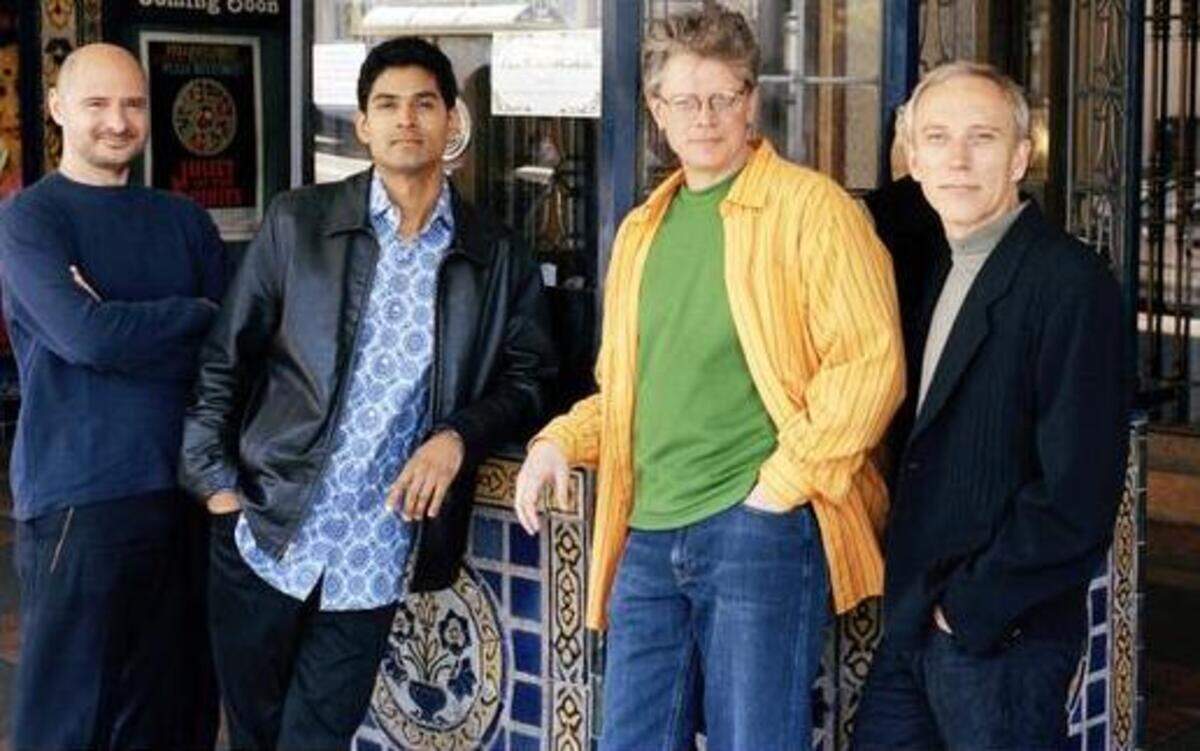
War is terrifying, chaotic and surreal. This was the attitude of Kronos Quartet’s new work, “Beyond Zero: 1914-1918,” a collaboration with composer Aleksandra Vrebalov and filmmaker Bill Morrison, commemorating the centennial anniversary of the start of World War I.
The piece does not celebrate or romanticize war, 100 years ago or otherwise. It’s raw and loud, confusing, frightening and mournful — and an enthralling, emotive experience.
Kronos Quartet is David Harrington (violin), John Sherba (violin), Hank Dutt (viola) and Sunny Yang (cello). They performed Saturday night in Kauffman Center for the Performing Arts, presented by the Harriman-Jewell Series. The series also helped commission the piece, along with the National World War I Museum at Liberty Memorial.
The performance began, really, as the audience filtered in, with period pieces broadcast into the hall. The quartet was off stage when the lights went down, bringing attention to a recording of the melismatic, meditative Byzantine chant “Eternal Memory to the Virtuous.”
This chant began a collage of pieces from the era, titled “Prelude to a Black Hole,” creating a narrative that set the tone for the large-scale, multimedia finisher.
String quartet miniatures from Igor Stravinsky and Anton Webern were matched with arrangements of vernacular sources from Turkish and Greek folk music and American blues singing, linked by drones and period recordings, including Charles Ives singing his own “They Are There!” Lighting further designated mood shifts.
This section ended with an arrangement of Sergei Rachmaninoff’s “Nunc Dimittis,” the final low tone in the cello becoming the first strains of “Beyond Zero: 1914-1918.”
Vrebalov created a tireless, terrifying score, also incorporating recordings, not least the ever-present mechanical whirr of film. Elements of chant were layered over siren wails, while sliding harmonics insinuated a sobbing quality. It was a hectic score with ever-increasing tension of tremolo, tormented melodic lines and aggressively snapped pizzicato.
Morrison’s film supported the score, an organic story arc of preparation, battle and consequence, the flickering, distorted images culled from archival recordings. The deteriorating material created a variety of hues, retroactively coloring the black and white pictures orange and sky-blue, enhanced by the bright splatters of corrosion, familiar yet ambiguous.
The score returned to the Byzantine chant, ending with ringing tam-tams and a decaying drone, against the final unsettling, haunting image of a lone aviator.
Following the intensity of the piece, the quartet concluded the performance with an encore of the Swedish folk song “Tusen Tankar,” the murmuring, prayerful melody serving as cleansing balm.
This story was originally published October 19, 2014 at 7:57 AM with the headline "Kronos Quartet creates multifaceted work for World War I centennial."