
The story is thin but the music is hot in ‘Motown the Musical’
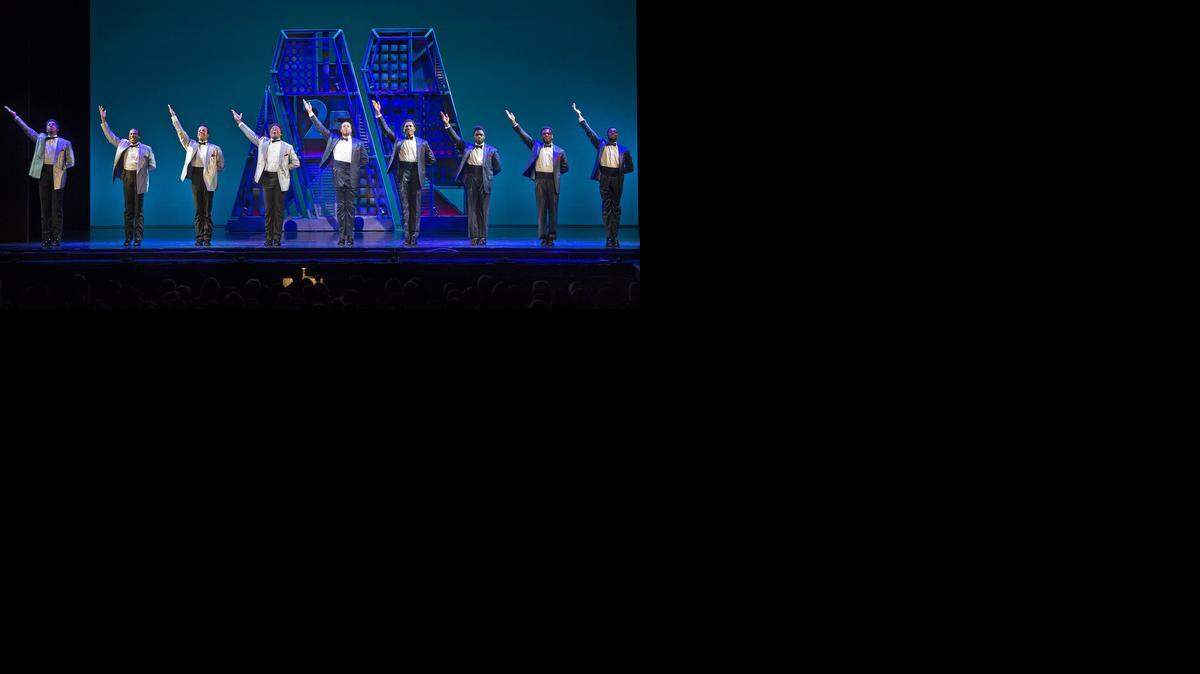
The theatergoers at the Music Hall really liked the opening night performance of “Motown the Musical.” And I’m very happy for them.
They cheered each time an actor playing an instantly recognizable Motown star appeared, and burst into spontaneous applause in the middle of numbers. They loved young Reed L. Shannon, who channeled Michael Jackson from the Jackson Five era. They adored Allison Semmes as Diana Ross. They were charmed by Jesse Nager as Smokey Robinson. All in all, it was a festive atmosphere Tuesday during the first local performance of this Broadway hit about the legendary record label.
The central character is songwriter/producer Berry Gordy, played Tuesday by understudy Jamarice Daughtry. Gordy, of course, founded the Motown label and nurtured a phenomenal stable of music stars with a controlling, parental hand.
This show opens and closes in 1983, the day of a TV special celebrating Motown’s 25th anniversary. The dramatic tension, such as it is, pivots on Berry’s conflicted emotions and indecision about whether he should make an appearance alongside the stars he developed but eventually left the label to continue careers with other record companies.
The rest of the show is a long flashback, in which we see how Gordy built the legendary label from the ground up. We watch it grow and prosper, relocate in L.A. and eventually segue into film production.
This is, of course, the Berry Gordy story as told by Berry Gordy, who wrote the book for this show. He follows the familiar model of Hollywood rags-to-riches, backstage showbiz sagas going back to the 1930s. There’s a whiff of the Mickey Rooney/Judy Garland “let’s put on a show” movies, but for the most part it’s like watching a weird hybrid of “Dreamgirls” and “Jersey Boys.”
Gordy lays out his story in mechanical, linear fashion, touching on specific years between 1938 and ’83, beginning in Gordy’s childhood when boxer Joe Louis’ victory over Max Schmeling inspires little Berry to become an African-American success story.
Gordy gives us too much story and not enough. The narrative races through the decades, zooming through key episodes in scenes designed to showcase the music — tons of it. We hear parts of about 60 Motown hits, few of which are performed in their entirety. Many of the musical numbers are rushed medleys. Director Charles Randolph-Wright and his team keep the show moving with impressive precision.
Gordy depicts himself as a flawed visionary without really becoming a convincing character. Daughtry is a great singer but delivers his lines like a DJ reading ad copy. That’s not all his fault, because all he’s got to work with is Gordy’s script.
We see conflicts as Berry’s intimate relationship with Diana Ross experiences ups and downs. He clashes with Marvin Gaye (Jarran Muse) when the great singer records his conceptual protest album, “What’s Going On,” because Gordy wants Motown to be a glitzy label aloof from social movements. We see the company sink into debt only to revive itself with a host of new stars, including the Commodores and Rick James. Any one of these episodes could have been explored in dramatic terms, but they are touched on only lightly as we hurry to the next musical number.
For my money, the best performance is delivered by Nager as Smokey Robinson. In addition to having a terrific voice, Nager can act. He creates an appealing, largely credible version of Robinson, who remains a source of optimism throughout the show.
I have to say, the musical performances in this road company are impeccable. The band is hot and even when actors can’t really match the sound of the artists they play, they invest themselves in the roles.
The design elements give the production cohesion with high-gloss production values and ever-shifting visual dynamics. Scenic designer David Korins creates a non-realistic but fluid stage environment with small representational units — like offices or recording studios — that can glide on and off. Emilio Sosa’s costumes are spectacular and Natasha Katz’s lighting bathes the stage in vivid, deep hues.
As a dramatic narrative, this show leaves a lot to desire. But if you’re in the mood for a greatest-hits anthology given the Broadway treatment, look no further.
To reach Robert Trussell, call 816-234-4765 or send email to rtrussell@kcstar.com.
This story was originally published December 10, 2014 at 10:29 AM with the headline "The story is thin but the music is hot in ‘Motown the Musical’."