
Why ‘bracket creep’ in NCAA Tournament field is unsettling ... but justifiable
.jpg "Teams like these might’ve benefited from an expanded NCAA Tournament men’s college basketball field this spring. But that broadened field, to 76 teams, won’t take effect until next year: 2027. Meantime, tourney expansion has sparked debate about whether adding more berths to the highly annually anticipated event dilutes its significance, as well as the meaning of college basketball’s regular season.")
AI-generated summary reviewed by our newsroom.
- Term “bracket creep” originated in 1977 in inflation and tax contexts.
- NCAA expanded men’s and women’s Division I basketball tournaments from 68 to 76 teams.
- The 76-team format has 32 automatic bids, 44 at-large berths, and a 12-game opening round.
At least according to the Oxford English Dictionary and archives of Newspapers.com, the term “bracket creep” originated in 1977 in the context of inflation and taxes and such.
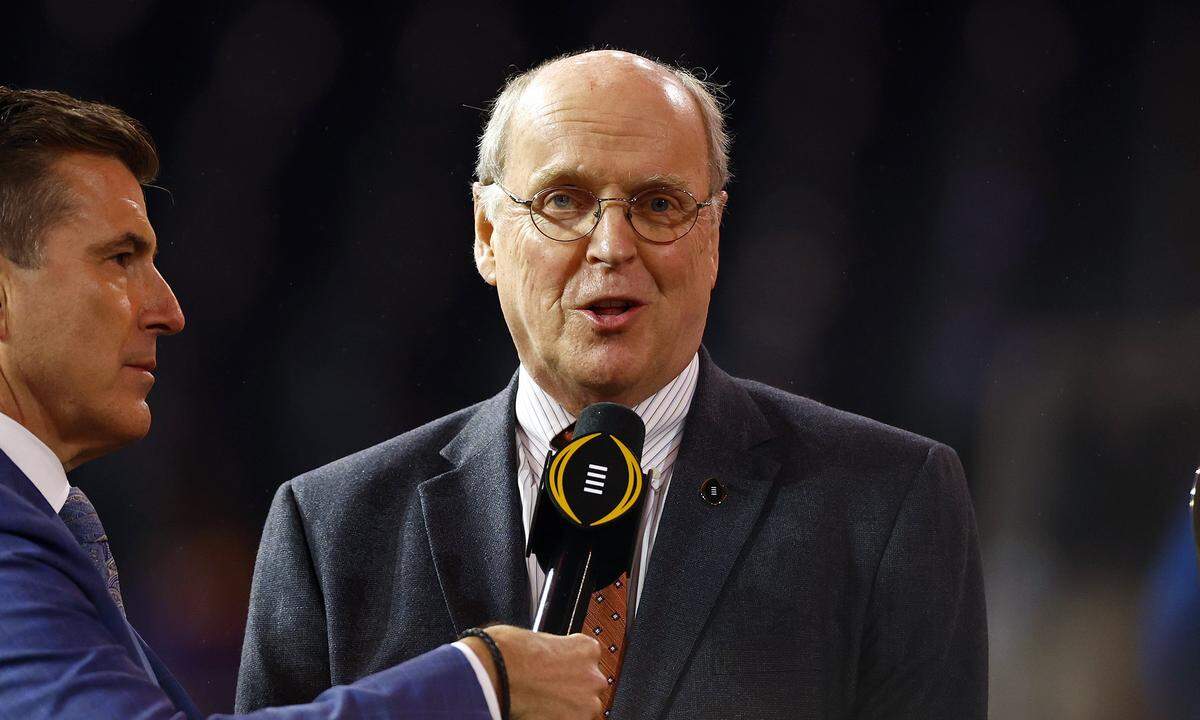
But the first time I heard it used was by my friend Bill Hancock when he was executive director of the Bowl Championship Series in the years following his tenure as director of the NCAA Tournament Final Four.
“As you know, I did not invent it,” he said Wednesday with a laugh. “But I liked it.”
And, wow, did he understand its implications as it pertained to sports.
While I’d heard him invoke the words several times before, the most foreshadowing was delivered in 2010 at Big 12 Media Days in Irving, Texas.
At the time, college football still was fending off even adding a plus-one model to the BCS national championship because officials felt it represented, yikes, a playoff.
“No bracket ever stayed at the size it was when the event was created,” Hancock, who lives in Prairie Village, said then. “We call it ‘bracket creep.’”
.jpg "BeFunky-collage (35).jpg")
Now, that seems like a scientific truism about inevitability. Certainly, it’s something we see across virtually every major pro and college sport.
And it was particularly reinforced by the NCAA’s decision earlier this month to expand the Division I men’s and women’s basketball tournaments from 68 to 76.
Even as the College Football Playoff likely is soon to expand from 12 teams to 16, a fait accompli, as Hancock put it ... while the Big Ten pushes for a 24-team format.
Back then, though, it was a wary point of concern. With ample reason. Or at least reasons that seemed to matter a lot more before everything in college sports became so brazenly commodified with conference realignment, etc.
For one thing, there was scant sentiment then among conference commissioners to create a playoff. Heck, to many coaches it still was heresy that a Bowl Championship Series title game had been established since 1998: According to an American Football Coaches Association poll Hancock cited at the time, 93% of head coaches still preferred the traditional bowl system.
It wasn’t merely stubborn resistance driving that, recalled Hancock, who was one of the leading proponents of sticking with the system.
Two areas, among others, that officials found particularly worrisome: To what degree might a playoff — even a four-team one — dilute the value of the regular season? And what impact would the extra time and games have on players?
The latter, alas, doesn’t seem to get talked about much anymore, perhaps all the less so in the Name, Image and Likeness era — in which players increasingly seem more to be employees than student-athletes.
As for the former, despite some flux in early postseason television ratings, regular-season attendance and ratings evidently haven’t suffered much to this point. At least within the small sample size of two years in the 12-team setting.
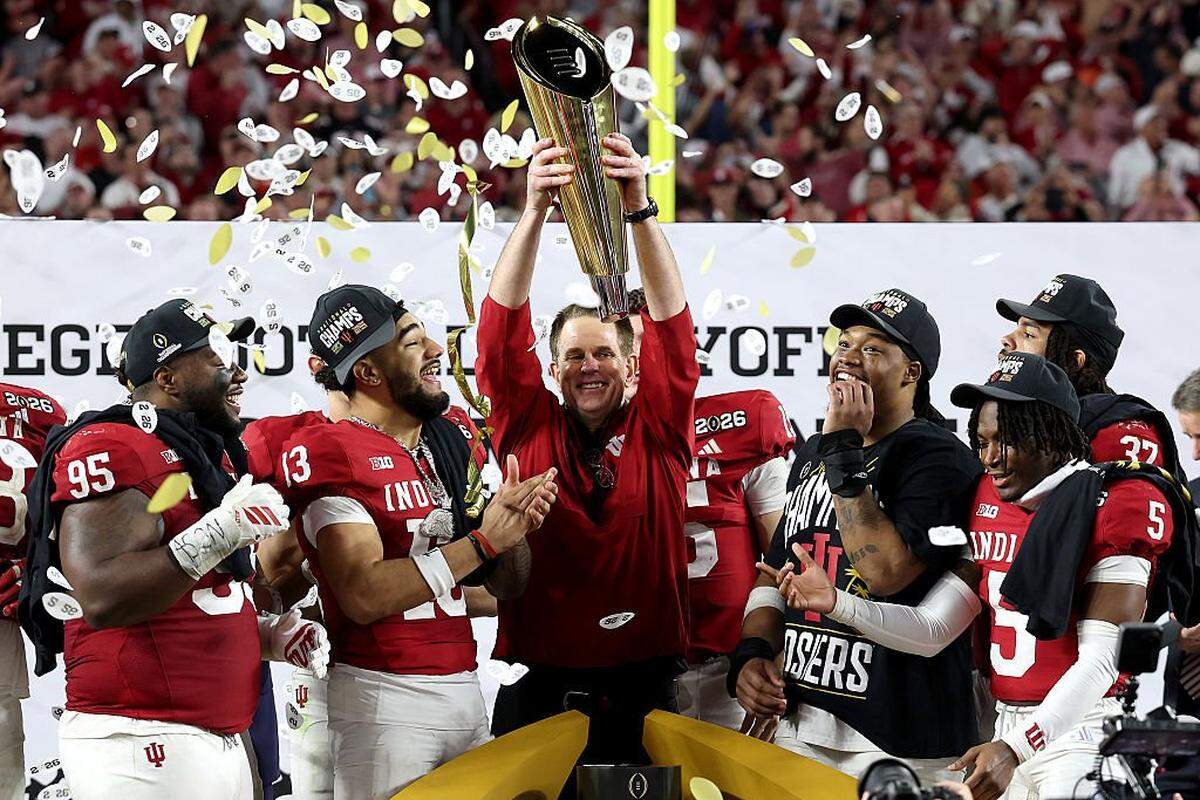
Which isn’t the same as believing, say, a 24-team playoff would work.
Not just because it would be a scheduling quandary, especially up against the NFL, but because of the original apprehensions.
“The charm of (college) football is the tradition and the pageantry, in my opinion,” said Hancock, who went on to be the first executive director of the CFP from 2014 through Feb. 1, 2025. “But the real meaning is, ‘We better not lose.’”
Heaven forbid, he added, if we get to a point where a team could lose three or even four games and be part of the CFP.
But what really compelled me to call the ever-sage Hancock, the Final Four director from 1989-2005, was the aforementioned recent news about the NCAA Tournament expanding to 76 — a number that initially made me flinch.
Looking back at the reflexive first notes I made to myself, I typed stuff like “everybody gets a participation trophy” and “it just means less to get in.” And that this isn’t what the spirit of 76 should be, and that the number should stay reserved for the trombones you’d want in a big parade, etc.
And, of course, I typed “bracket creep.”
Which took me to the wiser thought of … how would Bill see this?
“Isn’t it interesting how some people just freak out about it?” he said.
Surely sensing I was among them, but too kind to say it so bluntly, he added, “You know what? Chill out. It’s not horrible.”
What really struck me about his reasons were multifold, including that it’s ultimately more basketball that matters.
The new format featuring 32 automatic bids and 44 at-large berths will start with a 12-game opening round funneling into the broader tournament starting on the traditional Thursday with … 64 teams.
Meaning after some added initial bedlam ...
“Same ol’, same ol’,” Hancock said.
Seems to me there’s a certain sanctity to that. Or at least continuity I can appreciate.
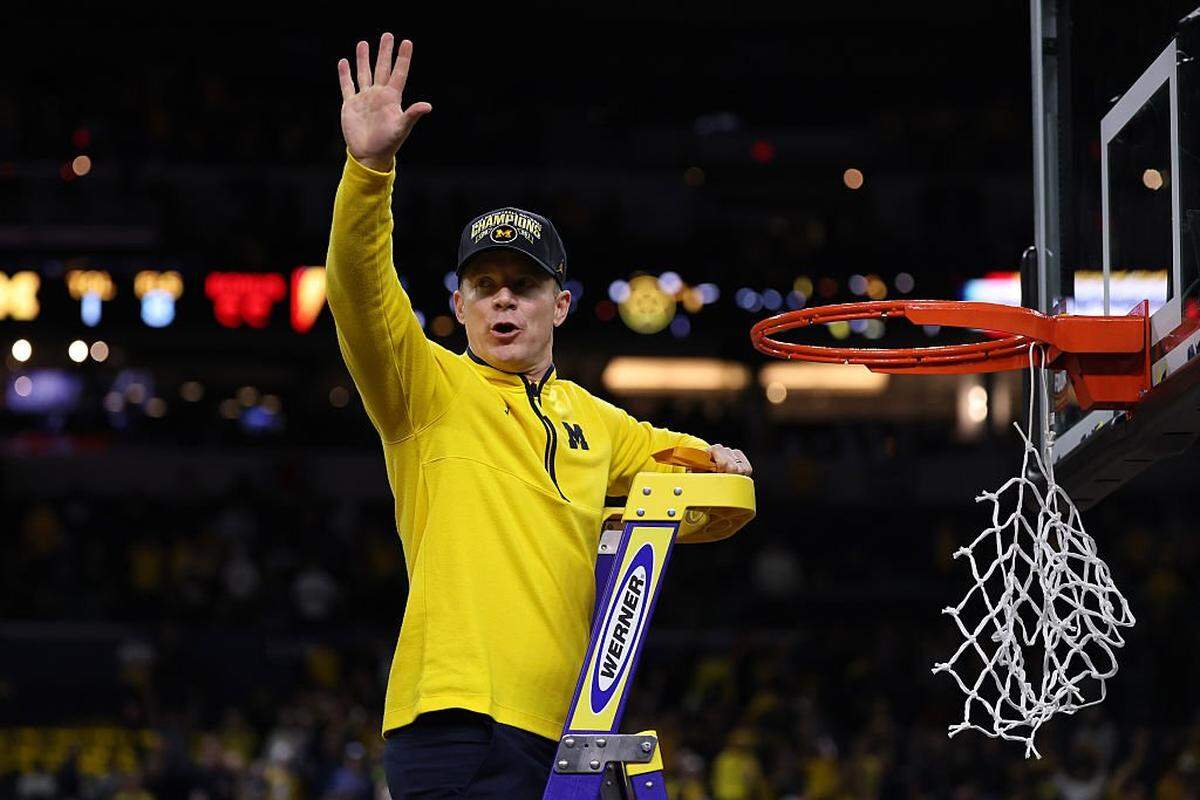
But it also bears mention how this really has evolved since its debut in 1939 as an eight-team tournament and doubled to 16 in 1951. Two years later, it was 22 teams. The field expanded to 32 in 1975, 48 as of 1980 and incrementally on to 64 in 1985.
No doubt many creeps of the bracket were resented along the way.
But, yes, 64 always seemed perfect, didn’t it?
Just the same, much has changed, even in those 40-plus years. Including a sheer numbers game that my man Blair Kerkhoff suggested was in play and prompted me to look up.
In 1985, there were 282 Division I programs — meaning roughly 23% of schools made the tournament.
Today, there are 365 — meaning a 76-team tournament would feature 21% of the institutions.
Meaning even with the jump from 68 to 76 the proportion eligible would be fewer than it was then.
“Goooood point,” Hancock said. “I tend to agree.”
Whether or not this latest expansion makes it a better tournament, per se, is another matter.
Especially considering the NIL/transfer portal era already seems to be further separating the haves from the have-nots and rendering Cinderellas a thing of the past. Fifteen of the Sweet 16 teams this year came out of a Power Five conference; the exception was tradition-rich St. John’s of the Big East.
So the major upsets may be fewer, but that figures to be less because of expansion itself than the consequences of the other market forces. And, with that, it’s not hard to picture a first-round loss devolving into more fan criticism that their teams and coaches can’t even win tournament games in a bigger field.
Even if it’s largely an illusion for most, though, Hancock believes it won’t take much time — if any — for fans to celebrate making the expanded tournament the way they do now.
So who’s to really say … it just means less at 76 capacity than 68?
“I get that, but I think for fans it’s not a valid point,” Hancock said. “Fans just want to get in.”
At some point, the bracket creep is going to overreach into the point of diminishing marginal returns — dulling regular seasons and perhaps ultimately even eventually interest in the postseasons.
Most likely, it seems, a 76-team NCAA tourney isn’t that point.
But that line still looms out there — even if it’s somewhere well beyond what we might have guessed over the years.
“Is there some point at which it might?” Hancock said. “People need to keep an eye on it.”
Ever-changing as it might be.