
A bizarre twist in Mizzou’s Elite Eight run of 1976 altered Tigers’ hoops history
AI-generated summary reviewed by our newsroom.
- Technical called on Anderson's dunk, nullifying the basket late in 1976.
- The dunk rule was reinstated days after the 1976 title game.
- Stewart long believed that loss altered Missouri's program trajectory.
Somewhere in the multiverse or over the rainbow or merely in a world where things fall more happily for University of Missouri athletics, the spirit of ‘76 — 1976, that is — still would be cherished by Mizzou fans.
Willie Smith’s 43-point performance against Michigan, in an Elite Eight game during the NCAA Tournament, would have been more of a foothold than a footnote of what then-Wolverines coach Johnny Orr called “one of the greatest shooting exhibitions I’ve ever seen.”
“It was like he was in another world,” then-teammate Kim Anderson said in a phone interview Friday.
The game would be an inflection point in the school’s history, the one that vaulted them into the school’s first Final Four and, really, who-knows-how-many-more once the barrier was broken.
But it wasn’t to be, at least in part because of a quirk of fate and an officiating determination: a pivotal technical foul called for Anderson’s then-illegal dunk — a slam made in self-preservation as he was about to be undercut.
Accenting the anguish by bizarre apparent coincidence, less than two weeks later the National Basketball Rules Committee reinstated the dunk — it had been banned for nearly a decade at the amateur level.
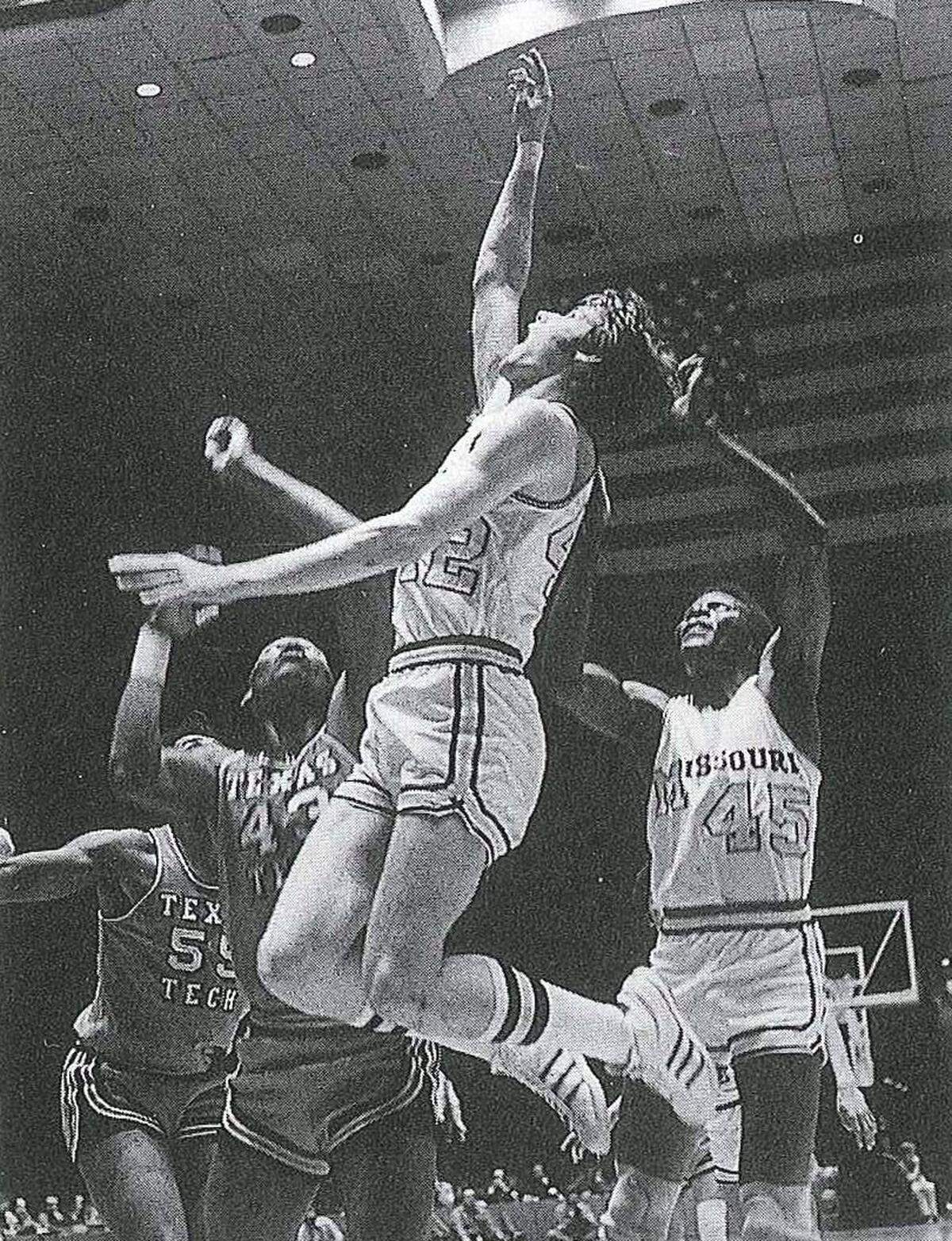
When the dunk was outlawed, it was informally known to many as “The Lew Alcindor Rule” — referring to the dominant then-UCLA star who in 1971 changed his name to Kareem Abdul-Jabbar.
But legendary Mizzou coach Norm Stewart came to think of it at the other end of the spectrum: the return of the dunk triggered by that play.
“Coach started calling it ‘The Kim Anderson Rule,’ and how it changed the game of basketball,” Anderson said Friday.
With a laugh, he added, “I’m not sure it was the Kim Anderson rule, but if it was, I’d certainly welcome any royalties.” (And as for any intersection with Abdul-Jabbar, Anderson recalled him “redirecting” one of his shots into the fourth row during his brief NBA career.)
More seriously, Anderson echoed what Stewart has long believed.
“I think (winning that game), that would have changed Missouri basketball; just people’s opinion of Missouri basketball,” said Anderson, who went on to coach his alma mater after leading Central Missouri State to a Division II national title. “I think it would have made a huge difference over the next several years.”
That seems right, not merely in perception from outside, but in terms of the outlook within: MU would have achieved a frontier the Tigers haven’t reached before, or since.
Even though Anderson noted the so-called monkey wasn’t on Mizzou’s back at that point, playing then in its first NCAA Tournament in 32 years, that sort of breakthrough might well have provided some butterfly effect or a broader psychological lift.
As in, Anderson said, “‘We’ve been there now; we can win it all this year.’”
No wonder Stewart has long reckoned that game altered history. When I asked Stewart in 2014 if he thought that play had seemed game-changing, he said, “Oh, it was more than that. That changed a lot of things.”
The Mizzou basketball program was in shambles in 1967 when it was taken over by Stewart, the Shelbyville native and True Son who’d starred on Missouri’s basketball and baseball teams in the 1950s.
The program had gone 6-24 in the previous two seasons, but Stewart’s first team won 10 games and the program steadily improved en route to qualifying for the then-32-team 1976 NCAA tourney.
That was Missouri’s first berth since 1944, when the Tigers technically played in an Elite Eight game because it was … an eight-team tournament. MU lost in Kansas City to eventual national champion Utah 45-35.
But in 1976, the program won its first Big Eight title (it was in the Big Six in 1944) and its first two NCAA tourney games — against Washington and Texas Tech.
That set up the game against Michigan at Freedom Hall in Louisville, Kentucky, where the Wolverines seized a 50-37 halftime lead and expanded their advantage to 18 early in the second half.
Then Smith became virtually unstoppable. His 29-point effort after halftime included a traditional three-point play that staked MU to a 76-71 lead with about 8 minutes to play.
Anderson, who fouled out with 8 minutes 36 seconds left, believed the call took place later in the game but wasn’t entirely certain. According to research by Missouri historian Tom Orf, though, the play Stewart long has considered fateful was earlier in the game with the Tigers trailing 12-8.
By his memory, the 6-foot-8 Anderson was on a fast break — or “semi-fast,” as the ever-self-deprecating Sedalia native put it — and moving in and up from the wing toward the hoop.
Then he felt a Michigan player coming up under him and reflexively dunked and clung to the rim to avoid a hard fall.
“It wasn’t one of those dunks you see today,” said Anderson, who went on to be Big Eight player of the year the next season. “I mean, it was definitely a dunk, but it wasn’t like three feet above the rim jamming it down.”
.jpg "BeFunky-collage (6).jpg")
Next thing you know, though, official Hank Nichols made his ruling. As we spoke, Anderson imagined anew the ref’s precise wording: “‘He dunked it, technical foul, two shots (for Michigan) plus the ball. No basket.’”
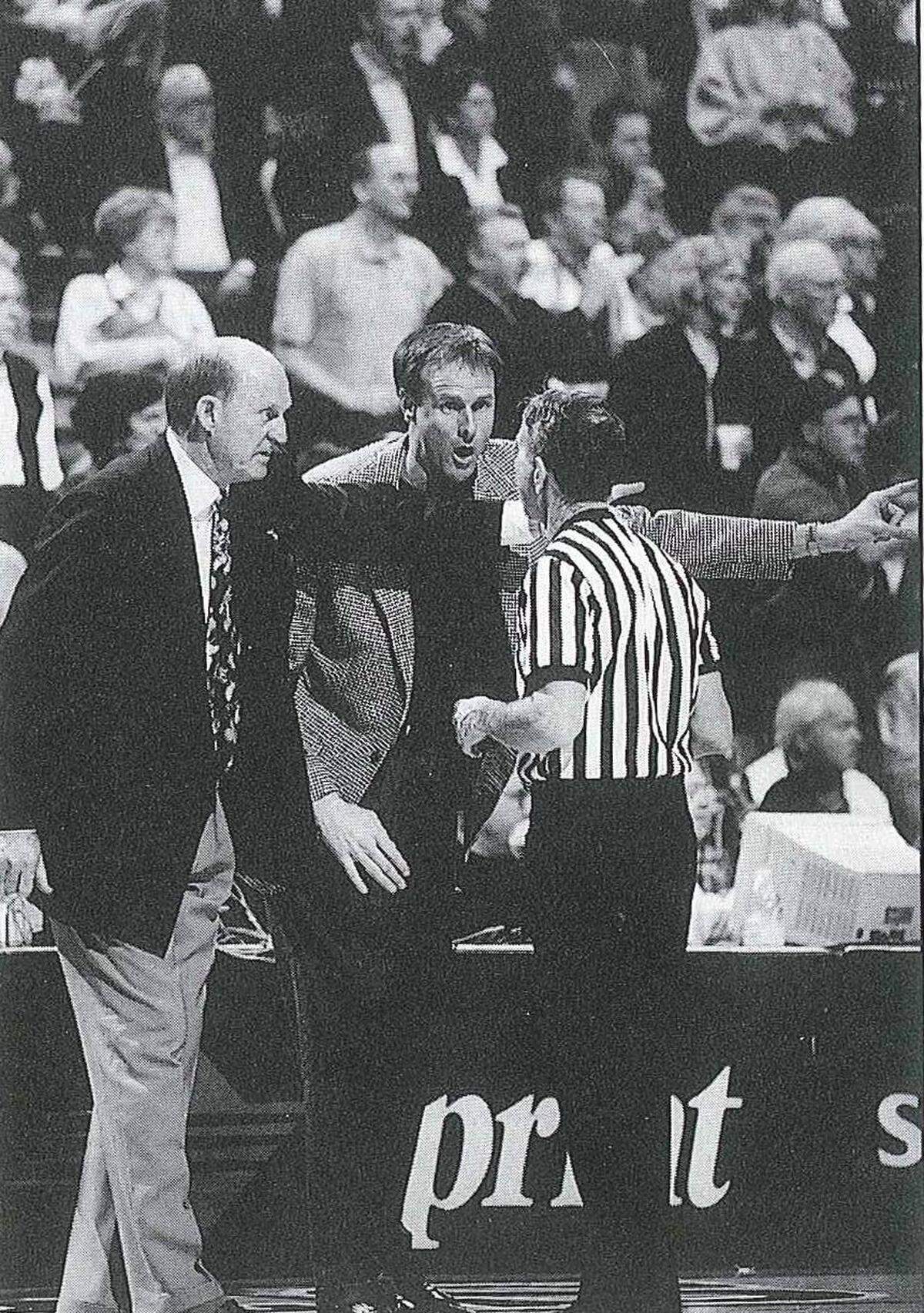
With a laugh, Anderson said he recalled that Stewart “was kind of vociferous” about the call, which denied MU those points and otherwise set in motion what would become a 38-27 Michigan burst to end the half.
“That was a swing,” said Anderson, who now is special adviser to the CMU president and provides color commentary on their men’s and women’s basketball broadcasts.
Not that there weren’t plenty of other reasons Mizzou lost that game and Michigan went on to the Final Four in Philadelphia — where the Wolverines lost to undefeated Indiana 86-68 in the national title game on March 29.
Anderson was among three Tigers who fouled out, for instance, and Michigan had four players score between 23 and 18 points. And MU, a 71.1% free-throw shooting team, went 10 of 22 from the line that day. Ultimately, Smith’s incredible effort was squandered.
No media account after the game includes mention of the technical, and Stewart’s tone in his postgame remarks largely was conciliatory: MU had proven it could play with anybody, he said, and the implication was that reaching the Elite Eight was a start toward future Final Fours.
For his part, Anderson figured MU would be right back in the same spot the next year.
“This is our first time here,” Stewart said afterward. “We’re still new at this.”
In many ways, that optimistic stance was spot-on.
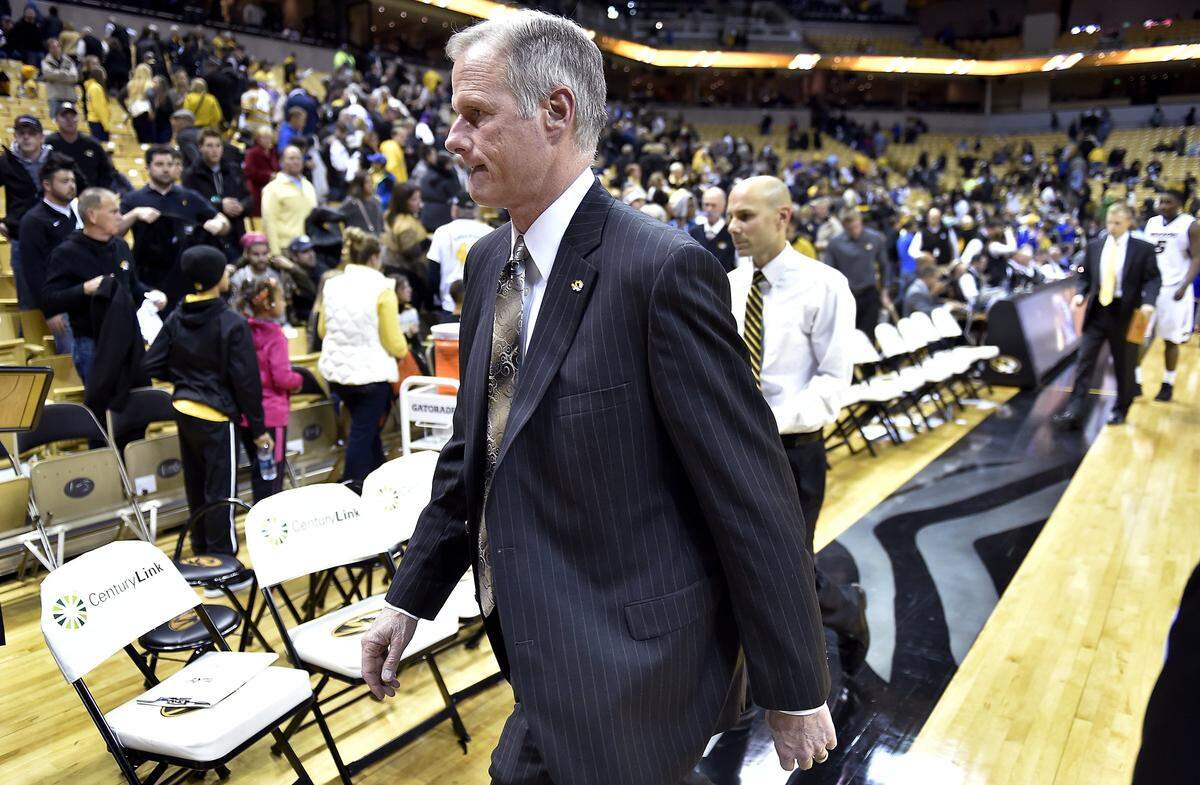
The charismatic Stewart became synonymous with Mizzou during a terrific career, going 634-333 in 32 seasons at MU and earning a place in the National Collegiate Basketball Hall of Fame.
But Stewart and Mizzou never have been able to enjoy a Final Four despite three later Elite Eight appearances: 1994 under Stewart; 2002, coached by Quin Snyder; and 2009 with Mike Anderson.
Stewart was unavailable for comment this week, but the game was a topic during a 2017 interview with The Star looking back on his career. Fairly or not, he pointed directly to the widely respected Nichols, who died Saturday at age 89. Nichols went on to become the NCAA’s officiating coordinator and was inducted in the Naismith Basketball Hall of Fame.
“Hank Nichols came in and asserted his importance in the game,” Stewart said, still with some agitation decades later.
That conjured the jarring words of Stewart just before he retired in 1999. He told the St. Louis Post-Dispatch then that he figured that call “changed the course of my life.”
The star-crossed extra twist, of course, was that only days after the national-title game the rules changed to allow the dunk again.
Among those quoted in an Associated Press reaction story was Michigan’s Orr, who called the dunk “the most exciting play in basketball.”
Alas, just a couple of weeks late for Mizzou.
This story was originally published March 28, 2026 at 6:00 AM.