
The agonizing ‘invisible struggle’ of the first Kansas Citian to play for the Chiefs
AI-generated summary reviewed by our newsroom.
- Harry “Bud” Abell was 1st Kansas Citian to make Chiefs and join inaugural Super Bowl team.
- Daughter says Abell endured numerous concussions now tied to later neurological decline.
- Daughter seeks donations and a Mass General evaluation to obtain full-time nursing care.
Chances are this is the first time you’ve read the name Harry “Bud” Abell.
But he has a distinct place in Kansas City sports history: a native (Southeast High) who played at Mizzou and became the first Kansas Citian to make the team — and then became the first to be part of a Super Bowl team with the inaugural one against Green Bay in 1967.
When the Chiefs made Abell the 178th pick overall in the 1964 AFL Draft, Chiefs executive and scout Don Klosterman said he was “especially impressed with his toughness” — something, alas, Abell later demonstrated by playing through what daughter Noel McKinnon says were numerous concussions.
The pre-merger Chiefs were so taken with that gritty trait among other attributes that they outbid the NFL’s Dallas Cowboys for Abell … albeit with all of a $3,000 signing bonus, he’d later recall.
As Abell later told Noel, from the time he joined the Chiefs in 1964 — initially stashed on a taxi squad — to being traded in August 1969 to the Broncos, the most money he ever made in pro football was $15,000 in a year.
“They make more than that for a practice now,” she said with a wry laugh in a recent phone interview with The Star.
Such was an era when most players worked other jobs to actually make their living …
Even as the less protective rules of the game, crude equipment, coaching that stressed using the head in tackling and ignorance of the ramifications often were creating serious consequences for their lives going forward.
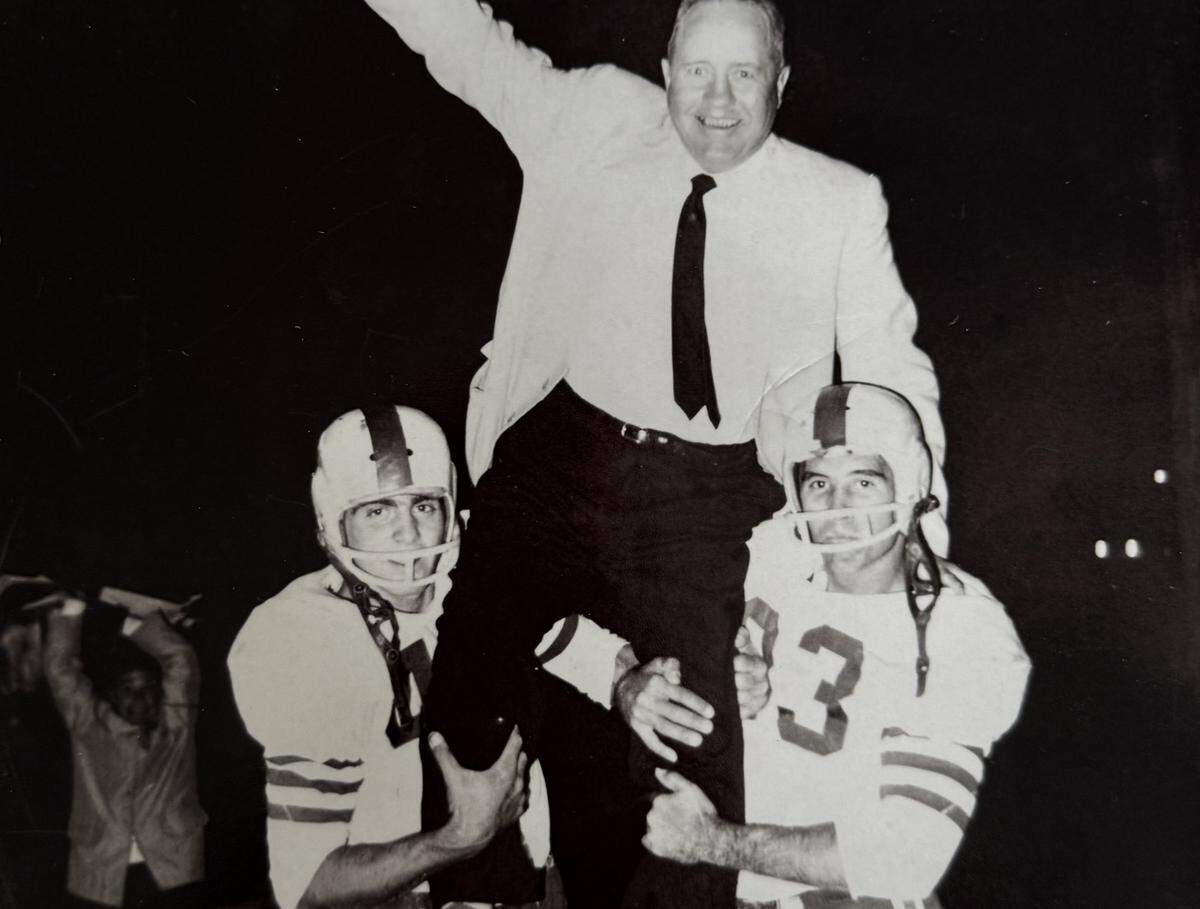
That specter continues to reverberate through that first Chiefs Super Bowl roster, from which 12 had died by their early 70s, suffering from such issues as cancer, heart problems, seizures and various forms of dementia. The group includes Jim Tyrer, who in 1980 murdered his wife, Martha, and killed himself in acts that now by all logic can be understood as attributable to the effects of chronic traumatic encephalopathy (CTE).
After a number of deaths in the last five years, only 12 men remain alive from that team. At least four of those — Abell, Curtis McClinton, Johnny Robinson and Fletcher Smith (the first man to touch the ball in a Super Bowl, when he kicked off to the Packers) — have been contending with cognitive impairments.
While that percentage of known such issues is largely consistent with people in their 80s, it’s more jarring when you consider how many from the past — and who have died in recent years — also were known to have suffered degenerative brain disease.
The list includes Jon Gilliam in 2020, Ed Lothamer in 2022 and Otis Taylor in 2023, as well as others less publicly.
Dual personality
At the confluence of all this now is Abell, 85 years old with no income but Social Security payments and a small teacher’s pension and in the throes of advanced Alzheimer’s among numerous health issues, his daughter said.
As they try to get him proper care and medicine, she said, it’s like trying to raise another child — who still weighs more than 200 pounds. His listed height as a player was 6-foot-3.
Seeking to relocate him from a small town in Florida to get proper long-term medical care and treatment in Massachusetts, the family recently launched a GoFundMe seeking to raise $4,500. As of this week, the effort had raised $3,855.
The need is more apparent than ever since he’s taken a drastic turn for the worse in the last few years and simply no longer can live on his own. She discovered this on a devastating visit from her home in Massachusetts last year.
In jarring contrast to the active life he’d described on the phone, she found him to be disheveled and laden with bed sores because he had been so immobilized by leg issues. The once-meticulous man’s apartment was in disarray, and she learned from his landlord that he’d almost burned it down a couple of times by leaving things on the stove.
That soon led to a battery of scans and tests arranged and funded with the help of the NFL Players Association Trust, she said.
Doctors at Massachusetts General Hospital told the family they were 100% certain that Abell’s worsening Alzheimer’s was triggered by concussions. In the process, they displayed the difference between what his brain should look like and what it does look like.
That explained a lot to Noel. While she stresses how he embraced being a single father, provider and protector to her older sister and her, she acknowledges his volatile, at-times violent, behavior over the years.
Behavior, she said, that doctors told her could well mean he’s suffering from CTE. The disease caused by repetitive head trauma is known to cause aggression, mood swings, depression and paranoia but can only be diagnosed through a postmortem brain autopsy.
Even though he could be upbeat, even as she has received many testimonials from former students and players about the man who coached them in football or taught them math, his temper became such that she long has thought of him as having a dual personality.
“You never knew,” she said, “what would set him off.”
‘Extreme changes in mood’
At Southeast High, Abell was an All-State player for Cecil Patterson, who guided the Knights to three undefeated seasons — the last of which was in 1958 with Abell on the team.
That December, The Star noted that Abell was a deft receiver on offense and “virtually was impossible to take out of a play.”
He earned a scholarship to Mizzou, where decades later coach Dan Devine would recall his key catch in a 7-6 win over No. 8 Arkansas in 1963. Devine in 1984 told The Star, “I always thought Bud had a lot of good stuff in him … He was one of those good, tough, team players, a very valuable member of our teams.”
Enough so that he earned a place in the 1964 Blue-Gray Game, featuring 48 of the nation’s top players, and merited drafting by the Chiefs and Cowboys.
.jpg "BeFunky-collage (3).jpg")
After signing his Chiefs contract at their then-Swope Park offices about a mile from his high school, Abell became the first local player to make the team after training camps he described in 1965 as “meetings, beatings, eatings and sleepings.” He largely played on special teams and as a reserve but started nine games at linebacker in the 1967 season.
By the time his career ended in 1969, he had a year-old daughter, Angela, who had a learning disability, Noel said. Noel was born in 1972. When the parents divorced soon after, he left Kansas City for Georgia to teach math and coach football.
But when Noel was 9 months old, her mother left the girls at a babysitter. And never returned.
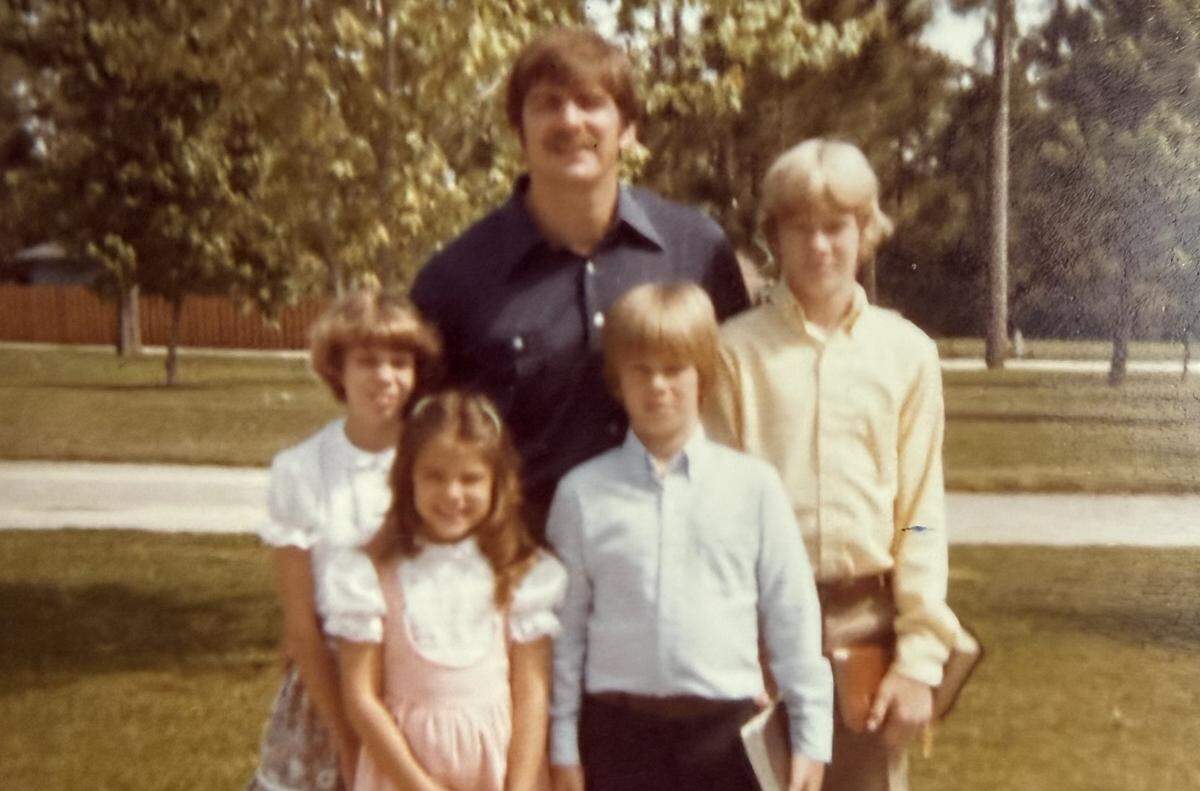
Bud brought the girls home with him to Georgia to raise them on his own before he remarried a few years later to Jeanie Hampton with her sons Mike and Greg Cash also joining the family.
“Not many men would take a handicapped daughter that needs a lot of attention and a 9-month-old baby, especially at that time when women stayed home and the men worked,” said Noel, a makeup and hair artist.
He was “always trying to better our lives,” Noel said, even going back to school for his master’s in psychology so he could also be a counselor.
As she grew into her teens, though, she was struck by what she called increasingly “sudden and extreme changes in mood and behavior that felt like living with someone battling an invisible struggle.”
Knowing he didn’t drink, she came to see his behavior as that of a “dry alcoholic.” Because she had no other way to explain it or understand it.
While he never physically harmed her sister or her, she said, several times he hospitalized the stepmother Noel loved.
Mike Cash said he never suffered physical abuse and was out of the home, as he was told Abell became violent. But Greg Cash remembered being hit across the face once when he was sick and didn’t want to go to school. He also was regularly spanked with a belt and verbally abused, he said.
“It was a chaotic environment,” Noel said, “and emotions were not something we were taught to show.”
‘Get back in’
Indeed: the father that emerged from the “rub some dirt on it” era of football taught the same.
Never mind if his vision was blurry after his “bell was rung” on the field. Or if a finger was so sliced open that the bone protruded. Tape it up, good to go.
“Sometimes, he felt like he was going to pass out, but they’d just say, ‘Get back in,’” she said, later adding, “That’s how I was raised. ‘You’re fine.’ We never went to the doctor. For anything.”
So even amid the turbulent contradictions of viewing him as both protector and potential menace, her father’s messaging was consistently clear in certain ways:
Be tough. Be perfect. Push forward no matter what. No time for tears.
Perhaps now’s the time for that, though.
At least in terms of how Noel and her brothers have come to reconcile his life and condition today.
Mike, now a physical therapist, called him “a great dad who did the best he could.”
Greg, who owns a telecom company, said he doesn’t make excuses for the abuse but that he forgives him and wants peace for him. As more and more has come to light about the long-range impact of head injuries, he has long thought the concussions created a sickness in a man he’d been told once was “one of those gentle giants.”
For all that afflicted Abell, Noel will tell you, he loved his children and tried hard to do right with such acts as taking them to church every Sunday. She thinks of him as always having put others before himself, including by dedicating himself to helping the teenagers he taught, coached or counseled.
But he was up against an insidious enemy within, she now believes, that was beyond his control.
When she made a surprise trip to clean his home a few years ago, she said, “he went crazy on me” with verbal abuse over nothing.
“Like the devil possessed him, “ she said.
Despite his history, she left in tears and decided not to visit for a while. But through her husband, Bobby’s contact with her father, she thought he was enjoying life, going to the gym and otherwise active.
And even as Greg tried to help and sound the alarm from what he was seeing, Angela living nearby reported that he had “a little memory problem” that didn’t seem extreme.
But last year, soon after he was being treated for a blood clot in his leg, a nurse called and said, “Your dad should not live alone.”
When Noel visited soon thereafter, she couldn’t believe his decline, color, weight loss and living conditions. And by the subsequent extensive visit at Massachusetts General, where her father saw 14 doctors in three days, something clarifying happened and changed her perspective.
Because she could appreciate in an entirely new way the implications of his injuries not being properly understood or treated as they were happening, leading to the sort of neurological issues that affected so many football players of his generation.
Now, she sees her father’s very life through a different light.
And she wants mercy for him in his final years, which doubtless have been made more agonizing by his early life playing football.
Since his insurance is inadequate, Noel and her husband are doing what they can to help with his medical bills. They want to get him from assisted living to full-time nursing care and an evaluation for a treatment plan at Mass General.
If nothing else, they hope they can make him more comfortable after all the torment he has known.
“My father spent his life trying to provide for and protect his family. Now it’s our turn to fight for him,” she said. “Any support, whether through donations or sharing his story, means more to our family than words can express.”