
Fifty years after death of Kansas City legend, it’s time to revive his name here
AI-generated summary reviewed by our newsroom.
- Casey Stengel, a Kansas City native, is one of the most famous men in MLB history.
- Despite national fame, Kansas City offers little public tribute to Stengel's legacy.
- New York monuments honor Stengel, while his Kansas City roots remain overlooked.
No manager in baseball history has presided over more World Series triumphs than Charles Dillon Stengel, the unique character best known through his nickname after a poker game among Brooklyn teammates he’d apparently regaled about his hometown.
“‘About time you took a pot, Kansas City,’” goes the story, as told by the Society For American Baseball Research.
Next thing you know, he’s “K.C.,” streamlined into “Casey” — whose death at age 85 exactly 50 years ago Sept. 29 evoked few tributes more revealing than that of New York governor Hugh Carey.
“Casey Stengel had the baseball mind of a genius, the heart of Santa Claus and St. Francis, and the face of a clown, and something very good has gone from our lives …” he said, according to multiple news outlets. “He made a unique contribution, too, to American letters with his inimitable ‘Stenglese,’ a language for which he invented his own prose and syntax. He was a joy in more ways than anyone in public life. We shall not see his like again.”
Baseball commissioner Bowie Kuhn referred to Stengel as “irrepressibly himself” and suggested that he left “a nation that adored him … a host of memories so vivid and marvelous that we can’t ever lose him.”
So it’s a most puzzling thing, then, that one of the most prominent and accomplished people to rise from the vicinity — a man whose nickname essentially represented Kansas City — has become all but lost here over the generations.
While The Star on the occasion of his death wrote that Stengel became “one of the zaniest, most storied and indelible figures ever to explode upon the American scene in athletics or any other walk of life,” he seems to have faded from indelible to invisible here.
In the very terrain from which he’d been born in 1890, The Star once wrote, “howling lustily from a set of healthy lungs that were to whoop all through his active baseball days,” good luck finding any visible commemoration of his existence.
You’ll find him on scant few lists of famous or distinguished or legendary Kansas Citians, for instance.
And not at all in the trophy cases or outside the modern Central High, a century-plus away from the building at 11th and Locust where he had such a “special grudge” against attending classes, a classmate once told The Star, that friends later made it a point to procure and send him the school bell.
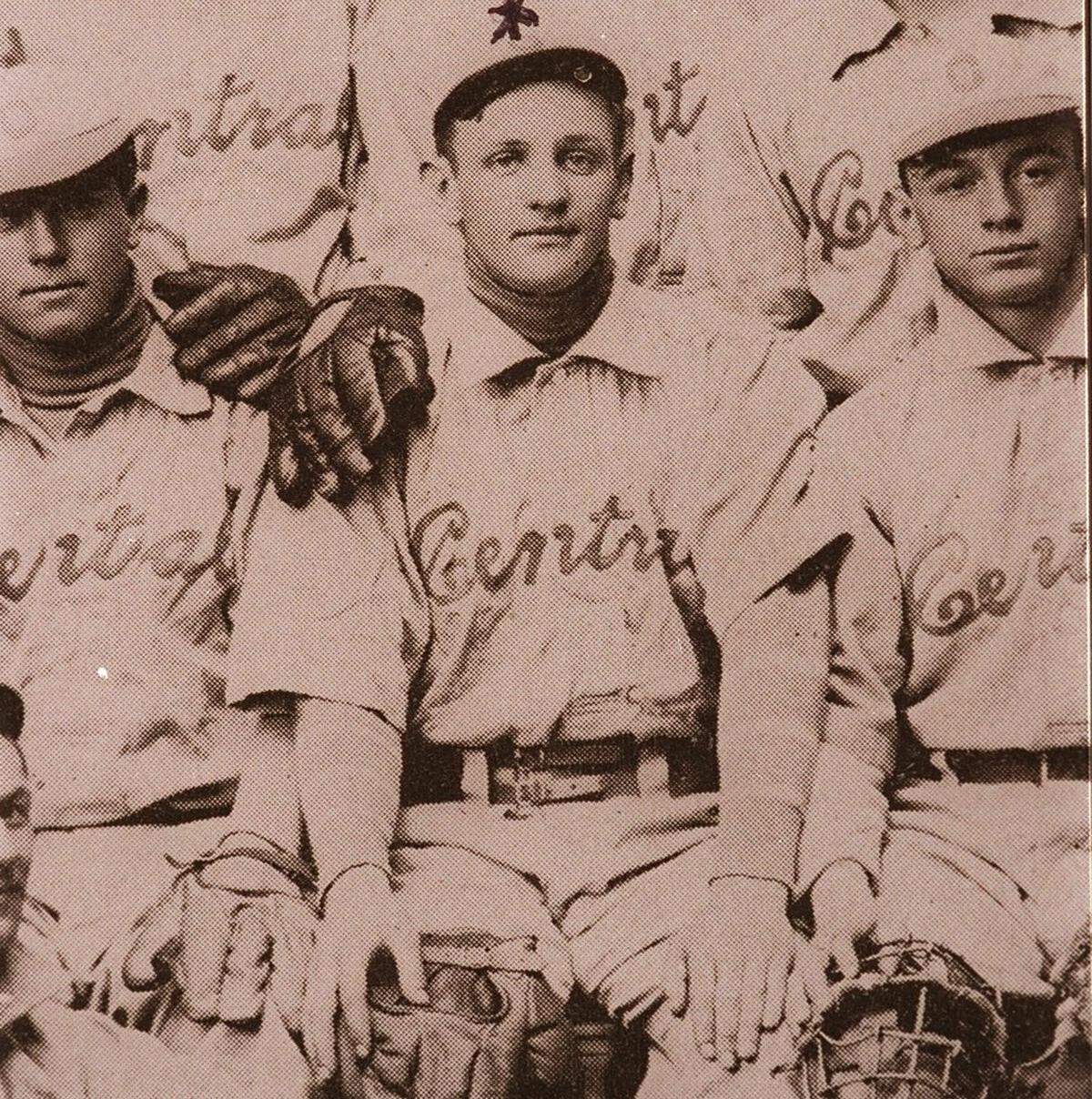
No tangible evidence of his past is obvious outside the house in which he grew up, in the 4100 block of Harrison. And he’s not among the nine athletes commemorated at the site of old Municipal Stadium — where Stengel managed the Kansas City Blues, a minor-league affiliate of the New York Yankees, in 1945. (He also had played for the Blues before they were a Yankees farm team.)
Maybe the most notable display of Stengel here is his photo among many in a Royals Hall of Fame display of Kansas City Connections who’ve made significant contributions to the history of the game.
Otherwise, not a plaza or a street or a marker in his name.
Well, not unless you count the one at kiosk E7 in economy lot C at Kansas City International Airport, where he’s mentioned in “KC’S BASEBALL STORY” … but, alas, with his surname spelled “Stengal.”
.jpg "BeFunky-collage (18).jpg")
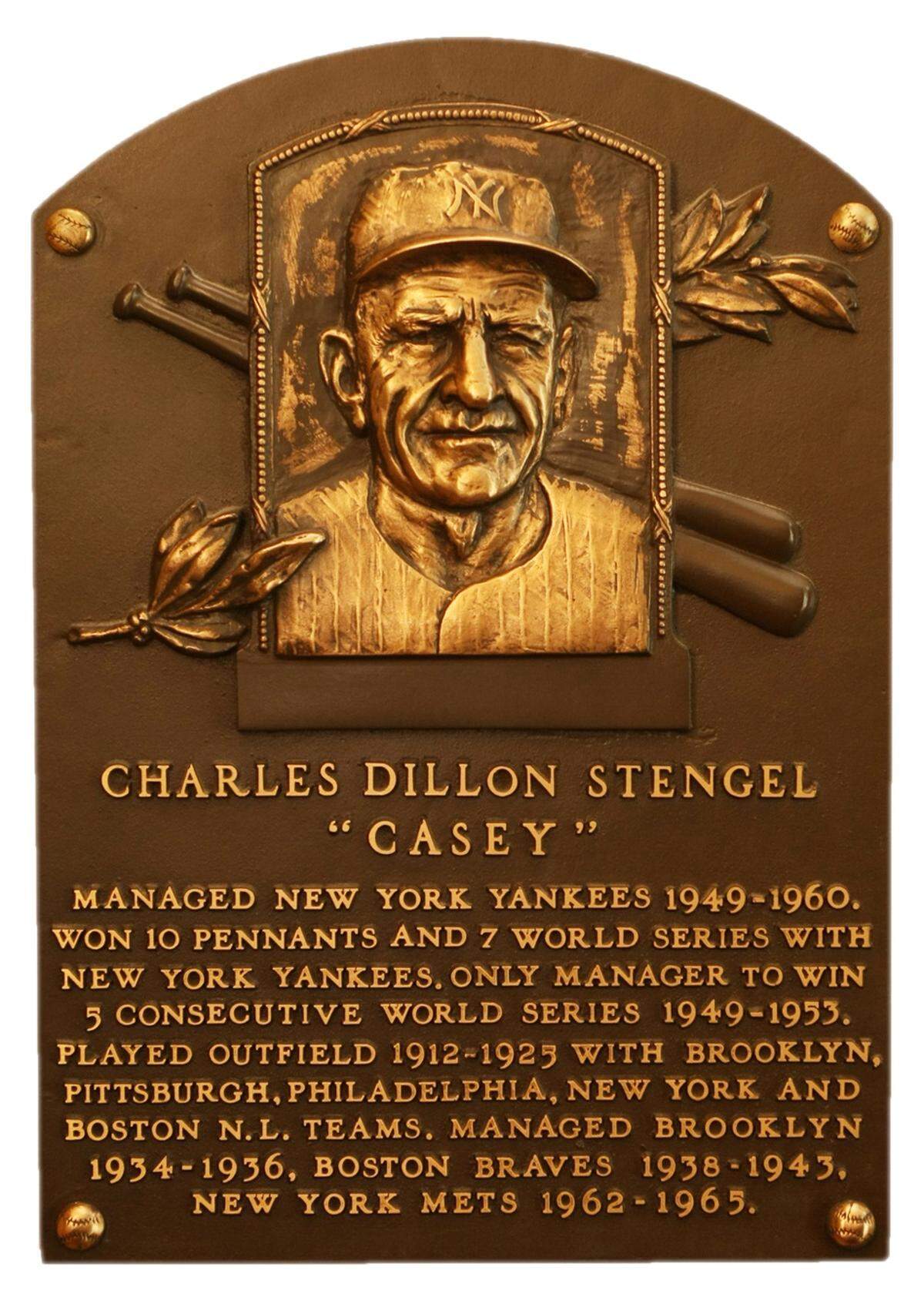
It’s all in profound contrast to New York, where he’s enshrined in Cooperstown and there’s a statue of him at CitiField (also held at The Smithsonian) and a plaque in his honor at Yankee Stadium’s Monument Park.
“BRIGHTENED BASEBALL FOR OVER 50 YEARS,” the inscription begins. “WITH (THE) SPIRIT OF ETERNAL YOUTH.”
Why none of that seems to still resonate with the actual city of his youth is both a shame and a curiosity.
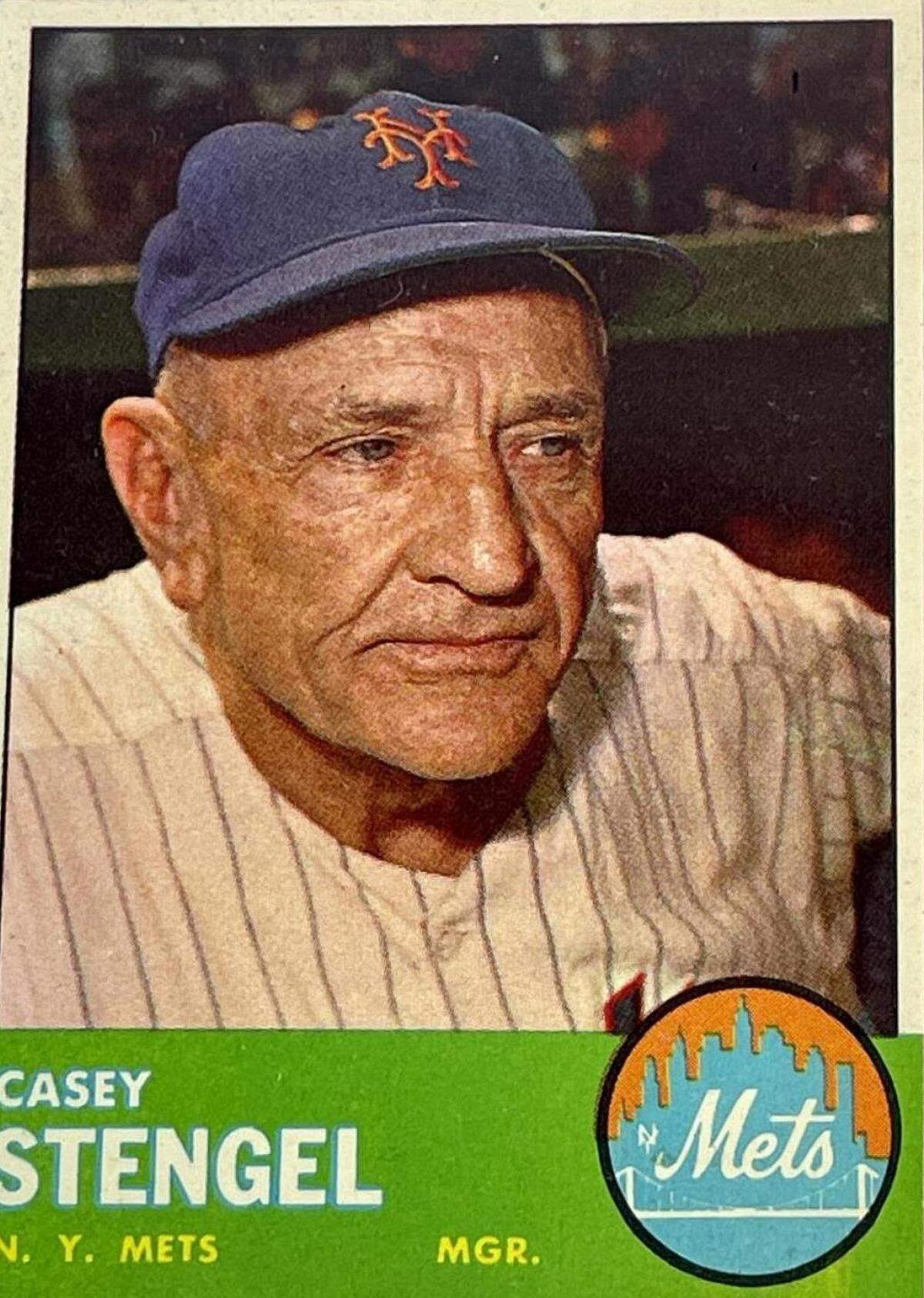
But Curt Nelson, the director of the Royals Hall of Fame, has a theory that helps account for at least some of that gap when it comes to the charismatic figure ... a man understood to have been the only person to have worn the uniforms of four teams in New York: the Dodgers, Giants, Yankees and expansion Mets.
(Perhaps reflecting Stengel’s charm, that 1962 Mets team won the fewest games, 40, in MLB history and, it’s been well-chronicled, became admired for its ineptitude. Stengel’s “Can’t anybody here play this game?” bit became the title of a book about the team. )
All of which is to say that Stengel was such a sensation in New York, so long after growing up here, that his roots seemed to become less and less relevant there and more and more distant here.
“If I were to guess on why his name sort of gets lost from Kansas City, (it’s because) he becomes such a big deal in New York,” Nelson said. “Nobody references his earlier life. He becomes, really, the Casey Stengel that we all know sort of later in his life.
“So we associate him so much with New York that we don’t even consider his origin stories very much.”
That makes a lot of sense to me even considering he’s one of the rare few from here to guide a major sports team to championships.
Perhaps it’s also explained in part by the information overload era: The present is always coming at us so hard and fast that the unexamined past fades more from consciousness in the echo chamber of the now.
But people here ought to know and savor that Stengel was Kansas City made.
He was the youngest child of Jennie and Louis Stengel, a German immigrant and insurance salesman. Stengel was a standout athlete at Central and initially went to dentistry school before deciding baseball was his calling.
Stengel had an off-beat way of showing his dedication, illustrated through a practice he made of throwing his glove between innings in the outfield and sliding into it so he could work on multiple things “in one operation.”
As Stengel played in three World Series during a 14-year MLB career, he became more known for his antics.
Like when he was playing for Pittsburgh on a trip to Brooklyn and responded to being booed by somehow tucking a sparrow under his hat when he stepped to the plate. When he tipped his cap to the crowd, out it came — effectively flipping the bird and changing the crowd dynamic.
Some still saw him as little but clownish through his first eight seasons as a manager in Brooklyn and Boston, when he guided just one winning team before being fired in 1943.
But he was hired by the Yankees in 1949 and immediately led them to five straight World Series championships — a record that almost certainly never will be broken and launched him toward tying Joe McCarthy for the most in baseball history with seven.
That’s when he became a New York story, really, amplified by his endless quirks and quotability (you could write a book about his wit and wisdom) and riding umpires.
As Los Angeles Times sportswriting legend Jim Murray led his final tribute to Stengel: “Well, God is getting an earful today.”
Stengel, who had no children, retired to and died in California and made his name in New York and around the nation.
But he’ll always be a Kansas City original.
And here’s hoping in the years to come we’ll have more conspicuous evidence of that, befitting his greater legacy.
This story was originally published September 27, 2025 at 6:00 AM.