
Why Missouri-Kansas revival is vital in a disillusioning era of college sports
AI-generated summary reviewed by our newsroom.
- Missouri and Kansas resume football rivalry after 14-year hiatus since 2011.
- Historical and cultural ties drive emotional weight of the MU-KU matchup.
- Coach Eli Drinkwitz stresses focus, preparation and game execution over nostalgia.
When Missouri and Kansas first met on the gridiron in 1891 at Exposition Park in Kansas City, the sport was spelled “foot-ball” and still in its embryonic phase. It would be more than a decade before the newfangled forward pass was legalized.
“The contest was perhaps not as scientific as some that have been held between Eastern college elevens,” the St. Louis Post-Dispatch wrote, “but football is new to the West and the 3,000 spectators thoroughly enjoyed it.”
So Kansas’ 22-8 victory that day made for an inauspicious debut for what would emerge as the oldest and longest-running football rivalry west of the Mississippi.
Never mind that but for a very few seasons (1960 and 2007 in particular) when both programs were thriving at the same time, the ferocious rivalry steeped in Civil War roots (just 26 years had elapsed since) typically was of little consequence beyond the participants and their fans.
In a certain way, there was a purity to that dynamic: rivalry for rivalry’s sake and the inimitable symbiotic relationship that comes with that.
The sort that legend says compelled Pepper Rodgers in 1969 to flash Dan Devine a peace sign late in a 69-21 pummeling by Mizzou … and for Devine to flash half of one back.
The significance in itself that led in 1977 to Al Onofrio being fired after going 1-6 against Kansas — despite otherwise going 37-35 with nine top-10 wins.
All the stuff that made the 2007 game so monumental.
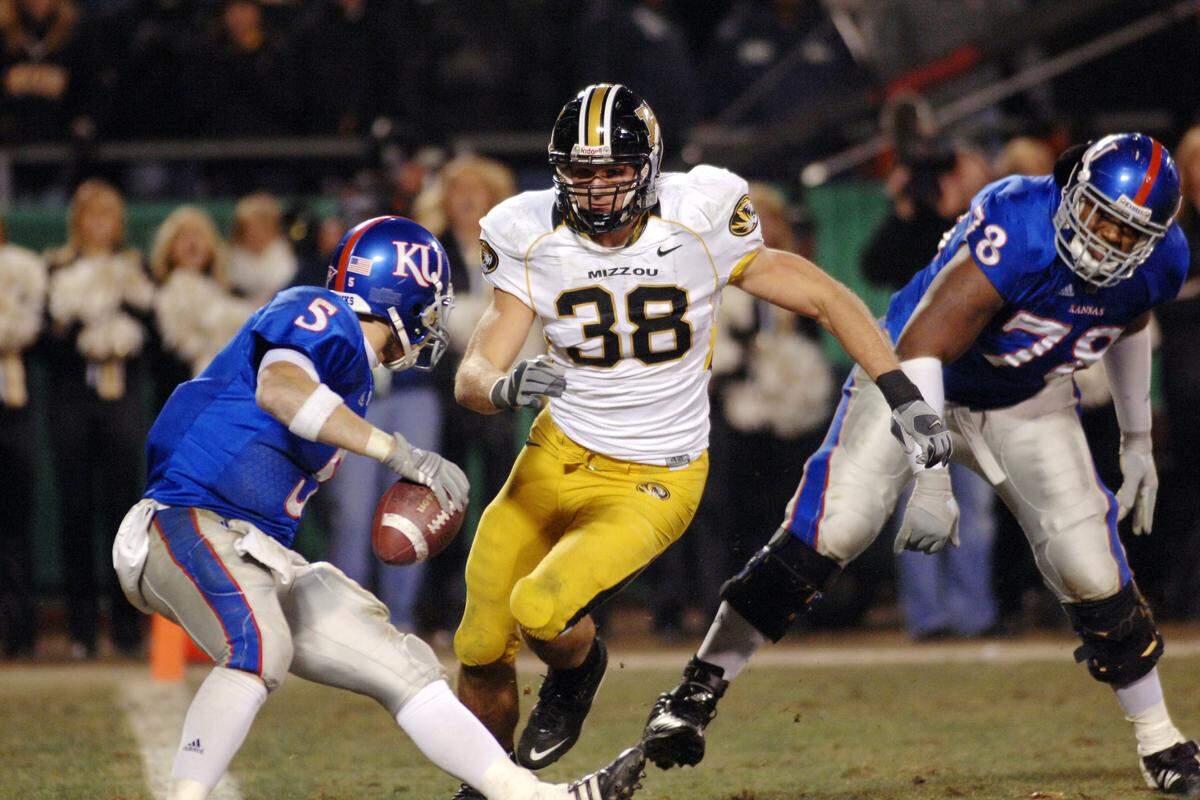
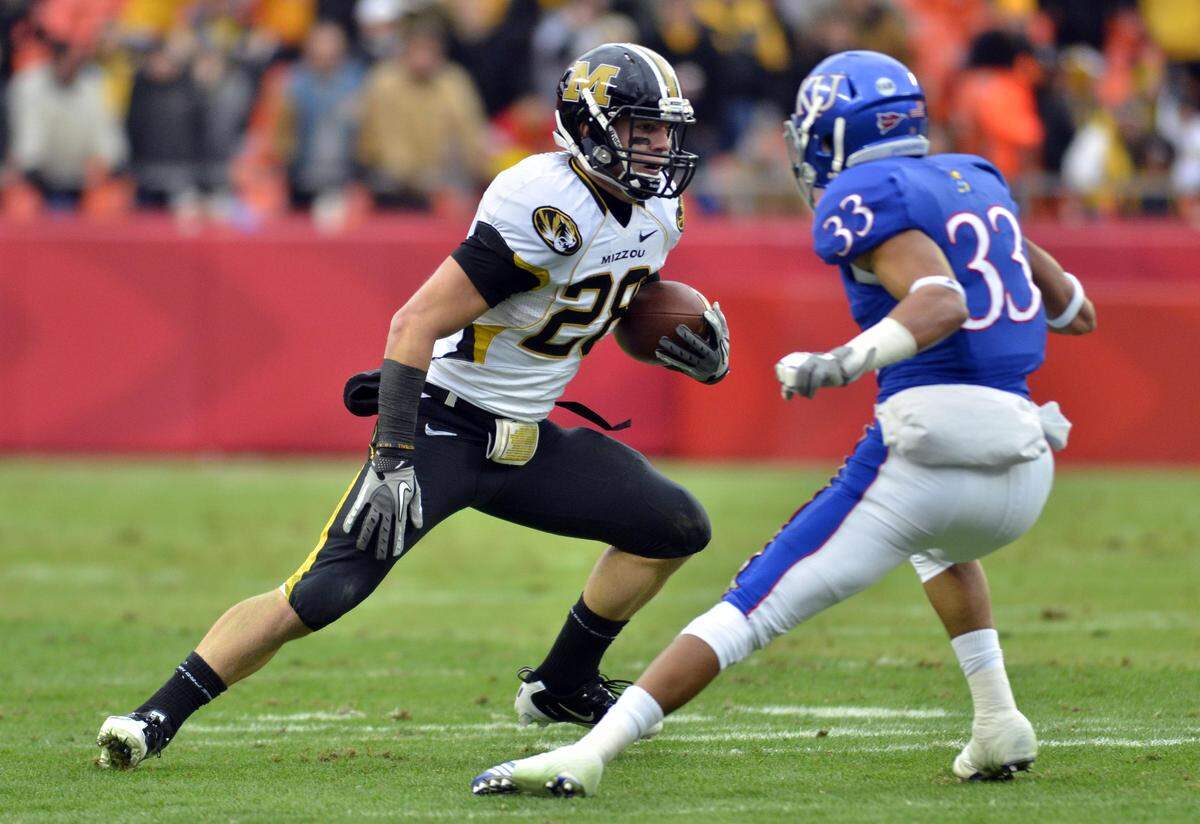
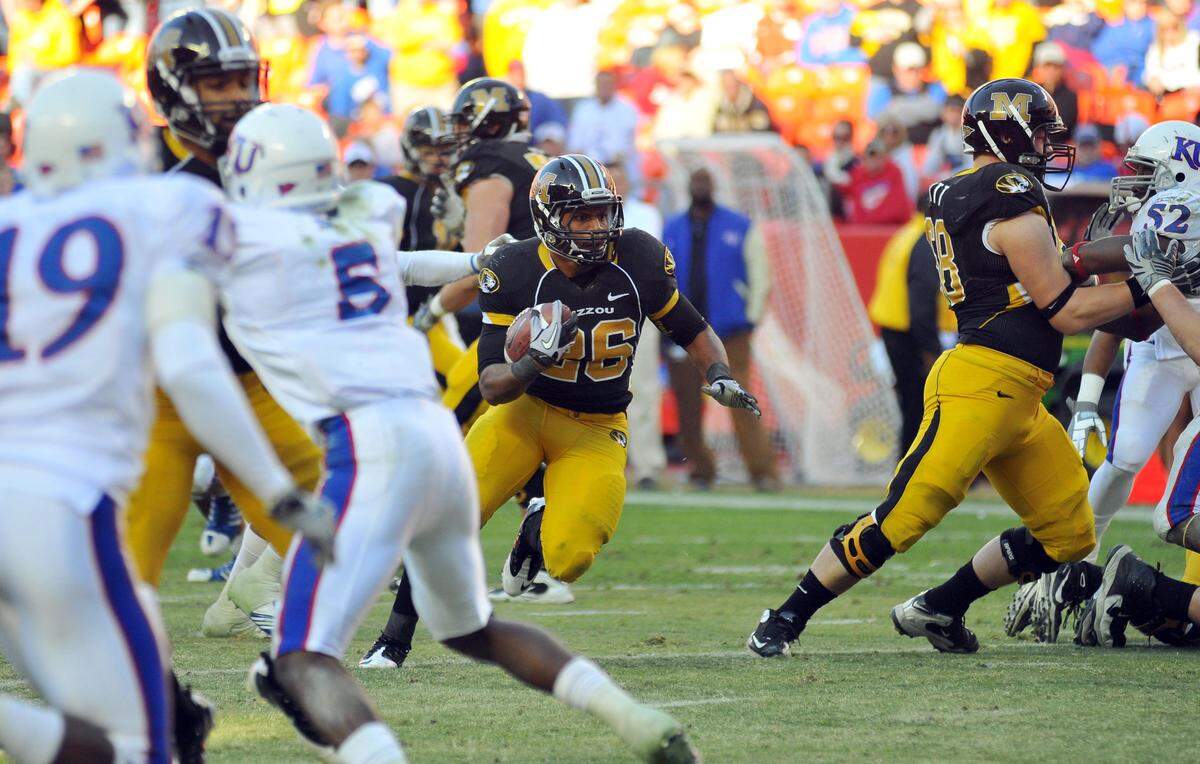
And all that we’ve been so glaringly missing since 2011, when the series came to an abrupt halt in the wake of Mizzou’s defection from the Big 12 to the Southeastern Conference.
Blame who you want to for the end of the tradition.
But this is about the consequence, not the fault, and why their series being revived this week is so anticipated and welcome.
At least for me, it’s been a disillusioning time in college sports.
Name, Image and Likeness opportunities and the transfer portal might be fine things in principle, but in jumbled practice they’ve wreaked chaos on the very essence of college sports.
As if the landscape, literally and figuratively, hadn’t already been disrupted by the seismic shifts, and bedlam, of conference realignment — a force that in many ways rendered trivial what was most special about collegiate athletics.
Rivalries like MU-KU, last played so long ago that most Mizzou players weren’t yet 10 years old at the time.
Heck, it was so far back that coach Eli Drinkwitz was a quality control coach at Auburn just two years removed from being an assistant high school coach in Arkansas.
So now a rivalry that generations of athletes and fans were indoctrinated in about the moment they arrived on campus, and that was perpetuated forevermore, requires what might be considered a tutorial.
Over the summer, Drinkwitz asked several speakers — including former player and coach Andy Hill and retired longtime ESPN announcer John Anderson, a devout alum — to address the team about the history of the rivalry and what the series means to fans.
Safe to say the talks were both needed and appreciated.
“I had no idea about the whole Civil War history,” quarterback Beau Pribula, who transferred from Penn State after last season, said Tuesday. “I thought it was just a sports rivalry, but I guess it goes beyond that.”
No doubt Drinkwitz seems to understand that quite well.
“Our team fully is aware of the importance of this game to our fans and the state,” he said. “And what it represents nationally and … (in) historical significance. We’ve embraced it. We understand it. We’ve taught about it. We’ve made sure our team knows about it.”
To that point, though, there are a few other things he wants the team to know entering the 2:30 p.m. game Saturday at a sold-out Faurot Field.
Playing in this game should be a stirring reminder of why it’s a privilege to wear “Mizzou” on their chests. And that they represent 6 million people in the state — “and that’s just current,” he added.
And that this game is “our chance to write our part of the story” in the series.
But he also wants them to be aware of all this.
Among other things KU has going for it, coach Lance Leipold is “terrific” and quarterback Jalon Daniels has returned to the form that made him an early Heisman Trophy candidate a couple years ago. This figures to be a steep challenge for each team. One that could sway a season either way.
And that’s why all the lore only goes so far in preparation for the game, which for now comes attached only to a return game in Lawrence next season and two more meetings in 2031 and 2032.
Because there’s a fine line between over-hyping, Drinkwitz said, and being so emotional that players lose poise and control.
So they need to play with energy more than emotion, per se. And be calm and present and locked in on preparation until game day.
Speaking of game day, when it matters most in the late-game crucible, he reckons the players won’t be thinking of what Coach said in his pre-game talk or what a guest speaker said.
“The point of it is not what they said; the point is to make sure that our fan base and our players understand that we know the significance historically, we understand the importance,” Drinkwitz said. “We’re not overlooking or undervaluing this game. …
“The issue is: Are we going to be able to execute? Are we going to be so focused on the crowd … that we forget it ain’t about that?”
Just the same, he’s not billing this as just another game.
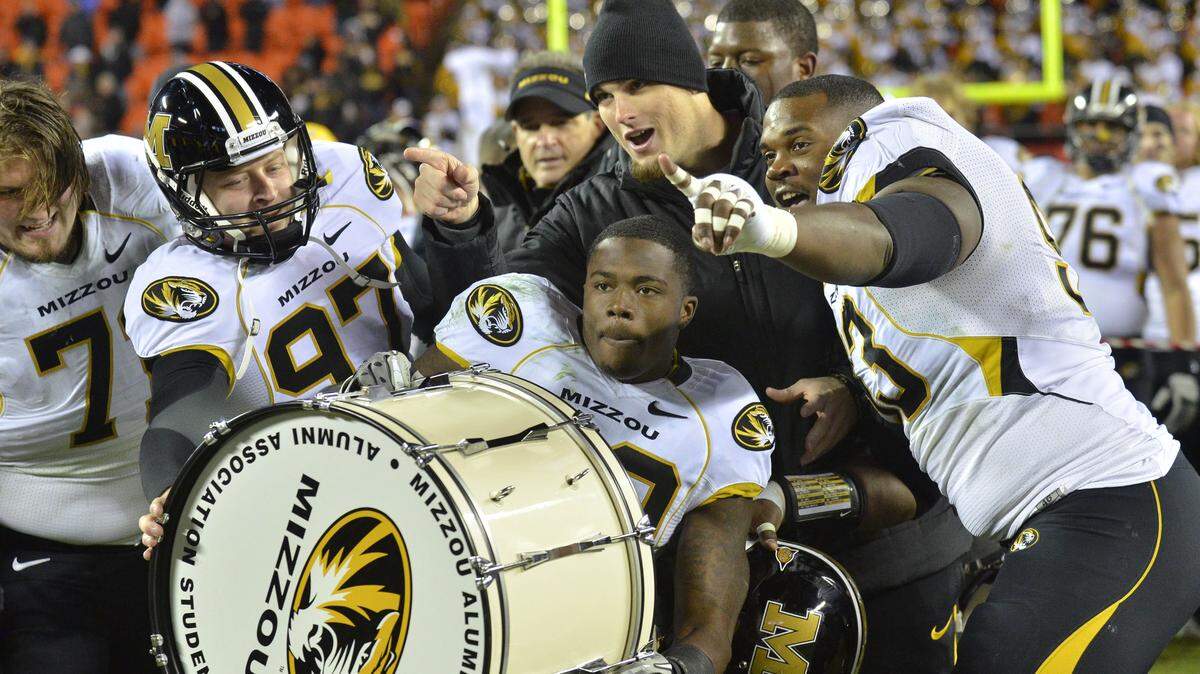
After all, he said, there’s a “dadgum War Drum” on the line. A trophy game, as he called it.
“In college football, you don’t always have that after a game,” he said. “Sometimes you just (get) an ‘attaboy.’ There ain’t no ‘attaboy’ after this one.”
Not just because of the trophy, but because it transcends the norm as the sort of game the college sport was built on.
“Unscientific” as it might have been all those years ago.
And because for everything else that’s happened since, especially in the tumultuous last decade-plus, it’s a resonant reminder of what the history yet means.
“It’s what college football,” safety Jalon Catalon said, “is all about.”