
The inspiring and touching tale behind KU baseball matching school’s best start
Twenty-five years before Dan Fitzgerald was coaxing the University of Kansas baseball program to a start that has matched the 1993 College World Series team for best in school history, he started paying his dues by accumulating debt as a volunteer assistant coach at Iowa.
It took an internship and a few more jobs over seven years before he landed an assistant job that paid as much as $12,000 a year. But, hey, at least he could live in the dormitory at Des Moines Area Community College — one of a number of times he was a residential advisor.
“I can really run a dorm, man,” he said with a laugh Wednesday in his Allen Fieldhouse office.
On this end of his steep and fascinating journey from then to now, Fitzgerald stood Wednesday night in front of the dugout at Hoglund Ballpark after his 23nd-ranked Jayhawks had beaten South Dakota State 10-7 to improve to 24-6.
It’s been a remarkable run, built on three straight No. 1 junior-college recruiting classes and, among other things, booming bats that at Minnesota tied an NCAA record with five straight home runs in a game.
With so much more to play for, this was no time for the 47-year-old Fitzgerald to savor any of that or its implications.
But it was a moment he could pause and bask in the more moving arc of his life.
‘The most Max Fitzgerald thing’
The man who once anguished to even say the word autism after his middle son, Max, was diagnosed on the severe and non-verbal aspect of the spectrum now was aglow in commemorating its profound personal meaning on World Autism Awareness Day.
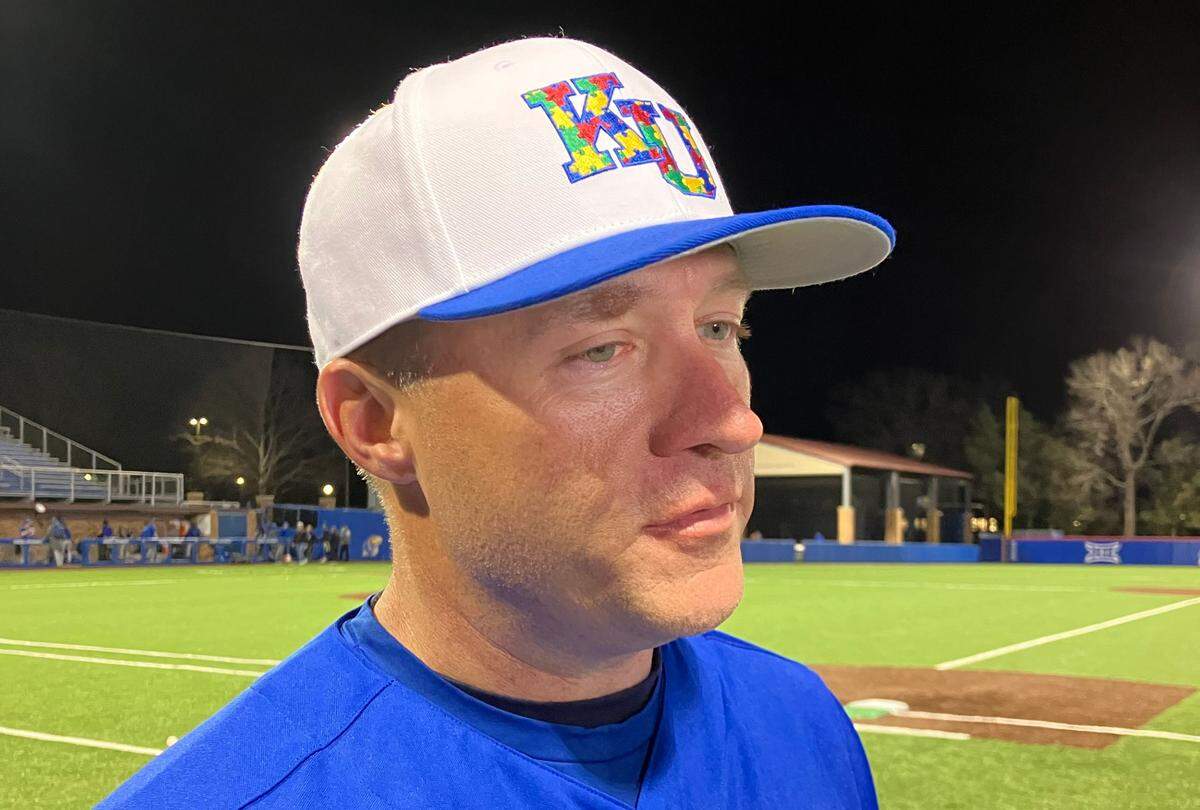
Driven by his initiative for the third straight year since he took over at KU, this branch of the event, KU’s Autism Awareness Game, featured an honorary first pitch thrown by members of KU’s Center on Disabilities and the team wearing hats and jersey logos customized to the rainbow colors associated with autism spectrum disorder.
And it began with a “sensory friendly atmosphere” of minimized noise gradually increased during the game.
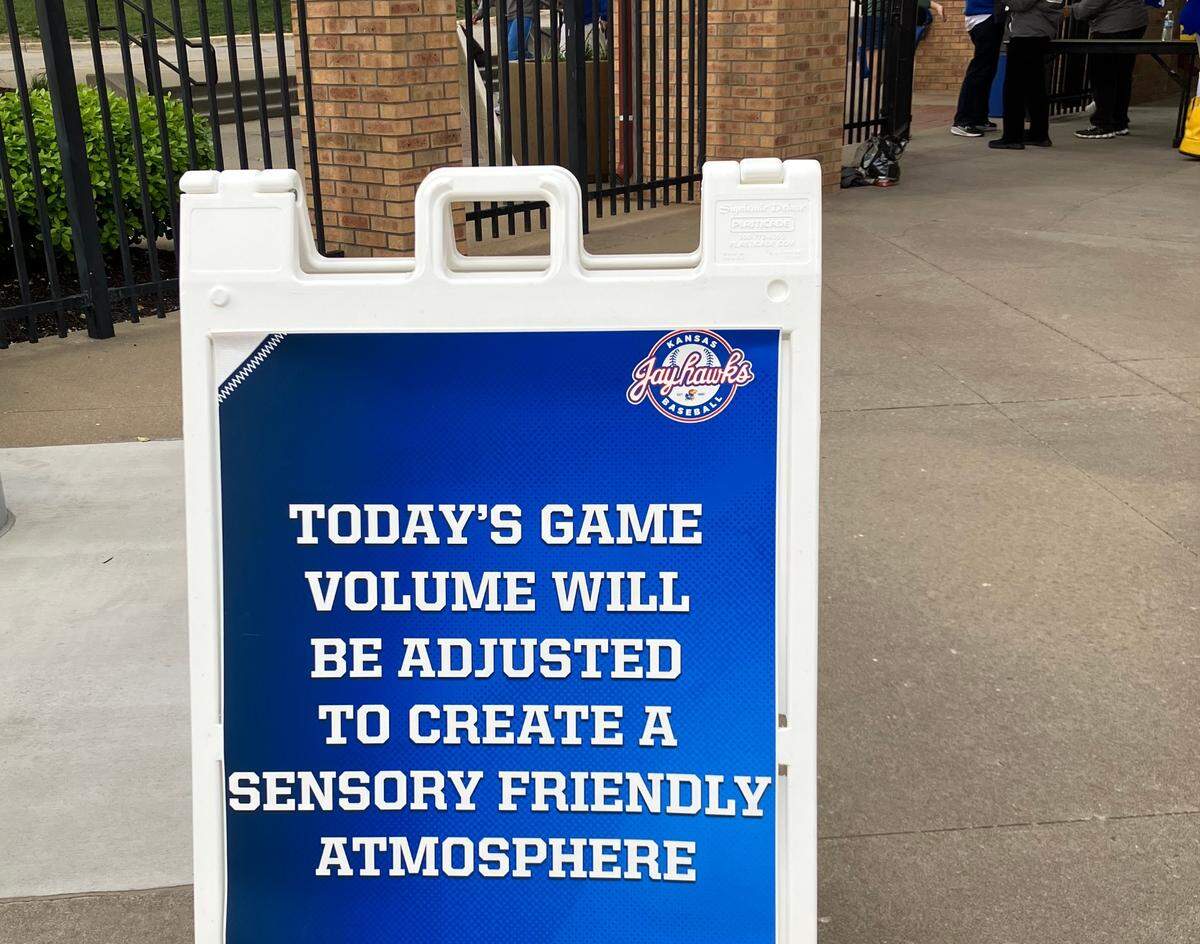
Without specifically being asked, even the student section that Fitzgerald described as normally “crazy-rowdy” seized the message to keep it down in the early innings.
“That’s one of the coolest things I’ve ever seen a group of college kids do,” Fitzgerald said.
An atmosphere in the first few innings largely bereft of the usual chatter and music provided a point of awareness in itself. But nothing was more striking than Fitzgerald with Max and Max’s friend, Daven Lopez, the “mini-managers” of the game.
Bookended by Fitzgerald on one end and the “reigning first-team All-American bat boys” who happen to be his other two sons, Will and Ben, the mini-managers wore headphones as the national anthem began.
As it played, in their own ways they were “stimming” — a term the National Autistic Society describes as “self-stimulating behavior” typically reflecting the pursuit of enjoyment, trying to either gain or reduce sensory input or dealing with anxiety.
Think of it this way:
“All of us self-regulate our bodies to some extent, right?” Fitzgerald said. “Some people are warmer, some people are colder. Some people don’t mind nails on a chalkboard. Other people cringe. You know, those are all sensory things.”
In Max’s case, sometimes he spins. He likes to sleep in a weighted blanket to feel his body more. And he loves to swim — perhaps, Fitzgerald ventured, because of the water pressure.
Then it was time to take out the lineup card. And while Daven was so into it that he stood in the middle as Fitzgerald, the umpires and the South Dakota State coach went over ground rules, Max circled some and soon plopped himself down and sat cross-legged.
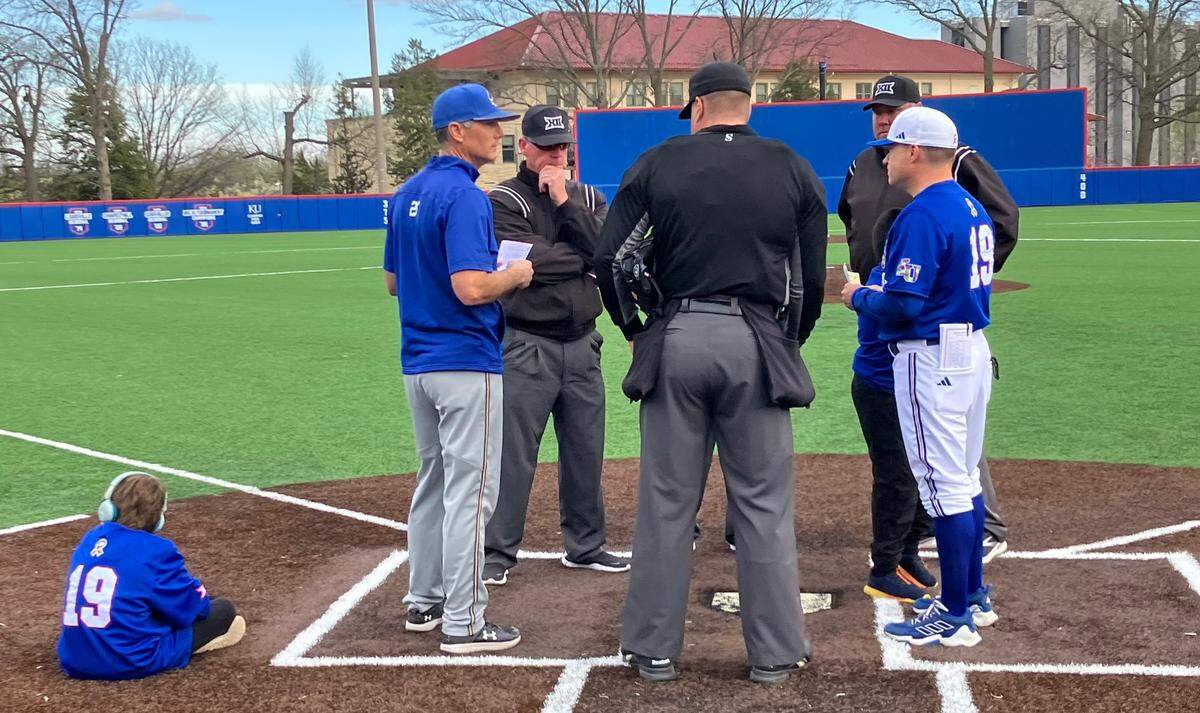
“I loved it when he just sat down. It was absolutely fantastic. That was the most Max Fitzgerald thing I’ve ever seen in my life. That was beautiful … ” Fitzgerald said. “It was just special that Max felt comfortable enough in that environment to just plant it.
“And honestly, it didn’t surprise me. There was nothing Max was going to do there that was going to surprise me.”
‘A new journey ahead’
Before Max was born 13 years ago and diagnosed a couple years later, Fitzgerald had no real notion of autism, which according to Autism Speaks is apparent with more children in the United States today (one in 36) than in the past because of increased awareness, enhanced diagnostic criteria, screening tools and processes.
In that way, Fitzgerald was a lot like many of us to whom it was just a vague notion until you experienced it directly or through family and friends.
The image in his own mind, he said, was “Rain Man,” the 1988 movie starring Dustin Hoffman and Tom Cruise that has a mixed legacy among those impacted by autism.
Among other ways he’s forever grateful to his wife, Kelly, her background as a school psychologist made her cognizant by around 13 months that “something was up” with Max.
The diagnosis took some time, he said, given that there could have been other explanations.
When staff at the Minnesota Autism Clinic spoke the words aloud, Fitzgerald remembered not being able to fathom what the future held.
(Symbolically enough, as he told the story he paused to pull back up the adjustable chair that tends to slowly sink down when he’s in it.)
All he really knew in the moment, he remembered thinking, was “this is a new journey ahead for us.”
What he might not have imagined was how essential it would become to who he and his family are and how Max would strengthen them and enlighten them and add to their lives.
Starting with Kelly, whom in rapid order he described as “the greatest,” “incredible” and “unbelievably selfless.”
“This conversation probably starts and ends with (that) everything goes through Kelly,” he said. “I follow her lead, try to follow her lead, on 90% of this, because she’s so amazing.”
‘Don’t know a world apart from that’
In some ways, the way he sees the world now through Max mirrors the career path that took him from becoming head coach at Des Moines Area Community College to assistant jobs at Dallas Baptist and Louisiana State before KU hired him in 2022 with an initial six-year, $3.16 million contract.
Every step is part of his identity now.
Along the way, he zealously dedicated himself to learning how to recruit and a philosophical approach that includes if you don’t hear “no” sometimes you’re not going after the best.
He worked hard to be able to pride himself on evaluating talent — and confirm instincts with data — and build rosters and lead and collaborate.
“I mean, if I skip any one of those steps, there’s no way I’m here,” he said. “I needed all those reps. Bad.”
As he poured himself into fatherhood and learning all about Max, he strove to follow Kelly’s patience and grace … both with Max and him. And through what soon became obsessive research, he opened his mind and heart about autism and the “monster number” of people affected by related challenges.
Only a few months after the diagnosis, Fitzgerald remembers watching a video by pastor Louie Giglio about the vastness of the universe.
That triggered a thought that through his career he’d likely be coaching players who will have brothers and sisters and children and other relatives on the spectrum.
As far back as then, it practically seemed a calling to help others navigate the “life-changing, awesome, incredibly hard (and) challenging” circumstances.
The notion of those steps along the way isn’t hard to connect to how he has experienced coaching.
“I don’t know a world apart from that, really,” he said. “Nor would I want to.”
Not to downplay the significance of other disorders — such as the genetic mutation suffered by pitching coach Brandon Scott and wife Denise’s 8-year-old daughter, Reese.
(Scott said that he is grateful that Fitzgerald, his “friend and confidante,” has offered counsel and, along with KU, enabled him to call attention to that condition the last few years with a Rare Disease Game.)
Just the same, this is as personal as it can be to Fitzgerald.
‘Greatest intro we could ever have’
As such, he sees that Max is talented and intelligent and able to be understood even without being verbal.
As Max was when he spontaneously hurried into the room to take a seat at the table before the news conference to introduce his father in 2022.
“It was probably the greatest intro we could ever have,” Fitzgerald said, smiling.
Recalling that he could hear Max giggling from a room away and Kelly then telling him Max’s shoes had come flying off and he’d already met everyone in the room, he laughed.
“That was a moment of, like, well, I guess there’s no reason to break the ice,” he said, smiling. “It’s (already) broken.”
Part of perspective, he said, that “for sure I didn’t have previously.” Along with what he can take from Max being “incredibly free from some of the cares of the world that I have found myself at times bogged down by.”
As he thought more about that, he added, “I think there were things that I valued or things I cared about that I don’t have space, time or energy to even contemplate (now). Because the important things are so front and center. …
“There’s some stuff I used to be really rigid about that now I look at and say probably was more for my comfort than actual necessity.”
And maybe that’s the essence of the most abiding and substantial point Fitzgerald hopes can come out of a day he’ll remember forever.
He hopes people’s interest might be piqued enough to help them learn more. Or at least try to understand.
Maybe more could be curious and not judgmental and refrain from stigmatizing.
Maybe more could remember that empathy is a virtue, not a weakness.
Most people are like that, he’s come to see. But he hopes it can become all the more so with awareness.
Because there’s sure a lot to be learned, as he knows well.
“We just don’t look at the world through the same lens now,” he said.
And he wouldn’t have it any other way.
This story was originally published April 4, 2025 at 7:00 AM.