
On the moving reasons Royals pitcher Tyler Duffey wants to talk about his melanoma
Veteran pitcher Tyler Duffey, auditioning with the Royals as a non-roster invitee, made his second spring training appearance on Feb. 26. Like the first outing, it went well enough. He threw another shutout inning, albeit this time allowing two hits in the process.
Then … Nothing since.
And nothing spoken of.
Amid the hope-springs-eternal buzz around more high-profile new players and the young core led by emerging star Bobby Witt Jr., Duffey’s abrupt absence was something only ardent fans and friends of his might have noticed.
But they certainly wondered.
“‘You haven’t pitched; what’s going on?’” Duffey remembered the texts coming.
He was tempted to just send back a statement in the form of a photo: a 40-stitch scar supplanting the skin over what he called essentially the length of his left trap.
Instead, he labeled the picture with what he called, “fair warning:”
He was contending with melanoma, which he learned when the biopsy results were delivered hours before he pitched on the 26th. Figuring he was about to be “on the shelf” for a while, he opted to pitch that day.
But that wasn’t so much being casual about it as a coping mechanism for an anguishing development that he spoke about publicly for the first time on Wednesday after being cleared to start throwing again, and perhaps resume pitching by next week.
While he’d later joke that he wasn’t trying to be a crusader for the cause, he certainly is seeking to create more awareness about the urgency of screening and attention to what the Mayo Clinic calls the first signs and symptoms: a change in an existing mole or the development of a new pigmented or unusual-looking growth on the skin.
“It’s eye-opening,” he said. “Because you don’t think about it, and here we are: I’m 33, getting stuff cut out of my neck.”
Had it gone a year without being detected, he added, he “may be missing a lot more than a piece of skin.”
Early detection, though, virtually always is promising: According to the American Academy of Dermatology, the five-year survival rate for people whose melanoma is detected and treated before it spreads to the lymph nodes is 99%.
Beyond his hopes of prompting others to be alert, Duffey’s sensitivity to it could hardly be more personal and profound.
That was evident through a sudden burst of tears as he divulged that each of his parents had died from cancer and his father, in fact, had died in 2021 from melanoma at age 64.
“It’s a nerve,” he said as he paused to compose himself.
Speaking about them now, in this context, made for another way to honor their memory and even enlist them to the cause.
While he still feels them with him everywhere, Duffey said, anybody who knows such loss can tell you that consoling feeling doesn’t really fill the voids, either.
Like the one Duffey pointed to when he said his dad “was there for everything,” so much so that he encouraged the few of us speaking with him to “go look up my call-up story.”
So we did, and it basically goes like this, per MLB.com:
When Duffey finally got the call to join the parent Twins club in Toronto in August 2016, he was playing Triple A ball in Rochester, New York… Without a passport.
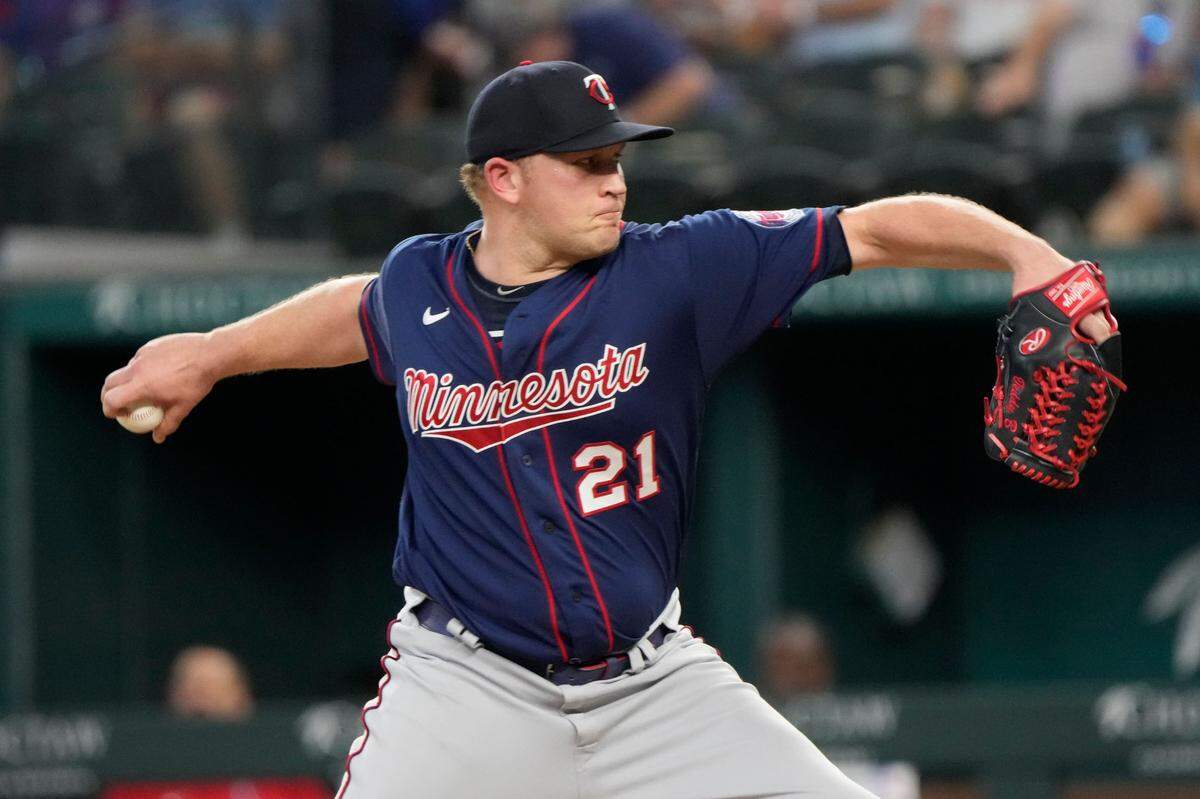
So when he called his father, Tim, with the news, it was both a celebration and a plea to bring his passport to him.
Steadfast as ever, his dad was on a plane from Houston at 6 a.m., passport in hand. And they got special dispensation to drive the three or so hours to Toronto together, a beautiful image you could barely dream up.
At the other end of his journey to the majors, his mother, Shanna, had suffered from breast cancer and died at 44 from complications of a blood clot in April 2012 — weeks before the Twins selected him in the fifth round of the 2012 MLB draft.
Referring to his brother, Travis, and wife, Sarah, and the support of his in-laws, Duffey said, “We’ve seen some things that will change you. It’s just all about perspective, ultimately. Just be happy for people. Be happy, and you’ve got to deal with what comes. You don’t really get a choice. You can’t pick your hands.”
Mustering a laugh, he added, “The saying, ‘We make plans, and God laughs’ ... It’s real.”
Just the same, so is the call to be diligent about health.
Even, as it turns out, for professional athletes who may feel immortal.
When you’re young and healthy, Royals manager Matt Quatraro said, you may tend to take such checkup opportunities as “kind of a cursory thing.”
Then there’s reality.
“No one’s invincible, right?” Quatraro said, later adding, “Everybody’s a human being out there. Whether it’s skin cancer, colon cancer, all the different screenings you can get (are) invaluable, and literally (help) save lives.”
That’s part of why access and affordability are so vital.
And why those with the means need to mean business when it comes to taking advantage of their resources.
For those in that position, anyway, Duffey had it right when he said “it takes nothing to get checked. I guess that’s the biggest thing I’ve taken away from it. It’s no effort other than showing up.”
In Duffey’s case, he scarcely had noticed anything in part because it was out of his routine field of vision. But some weeks ago his wife noticed what he called “a freckle that changed” and planted the thought that he ought to get it looked at.
Even with the family history that he reckons makes him “somewhat pre-dispositioned” to melanoma, though, he didn’t immediately take that seriously.
“We’re in the sun a lot. We’re outside, always,” he said. “Often not even thinking about it, you know, sitting in a bullpen.”
But his wife’s suggestion gave him the presence of mind during his Royals’ report physical to ask team dermatologist Glenn Goldstein to “just take a peek.”
Almost instantly, Goldstein said, “I don’t love that one.”
Shortly thereafter, Duffey underwent a biopsy that he said removed a majority of the issue.
But that nonetheless led to a diagnosis that was jarring to hear — particularly because of his father’s experience.
“It’s heavy,” he said. “Because you don’t know what that entails, per se. You don’t know … if it’s anywhere else. If it’s just one spot. Is it shallow?”
His instinct still was to put off the second procedure, because no matter what it would sideline him for weeks.
But when he asked Goldstein if it could be delayed, what resonated most were the words “we can’t make any promises” if you do that.
So Duffey opted for minor inconvenience and setbacks and the relative peace of mind of immediately dealing with it.
Other than the stitches pinching as they heal, he described himself as “in the clear now” pending checkups every few months for the next five years.
He’s also contending with some itching, which he playfully apologized for indulging at times on Wednesday.
But his real itch is to get back out there.
That’s why he sat in the bullpen on Tuesday night for the first time since Feb. 26 and is eager to return to what he originally planned to do this spring after spending most of his career with the Twins and most of 2023 in the minor leagues with the Cubs.
“Leave a good impression on everybody,” he said, “and be of use ultimately.”
Something he’s already achieved, actually, even if not quite as he envisioned it.
This story was originally published March 7, 2024 at 5:30 AM.