
Orlando Brown’s return despite contract dispute reflects vital part of Chiefs culture
A career in the cruel and grueling NFL is precarious and fickle. It’s dangerous and can be snuffed out at any moment … to say nothing of inflicting lasting damage. So anyone able to play certainly is best served to get all he can get when he can get it.
We usually think about “getting yours” in terms of financial compensation and, accordingly, being able to provide. Moreover, many quite reasonably perceive that as a measure of personal worth: If you’re the best, after all, it sure seems you should be paid the most.
In this context, anyway, Tyreek Hill certainly did what was best for him and his family after Davante Adams jolted the receiver market (with a five-year, $141.25 million deal) that led to Hill’s trade to the Dolphins and a four-year, $120 million contract.
Now, the Chiefs prospered by the deal for five draft picks that figured in their selection of Trent McDuffie and Skyy Moore (with two more picks still in hand) and enabled them to have financial flexibility to do some key spackling along the way. But that’s merely a side point here.
While Hill has felt the need to crow about the move he essentially forced, we wonder if he’ll ultimately recognize there is more to his NFL legacy than maxing out what he can make.
Because no matter how many essentials … into luxuries … into generations of wealth that such money could create, it can’t buy the greatness and gratification that Hill might have further achieved here with, say, $20 million a year.
That’s his choice, and you can’t say he was wrong to seize the moment since that apparently is what most motivates him.
But some indulgence of the reason the game exists — the pursuit of championships — is a fine piece of the formula for the simultaneous chase of team and personal glory.
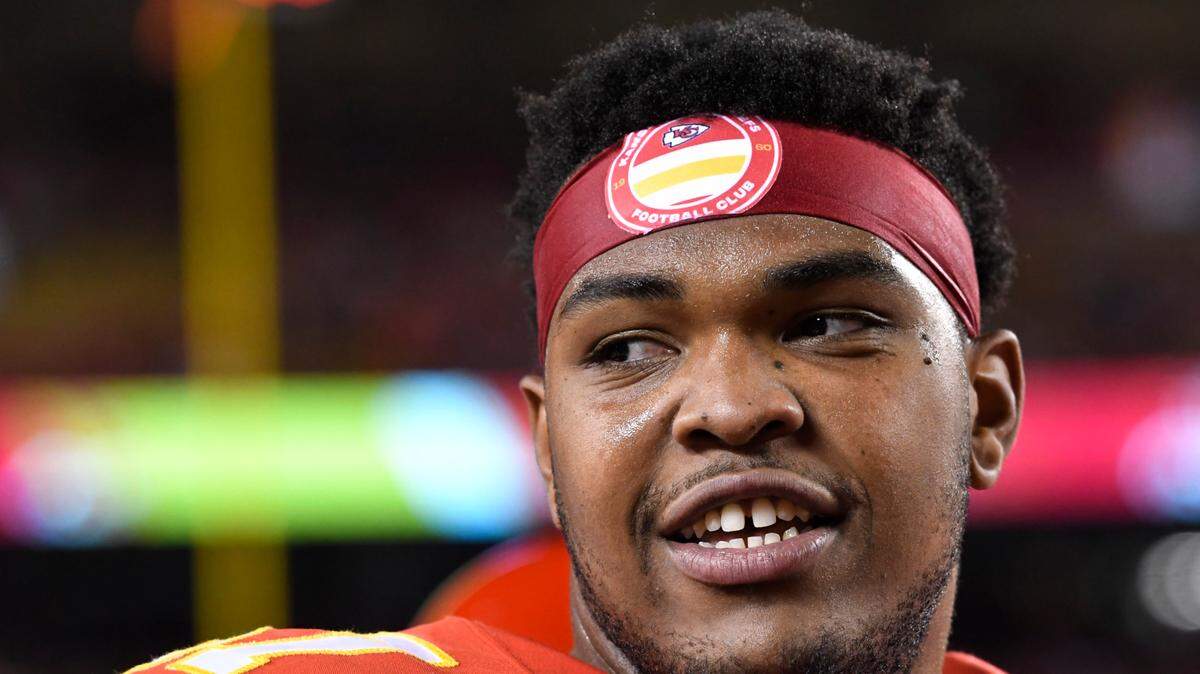
That’s something we were reminded of as left tackle Orlando Brown spoke with the media for the first time since arriving at training camp on Monday amid a contract kerfuffle that has relegated him to playing on the franchise tag — a one-year deal for $16.7 million — instead of on the long-term deal he had hoped to secure.
Brown was here for a lot of reasons, to be sure.
But one of them was his ongoing desire to be part of something bigger than himself despite his intense ambition to get a contract that would have put him at or near the top of the market for his position.
Here’s hoping he can compel that. But here’s the thing:
In a finite world of salary caps, a primary need to be the highest paid can be antithetical to the ability of a franchise to maximize its capacity.
See superstars Patrick Mahomes and Travis Kelce, each of whom is lavishly remunerated but hardly the highest-paid at his position. (Mahomes is fourth among quarterbacks, Kelce fifth among tight ends.)
The dynamics and significance of this point were reiterated with Brown’s return with the contractual disconnect still hovering: ESPN’s Adam Schefter reported that the Chiefs offered a six-year, $139 million deal, which on its surface would have put a player who hasn’t been top five at his position among the top paid but had only limited guarantees.
So Brown missed all off-season activities and the first five days of camp, and he could have sat out camp altogether.
But he basically came to his senses just as the pads went on.
“I know how important this five-day stretch is to Coach (Andy) Reid, and everybody here in K.C, man,” he said. “It didn’t feel right sitting at home missing out on this; this is something I want to be a part of. I was brought here to help win Super Bowls, and this week is very important to our progressions.”
That was surely in his self-interest but also, at least we think, because of something more: an abiding understanding of what’s at stake and what he can be a part of that will elevate him by extension.
Extension in more ways than one, perhaps:
Brown insists he still hopes to finish his career as a Chief. And the Chiefs like the idea of signing him for the longer term if it makes financial sense … and he further demonstrates his worth in just his second season as a left tackle.
The issue, he said, was “not about the money” but a matter of not “enough guarantees.” That might sound contradictory, but you could also see it through this lens: security in the long-term with an organization he believes in.
“I love blocking for Pat Mahomes, I love putting the Chiefs logo on my helmet, and I really enjoy being here,” he said.
Perhaps illustrating a certain sincerity to his view, Brown even acknowledged he has plenty to improve “in almost every way, shape form or fashion.” From run blocking to pass blocking to leadership, he said, adding that he struggled in the crunch at times last season and “I want them to be able to count on me when they need me most.”
Count him reporting now in that category in numerous ways, including helping establish the crucial cohesion of the offensive line.
But it also echoes a broader, deeper tone set by Mahomes and Kelce when each spoke about their compensation in the last few months.
Two years after signing a $500 million contract, Mahomes promptly has become the fourth-highest paid at his position but has no public quibble with it.
“When I signed my deal, I knew I was going to be set for life regardless of what (happens in) the market,” he said when the Chiefs opened camp last month. “But you just keep playing. I mean, money is one thing, but when you get those Super Bowl rings at the end of your career, I think that’s going to be the thing that you look back upon.
“I think I’ve made enough money from the football field, and obviously off it as well, that it won’t matter at the end of the day.”
Kelce spoke similarly a few months ago after 49ers counterpart George Kittle (the top-paid tight end in the league at $15 million a year) suggested Kelce ($14.3 million) was vastly underpaid.
Much as Kelce appreciated Kittle saying that, Kelce made a different point: “I signed my contract understanding what I had. I put a lot into this. Money in my mind is almost secondary in my career. I’m here for the legacy and trying to make the Kansas City Chiefs the best team possible, man. So that’s my main focus. That’s why I’m here.”
We know these are only words, and that actions in the years to come will speak louder from all of them. And we’re not advocating anyone accepting cut-rate for their excellence.
But the bigger picture is a little like that expression about perfection being the enemy of the good.
In this case, you can go all-in for nothing but the money.
Or you can consider the balance of the money and the cause that matters most to you.
If that’s purely the money, of course, then there’s no decision to be made … and more power to what that brings you.
Like Hill is seeming to enjoy entering this season with a Dolphins franchise that hasn’t been in the playoffs since the 2016 season and hasn’t won a postseason game since Dec. 30, 2000.
And, heck, maybe he’ll help transform that — something that could bring its own distinction for a mesmerizing player.
Meanwhile, Brown is in camp now despite the complications, he says, because he wants to help his teammates. And certainly to burnish his own sense of accomplishment and resume.
Which he knows he can do in one way in particular.
“I’m here,” he said more than once, “to win Super Bowls.”