
The uplifting story behind a Kansas umpire’s journey from Garden City to World Series
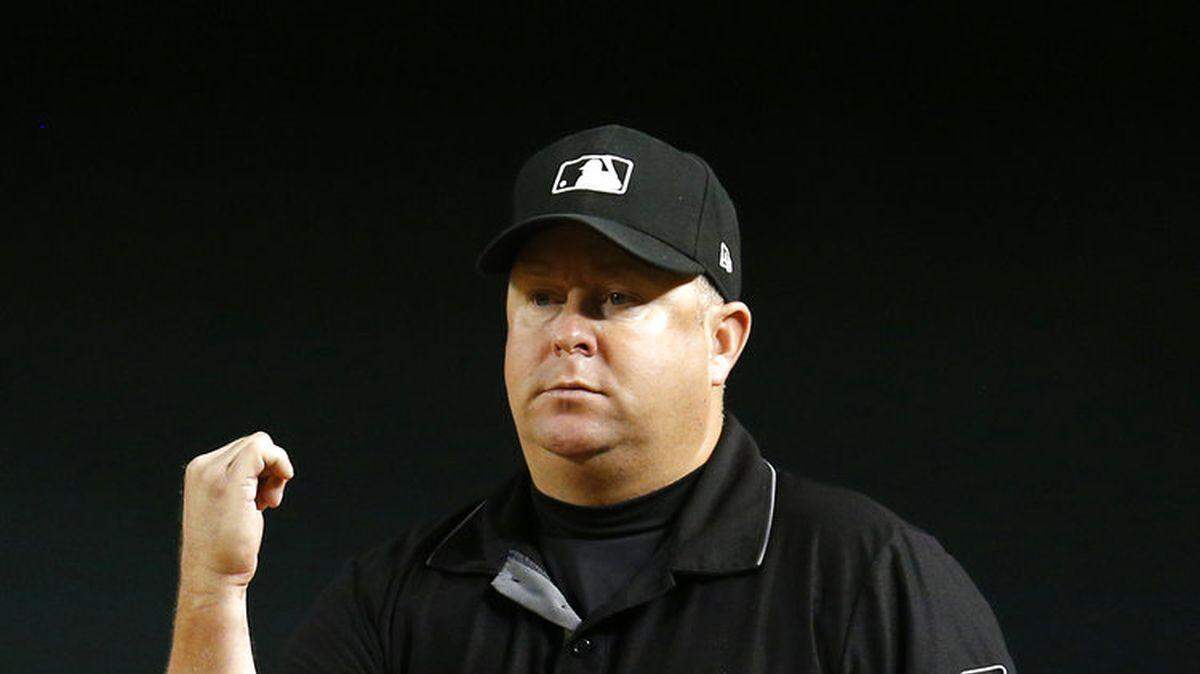
Inauspiciously enough, Todd Tichenor was 13 when he began umpiring in men’s softball in Garden City, Kansas. Initially, it was just because he realized he could make more movie money that way than by keeping score or shagging down softballs.
But by the time he was 15, “dragging” Main Street (as a passenger) with friends and for the first time meeting his future wife, Kelly Maestas, he already had embraced it as what he was born to do.
When they spoke that night in the parking lot of Anthony’s Dress Store and she asked him what he wanted to be when he grew up, he recalled Wednesday, he told her: a Major League Baseball umpire.
Something had “clicked early,” perhaps including seeing his late father umpiring before he died of cancer when Todd was 6.
(His father’s early death also helps account for Tichenor’s efforts with UMPS CARE Charities, the official philanthropy arm of Major League Baseball Umpires, which provides in-kind, financial and emotional support for underserved youth. On its behalf, ESPN’s Dan Shulman on Sunday will moderate a conversation with Tichenor and the rest of the 2020 World Series umpiring crew. If you’re reading this in print, go to umpscare.com for more information.)
So somehow the dream became not to play major-league ball, but to be calling “that 3-2 slider at the knees” in the World Series.
It was a precocious and improbable ambition, particularly for someone from the remote part of a state that hadn’t produced an umpire to reach that pinnacle since George Barr in 1949.
So imagine the sensation when the vision, and an arduous path to it culminating with negotiating a season of the pandemic, finally was realized in October some 30 years after he started speaking it out loud.
He’d had many milestones since becoming a full-time MLB ump in 2012, including the 2017 World Baseball Classic, the Royals-Astros series in 2015 and his postseason debut the magical night of the Royals’ 2014 Wild Card rally over Oakland.
“By far the most rocking stadium I’ve been in,” he said.
Just not quite as emotionally rocking for him as getting the World Series nod in October.
Tichenor, 44, didn’t cry when he called Kelly. But the emotional dam broke when they Facetimed oldest son Kaden — with whom Kelly had been pregnant all those years ago as Todd was toiling in the lower minor leagues with no way to know if the payoff ever would arrive.
Because this was the family’s journey as much as it was his.
Maybe all the more so in a year when COVID-19 coronavirus protocols meant going more than three months without seeing each other in person and having to stay apart when the family came to Arlington for the World Series.
But even at social distance, he’ll always remember the moment after he worked behind the plate for Game 2 and made eye contact from a distance with his sons in the stands afterward.
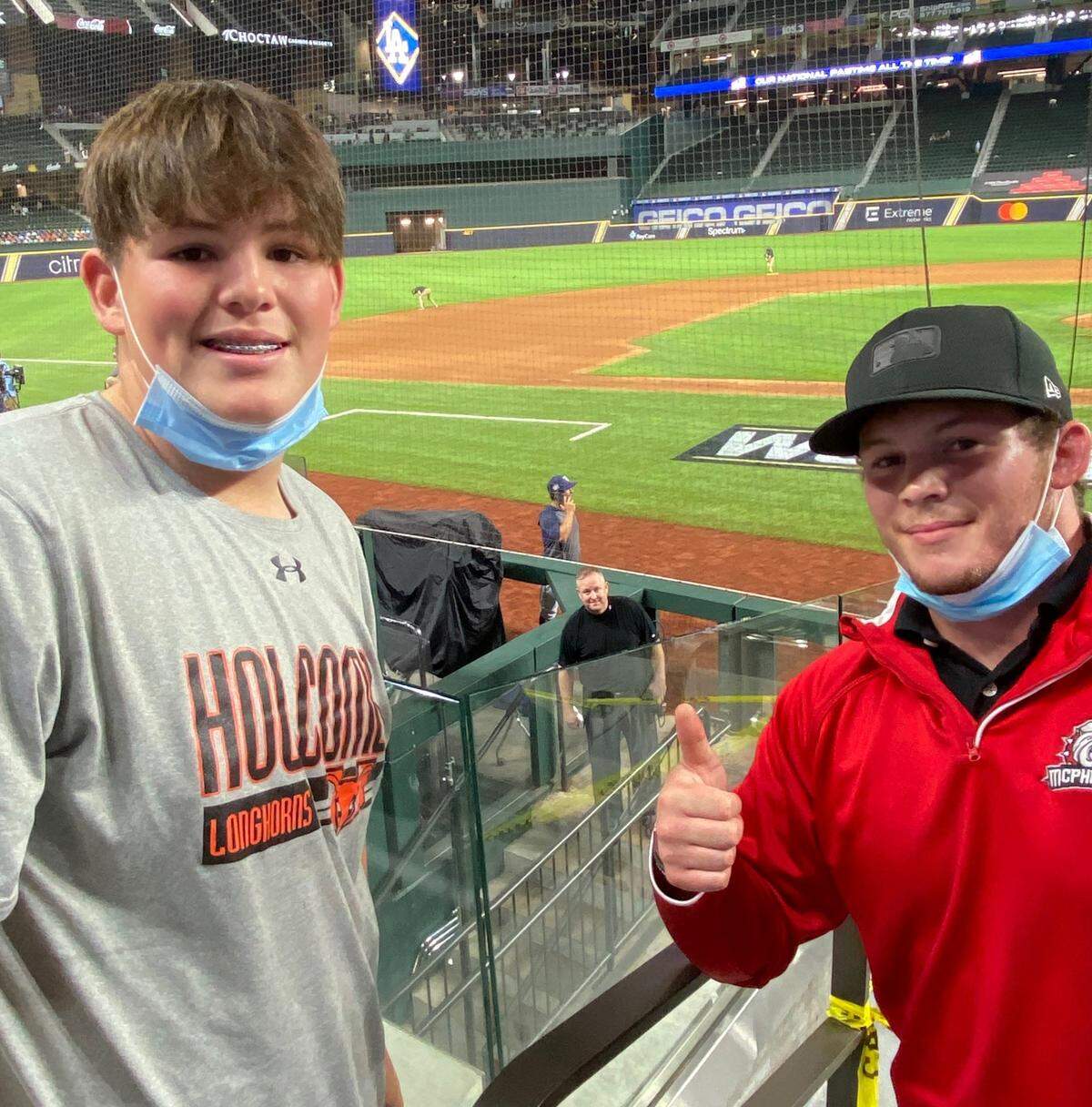
The scene was all the more serene since he figured he could celebrate secure in the notion that “I shouldn’t be on the news” for any controversial calls.
Still, the honor was as much about the odyssey as the destination, from umpiring school in 1999 through every level in the minor leagues all over the nation to being an MLB substitute from 2007-11.
Having no home games meant he was effectively gone six months a year while Kelly was at home teaching and eventually with three children.
To help make ends meet, in the offseason he’d substitute teach and referee youth volleyball, basketball … you name it. Then he’d go back out and do it again.
“Nobody saw that part,” said Tichenor, who now lives in Holcomb — and yes, he is plenty conversant in the history of Truman Capote’s “In Cold Blood” and the tragedy of the Clutter family.
The part people could see started in 2007, subbing for the first of 530 MLB games over five years. That was 530 job interviews, he reckons now, being evaluated not just for accuracy and acuity but also for his feel for how and when to put out fires of the game … and even when to add fuel.
By 2012, he was deemed ready for full-time MLB status. And like everyone else involved, he’d need all of the ensuing experience to know how to manage this year when who knew how long baseball itself could last. At times amid COVID flare-ups among teams, Tichenor and other umpires worried that it just wasn’t working.
“Obviously, we bent,” he said. “But we didn’t break, that’s for sure.”
That included off the field, where pop-ins back home weren’t practical or safe in general and were out of the question by policy once the postseason hit. That’s when the bubble went from essentially“ on your honor” to relatively airtight, going only from hotel to ballpark and eating room service while still testing every other day.
Technology helped, with frequent Facetiming allowing him even to be third-grade daughter Teagan’s “show and tell” one day from San Diego back to Holcomb.
As for on the field, the matter of masks initially loomed large, particularly when behind home plate … under a mask. But by the end of the year, he said, “It became part of me. I didn’t even realize it was on.”
The season also featured implementation of rules changes such as three-batter minimums for pitchers and, contoured to the pandemic, a runner starting at second base in extra innings.
As one who believes more in carrying out the policies than critiquing them, Tichenor was reluctant to elaborate much on either. But he did allow as how anything enhancing pace of play is good for umpires.
“We don’t care who wins,” he said, laughing and adding, “We just want it to be over with.”
Meanwhile, with his quest for the World Series theoretically over with, little has really changed back home.
Sure, the El Rancho Cafe has a dish named for him (“The Ejector”) … but, he says, that’s been the case for a while and just because the cafe is owned by Kelly’s family.
In fact, he figures the only recognition was getting laundry started for the kids and making sure their homework was done.
But he wouldn’t have that any other way, either, trading in one family endeavor for another in the offseason after all together realized the stuff dreams are made of.