
Born into segregation, Jack Bush blazed his own unique trail and paved way for others
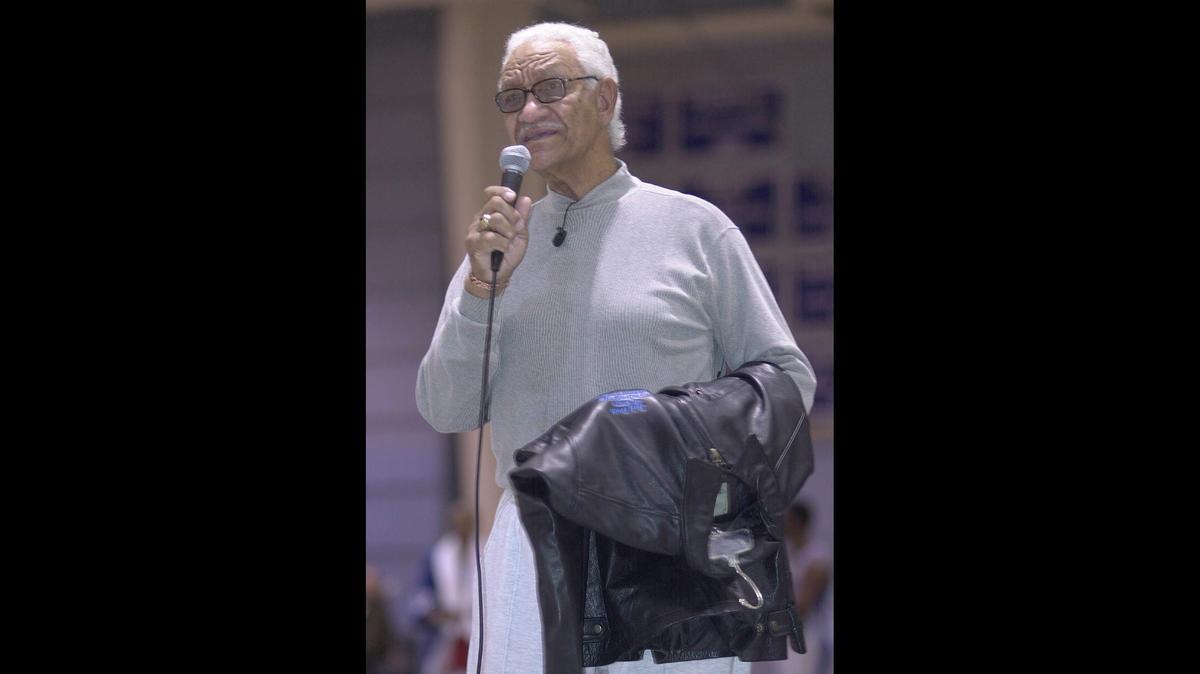
Jack Bush was born in his parents’ home at 21st and Vine in 1924. His father was a firebuilder and boilerwasher for the Frisco Railroad for 30 years, typically walking miles to work in the West Bottoms.
So the only child of Jackson Sr. and Ida would learn to work, too. By age 14, he was lugging coal into apartment houses for 10 cents a bushel and learning what he called to “act right” even when so much in the world around him wasn’t right: He never ventured past 27th Street and didn’t know there was a golf course in Kansas City until he went away to college.
“I knew nothing, really, about segregation,” he said. “I had no gripes. Because if you didn’t know you were missing anything, how could you feel bad about it?”
When he did know what he was missing, he forged his own path:
His first coaching job was in 1949 at Washington High School in Caruthersville, Missouri. The former Lincoln University football and track star (he didn’t play basketball in college) was startled by the lack of facilities and resources.
So he drove his old Chevy into an open field near school, watched the odometer turn one mile and declared it a track.
So when he had five athletes qualify for state but no uniforms or transportation money, he packed them in his car. Then they met the uniform requirement by sharing his undershirt, passing it around and attaching numbers to the back.
Such was the stuff of an iconic and unique journey — one that led him to military service in the South Pacific during World War II, a celebrated basketball coaching career and multiple halls of fame.
One that led to influence around his hometown, abiding friendships with the likes of Buck O’Neil, Ollie Gates and Negro Leagues Baseball Museum president Bob Kendrick and the ever-lasting gratitude of former players.
That’s why days after Bush died at 96 on Friday, six of his former Central High players spanning nearly a generation (from the late 1970s to the late ‘90s) gathered in the gym bearing his name and beneath a banner extolling his records.
But it was what no raw numbers could quantify that they wanted to pause to appreciate as they sat clad in masks in a distanced semi-circle reflecting a pandemic that Michael Walker reckoned was the only reason the gym couldn’t be overflowing.
They talked about defining sorts of images like a larger-than-life aura with Bush’s ever-sharp appearance and white hair and huge hands.
Hands, Donnell Fletcher remembered, on which Bush might put three quarters atop the back of and then flip up and catch all three.
“I thought he was a magician at one point in time,” he said.
Really, they all thought that in some form or another. But Darryl Bush (no relation) better remembered Bush applying those hands when the coach yanked him from a game — often delivered with an abrupt rise from his seat and face reddening, Jamar Parker said, laughing.
Much as the player might seek a seat at the end of the bench, there was a spot reserved next to Bush, who also coached at R.T. Coles Vocational School and Manual High before coaching Central from 1968-2001.
He wasn’t prone to berating players but commanded attention by demeanor and with a hand squeezing a knee in such a way as to enhance engagement.
If those were the vehicles, though, it was what Bush delivered and stood for that most resonates.
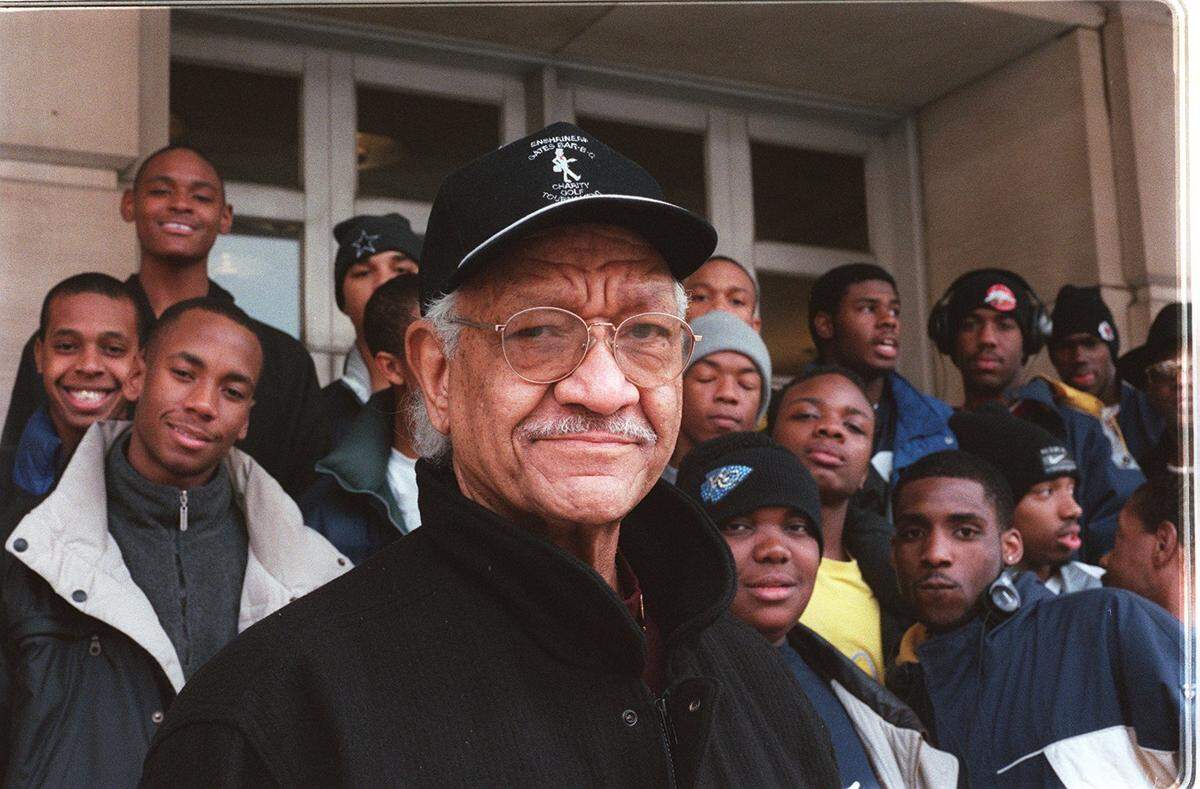
Players knew he was invested in them beyond the court, in a real world where he wanted them to remember someone else’s label or opinion never should become their reality.
He was in charge, yes. And that might mean he’d bid farewell to an entire senior class during one season for a perceived insurrection and didn’t suffer selfishness.
But he also was compassionate and accessible. Sterling Burgette treasures that he could go to Bush to make a case about playing time and that Bush thanked him for making the point and later commended him for standing up for himself in front of the student body.
“If something went wrong, you could go to Coach Bush,” Steve Johnson said. “You could talk to Coach Bush. Coach Bush would listen to you, and you’d sit there and figure it out.”
He helped them learn about banking and taxes, about social security and job applications and the importance of a college education. He helped shape their directions, who they are and what they pass on.
When he coaches now, Burgette’s youth players cite the very pregame words Bush used: “United we stand, divided we fall.”
Walker thinks about the tough love that also came with a certain kindness that made Bush a father figure to the entire student body.
He reached in his pocket for students so often that they wondered whether he owned the school’s pop machines and figured he was rich.
“In spirit, too,” Walker said.
If you played for him, you learned to be prepared and on time … and not to take a shot outside the paint if he said not to. You learned how to dress and be neat and how to treat others. You learned to look people in the eye when you shook their hands, and you witnessed the dignified example of never cussing.
You learned the integrity of not embarrassing your opponent. And you learned to understand losing was part of competing … even if his teams didn’t do it so much in a career that included 799 victories and 12 state final fours and the 1979 Missouri 3A championship.
Bush was so many other things, too. For instance, in the mid-1970s, The Kansas City Star wrote that he had begun spending spare time at the sewing machine. He was personally stitching warmup suits for his teams and to that point had made what he estimated were some 200 pants, mostly for family members, with the guidance of tailor Petey Stamps.
Stamps “tells me to be original, to be different. So what if one pocket is up and one is down?” Bush said in 1976. “At least there isn’t another suit like it. He makes you solve your own problems, too. If the pants don’t hang right, you have to figure out why.”
So he did. Just like he figured out about everything else, an original who blazed his own way to paving one for so many others.
This story was originally published November 25, 2020 at 12:08 PM.