
Fifty years after tragic death, remembering name and legacy of pioneering Carol Durand
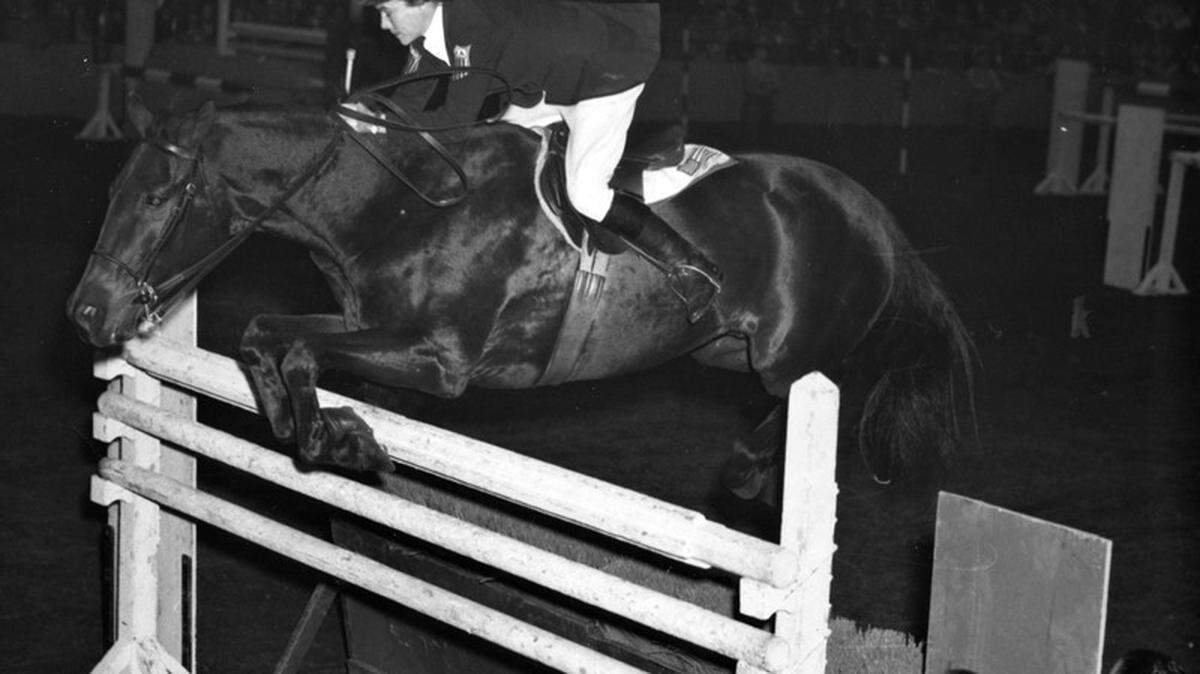
Fifty years ago this week, a 52-year-old Olathe woman whose name you probably don’t know but might appreciate ventured to the race track in Cahokia, Illinois, seeking to buy a horse.
The seemingly routine trip turned tragic.
According to one report citing authorities, she was exercising a horse when it reared up and threw her into a fatal fall after her head hit a guardrail. Another report said she died because the horse fell on her.
Whatever the case, it was a particularly cruel twist of fate for Carol Durand, who had been such a pioneering force in the equestrian world that her death was noted in Sports Illustrated and The New York Times.
Both emphasized the same point in the rough draft of history:
Just below its mention of the horrific Wichita State football team’s charter flight crash that killed 29 people on Oct. 2, 1970, a moment to pause and remember now, too, Sports Illustrated wrote that she “was named to the 1952 U.S. Olympic riding team but was barred from participating because of her sex.”
But Durand’s fascinating life, which I knew nothing about until coming across her researching something else, was far more about all she did achieve and do than what she wasn’t allowed to take part in.
And while she was inducted in the Show Jumping Hall of Fame in 2000 and into the Greater Kansas City Amateur Sports Hall of Fame in 1983 and her name remains celebrated elsewhere and by the American Royal, her story bears broader modern commemoration lest it be forgotten.
(Attempts to reach her son, Dana, were not immediately successful).
“While many have helped secure female spots on U.S. international teams, Carol Hagerman Durand was one of the first to blaze the trail that eventually led to allowing women to compete as equals,” The Chronicle of The Horse wrote in 2011.
According to Star archives, Carol Hagerman became enamored of horses as a child on a family farm near Kansas City.
“Some people like cats and dogs, but I disagree with them,” she wrote in a school essay. “A horse is my favorite animal.”
After her first success as a 7-year-old American Royal, she won what The Star called “almost too many to count” show-ring prizes and also began showing horses she had developed herself.
She joined the Red Cross during World War II in part out of sense of duty and in part because of what the Show Jumping Hall of Fame described as “the reduced show horse activity of the War years.”
During her 22 months of service, largely in China and India, she remained a celebrity locally. The Star wrote about how she “bounced into the news again … on an occasion when her mount was a jeep and she was on a tiger hunt in Burma where she was stationed as a Red Cross staff worker.”
Upon her death, it reported on a more substantial aspect of her service.
“She was one of four young women who established a Red Cross canteen in the jungles of India for airmen who flew a hazardous route over the Himalayas,” it wrote in 1970.
The Show Jumping Hall of Fame described the canteen being “for combat engineers along a 200-mile stretch known as the Burma Road.”
Shortly after she returned from the war, she married Frederick Dana Durand, a distinguished WWII veteran and Kansas City businessman. And she resumed her equestrian career, becoming front- page-above-the-fold news in The Star in 1950 as she flourished in the sport in the months after giving birth to a son she would bring into her world in more ways than one..
In 1951, one newspaper headline noted she was taking him “Riding At 17 Months.” Another put it as “Kansas Matron Teaches Son Riding Skill.”
The story was coming out of the National Horse Show in New York, where Durand was a sensation: Through the Olympic Trials at Fort Riley, Kansas, she had established herself as the first and only woman on the four-person U.S. Equestrian Team (or on any of the international teams there) and was on trajectory for the 1952 Helsinki Olympics.
Yes, a woman competing among men, per an emerging and apparently enlightened U.S. Equestrian team policy. But despite the International Olympic Committee ruling in 1951 that women could “henceforth compete in equestrian events,” according to her American Royal bio, that hope was ended when the International Federation for Equestrian Sports proclaimed Olympic jumping as “too hazardous for women.”
Four years later, at the 1956 Melbourne Games, women were allowed to compete in show-jumping. Although she would have been 38 by then, it’s unclear why Durand wasn’t part of that considering she continued to compete successfully until at least the mid-1950s.
In 1953, she was part of a pictorial story in Life magazine with a headline, “Girls Steal The Horse Show” that referred to her as part of “the parade that put the dominant male to shame.”
And in a 1956 Sports Illustrated piece soliciting opinions of whether women were at a handicap competing against men, a member of the National Horse Show board of directors invoked her name as one example of women thriving in the competition.
“I’d say that the average woman is at a handicap competing against men. But the really good women riders don’t need handicaps,” Gen. Guy V. Henry said. “They are as good as the top male riders and better than the others. I mean riders like Pat Smythe, Carol Durand, Shirley Thomas and Joan Flynn.”
In the years to come, Durand’s American Royal bio adds, she “became well-known as a judge (and) shared her knowledge and enthusiasm” for the sport with so many friends.
“Carol Hagerman Durand,” it added, “is remembered for the joy she found in teaching children to ride and for her fearless spirit and great love of the sport.”
She died, alas, as she lived.
But she died, too, with a legacy that deserves to be remembered.