
Mizzou football’s message reflects what sports can stand for amid COVID-19 pandemic
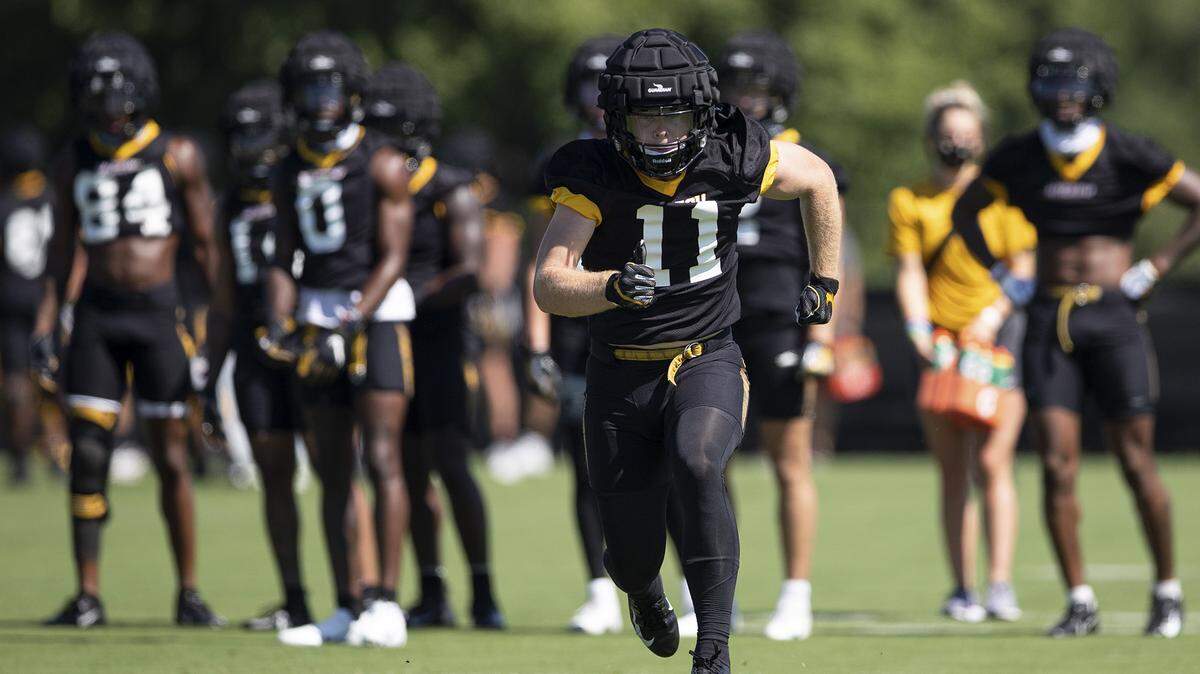
On the first day of his first preseason camp as the University of Missouri football coach, Eliah Drinkwitz thought Monday about how it was the stuff of dreams.
Coaching football at a state school in the Southeastern Conference with grass beautifully cut on a gorgeous day, maybe 73 degrees, he ventured. And who doesn’t love a fresh start in which everything seems possible?
But what comes with the fresh start now also is a blank slate, for better or worse:
Consider that there is a three-way battle for quarterback ahead. Freshman newcomers are waiting to earn jersey numbers. And the essential install of the offense in particular, and to some extent the program in general, was stalled by the COVID-19 coronavirus pandemic that shut down MU’s reset before it even began in earnest in the spring.
But even as Drinkwitz stressed that the compressed time frame won’t lead to compromising the laying of the foundation in the weeks ahead as Mizzou prepares for its scheduled Sept. 26 opener against Alabama at Faurot Field, emphasized that there are no microwaves or CliffsNotes or executive summaries that can speed up “the process,” the question of whether anything actually will proceed as scheduled hovers over it all.
All the more so as students return to campus and the X-factors in the spread of the virus potentially multiply geometrically outside whatever compound and culture collegiate sports programs are able to dictate or instill to try to keep athletes safe and healthy.
The matter naturally came up with players on Monday, framed within the context of other athletes and coaches around the nation who have called attention to unmasked, undistanced and otherwise undermining behavior immediately erupting around campuses as students return.
And here we pause in appreciation for the broader perspective of tight end Daniel Parker Jr., the junior from Blue Springs: “Don’t wear a mask because we want to play football. I would say wear a mask for your safety and other people’s safety. That’s really the point of wearing a mask.”
It sure is, isn’t it? When all is said and done, it’s kind of just that simple.
And for all the consternation and fretting and bickering over whether trying to play football this fall is viable or appropriate, for all the indicators that this endeavor could (and maybe should) shut down any time, it’s worth noting this has come of it:
At virtually every turn, sports teams and coaches and administrators and athletes trying to resume at least are transmitting public-service messages with fine applications to the rest of the world at large.
The sorts of things that signify concern for others and taking individual responsibility for your role as a link in the human chain that ought to be an obvious and absolute guiding principle are being advocated for all the time in these groups.
And that suggests not only that they’ll have at least a chance to make these games work but maybe also the opportunity to have some influence based on the only way they can get it done: by way of the demonstrably proven science of such simple gestures as masking up, washing hands frequently and keeping social distance.
Even taking those measures, of course, something could go awry. And the game of football itself seems teeming with issues, starting with the blood, sweat, breath, tears and saliva going back and forth.
But what might we learn from this?
When running back Larry Rountree III was asked about what he saw in students, he said he’d seen some taking it seriously and others not. Then he said some things that we all ought to be thinking about, even if it was under the umbrella of football.
Rountree, who said the SEC feels “overprepared” to deal with the pandemic, spoke of teammates holding each other accountable for how they behave away from the field.
Because it can affect everyone else.
Not only could someone catch COVID and miss two games, he reminded, but it could ripple through the team and rapidly threaten to shut down the season.
Which is why they try to spread the word instead of the virus:
“‘If you do go out, just wear a mask,’” he said he’ll tell others. “‘It’s not that hard.’”
To reinforce the point, Rountree said, they have to “assume everybody has it.” Even those who may not want to wear masks.
You can’t force them to, he said, adding, “I don’t expect them to hold themselves to the (same) standard as we do.”
But they can still set a standard that makes sense for all — even if their incentive is more specific: To animate a blank slate instead of contaminating it in the weeks to come, and to have a chance at a season ahead that could keep sending a message about a path forward for all.