
Former Chiefs assistant coach and MU star Brock Olivo unbowed by quarantine in Italy
As Brock Olivo gazes out at the wondrous city of Rome from his seventh-floor balcony on Viale Beate Vergine del Carmelo, some of the words that come to mind right now are “macabre” and “apocalyptic.”
Amid the sinister sprawl of the COVID-19 coronavirus pandemic, through Friday evening no country had suffered more coronavirus-related deaths than Italy (18,849), where strict quarantine has been enforced for weeks.
So the city with a population of nearly three million is a ghost town where only grocery stores, pharmacies and gas stations are open. Its enchanting buzz and bustle have been relegated to a haunting vacuum.
Vanished into the haze are the kisses on the cheeks among what Olivo calls “one of the most touchy-feely societies in the world,” and ebbed away are the gregarious clang of espresso cups and white noise of normally constant chitter-chatter.
Replaced by a setting Olivo described thusly: By decree, he can’t go into the silent streets without a printed consent form to shop (once a week) and might wait in line for hours while clad in a mask and surgical gloves and toting a bottle of spray disinfectant.
“Think about this: Rome in the spring,” Olivo, the former Chiefs assistant coach and star running back at Missouri, said Thursday in an interview over FaceTime. “This is an ethereal place, and you have spring in full bloom all around you. And all the beauty that spring brings with it here. And the paradox is that you also have this silent killer lurking.
“So you can’t even go outside and enjoy it because you don’t know where it is and who has it … Never in my wildest dreams did I imagine seeing Rome so empty.”
A void in which Olivo more than anything else perceives hope in the unseen. It’s an attitude that might be a challenge for many to absorb, let alone execute. But it’s also one with some vital incentive both abroad and right here now.
“You have to see this and approach this as an opportunity to enrich your life,” he said. “That’s the way I’m approaching it, and for me it’s working. I know everybody is different, but I can just speak from my perspective:
“What a great opportunity for introspection. Think of the artists, the singers, the songwriters, the writers, anybody who has to create. Think about the opportunity that they have during this time, especially in the (United States).
“Our rhythm, our pace, if you will, is so much more accelerated than most of the other parts of the world that we really don’t ever have a chance to sit down and take a deep breath and relax. So what an opportunity for people to embrace this moment and find out, really, who the heck they are. …
“In my opinion, there are going to be a lot of people who when they come out of this thing take a different direction in life. Be it career-wise, culturally, relationship-wise, etc., etc. It’s going to be an eye-opening experience if you embrace it and you approach it optimistically.”
Anyone who knows Olivo might not be surprised that he somehow sees fullness, even a richness, in this barrenness.
Anyone who doesn’t know him might learn that from a quick glance back at him as a player.
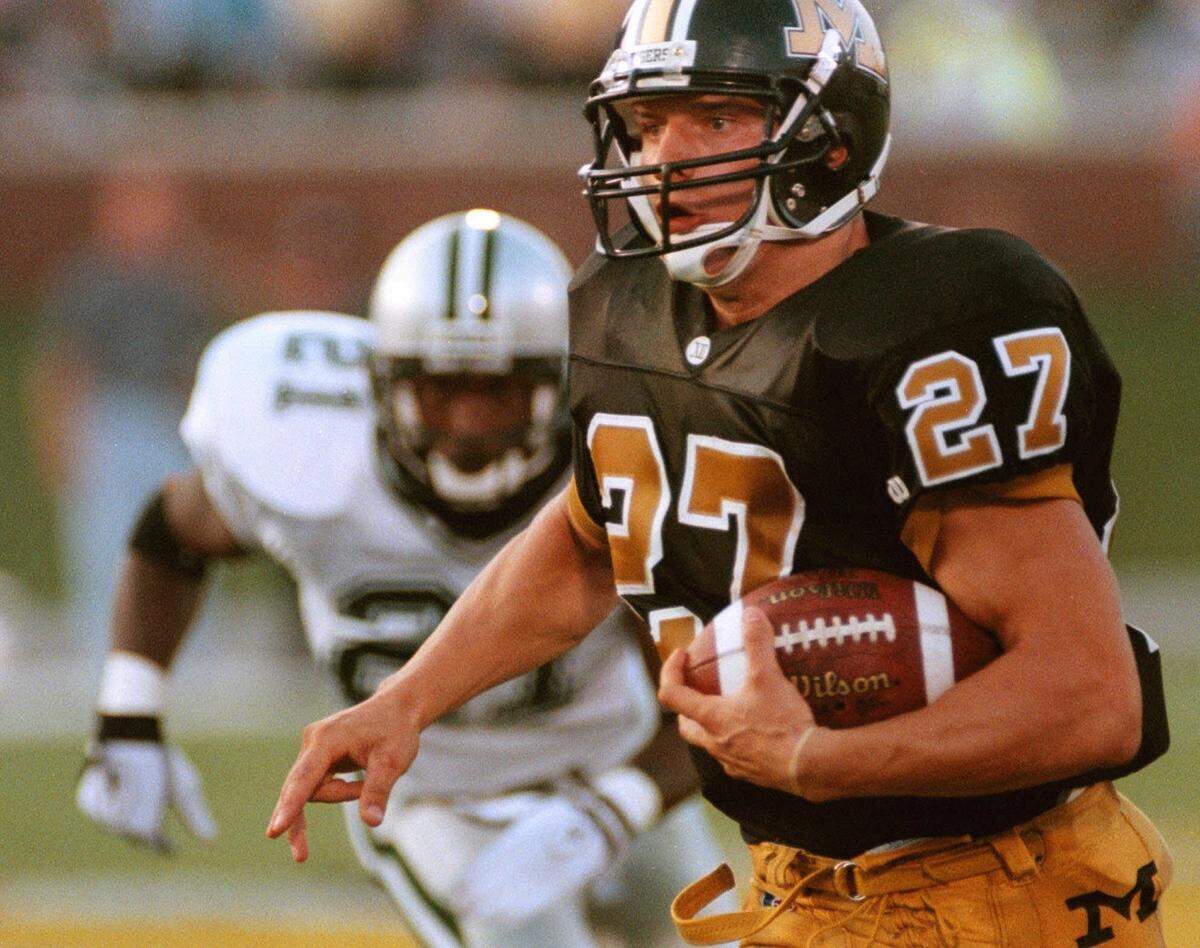
He became MU’s career leading rusher (a record since broken) but was all the more distinguished by the work ethic and infectious mojo of a guy who into his Mizzou days had slept with a football most of his life and tended to call his Tigers linemen “sir.”
Between his high-knee churning and polite, sincere manner, then-Mizzou assistant coach Skip Hall took to calling him “Forrest Gump,” after the fictional character made famous by Tom Hanks.
And he made an enduring statement on then-coach Larry Smith’s recruiting visit during Olivo’s prep days at St. Francis Borgia in Washington, Missouri.
“First of all, he about tore my hand off when I walked in the door. And then he sat across from me, and his eyes got about that big,” Smith, who circled his fingers around his eyes for emphasis in a 1997 interview. “And he was on the edge of his seat. I was afraid he was going to jump across and attack me. “
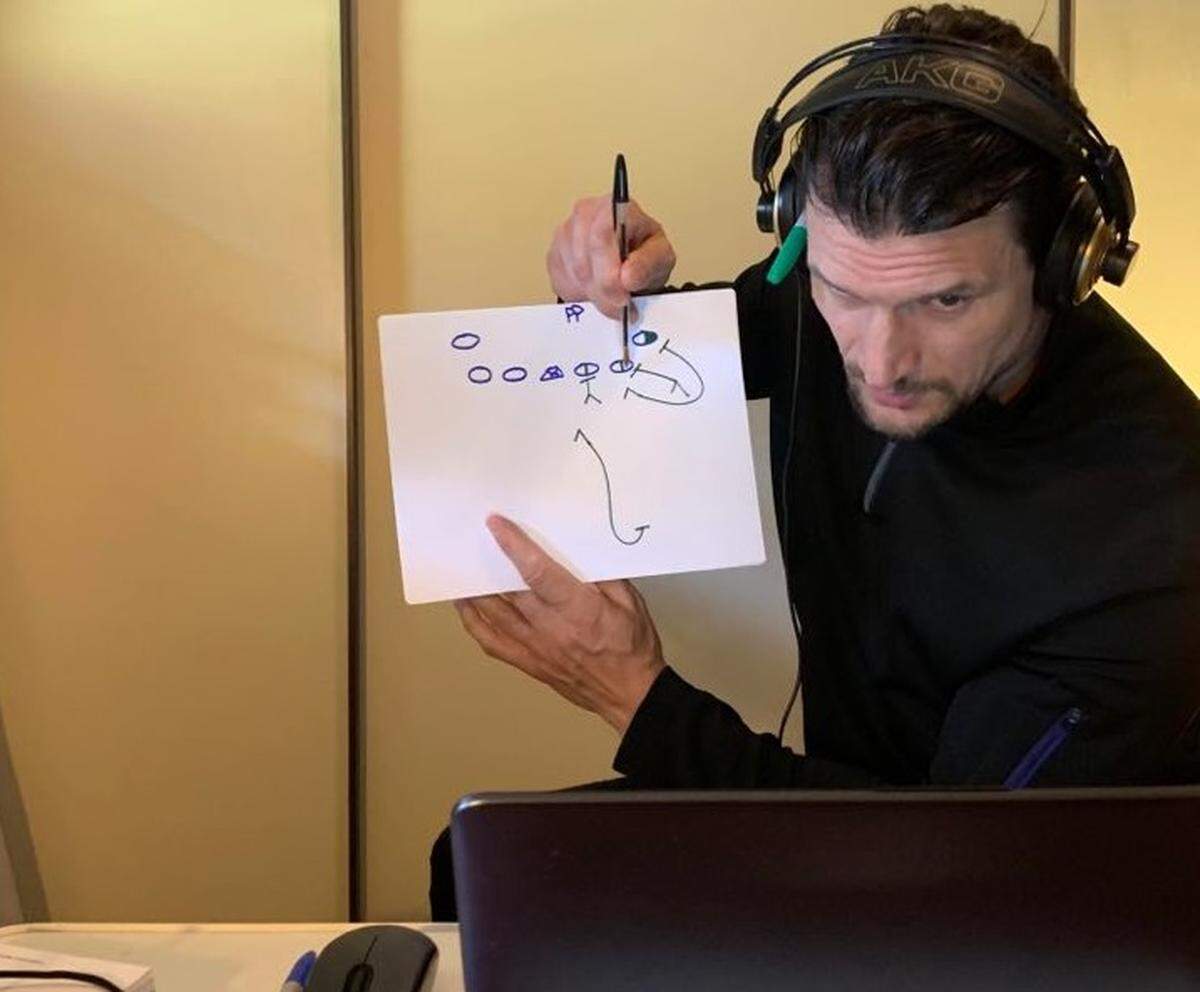
In a scene that conjures the image of Kramer on “Seinfeld” instantly accepting a low-ball settlement for a coffee burn, Olivo accepted the offer before Smith finished the sentence.
“What I saw in that living room,” Smith said then, “came out in the uniform.”
(When I reminded Olivo of some of Smith’s comments in a follow-up message, he wrote back that he was so glad he had made it to Smith’s funeral in 2008. “Haven’t cried like that since,” he added.)
What Smith saw in that living room has prevailed ever since, actually, leading to Olivo receiving the first Mosi Tatupu Award bestowed on the nation’s best special teams player and four years in the NFL and playing football and coaching in Italy.
His time at MU doubtless played a role in his being hired by the Chiefs in 2014 as an assistant to special teams coordinator Dave Toub, who was on the staff at Mizzou during Olivo’s career from 1994-98. Olivo was particularly thrilled for Toub after the Chiefs won Super Bowl LIV and believes this father figure in his life is the archetype of what an NFL head coach should be.
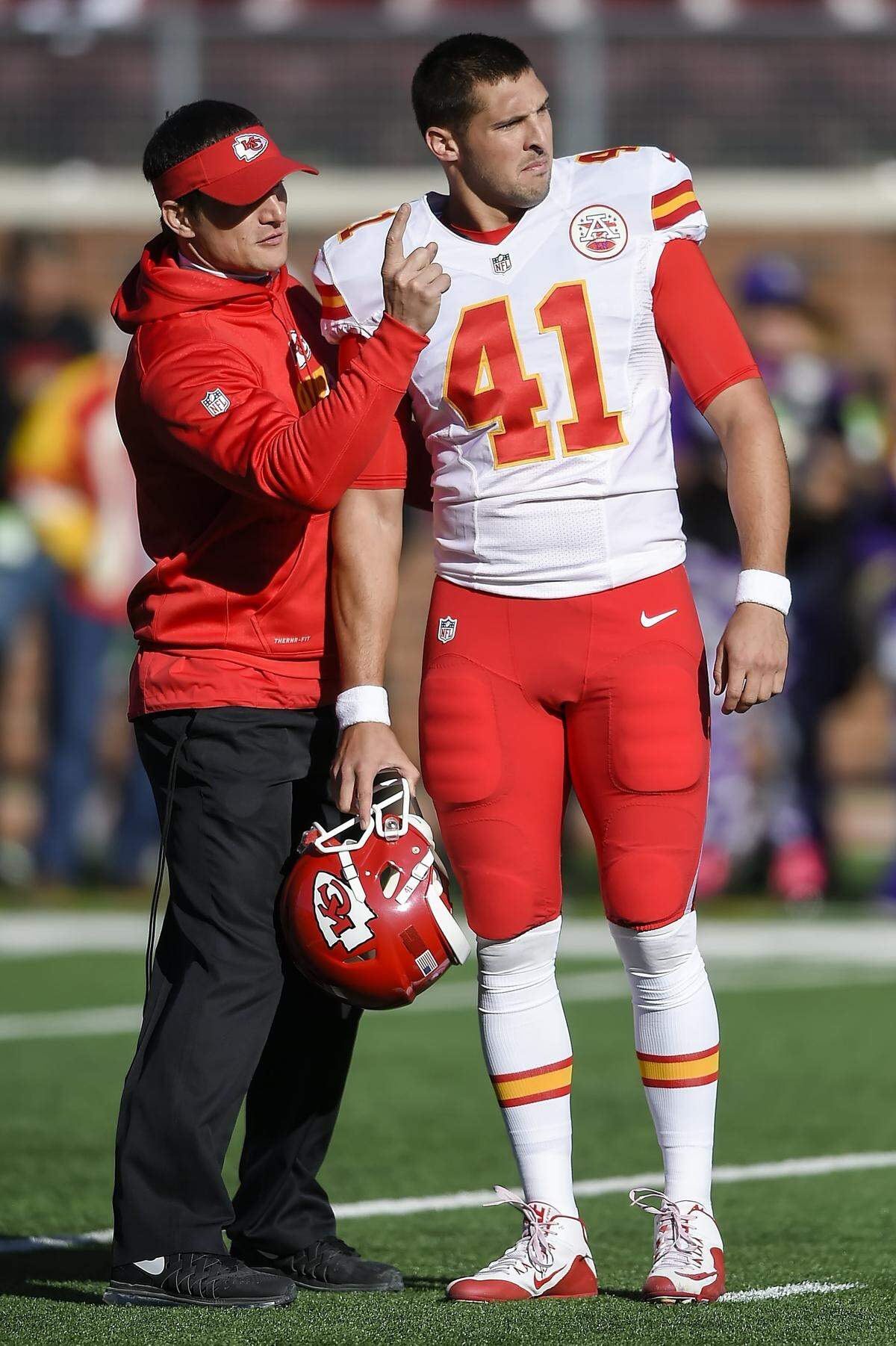
Olivo left the Chiefs in 2016 to become the special teams coordinator in Denver. He was fired after one season and then resumed his role as an assistant special teams coordinator, this time with the Bears. He lost that job after two seasons and returned to Italy in February to coach the Lazio Ducks and get closer to his two children, Sophia and James.
He soon understood he was in a dire situation, including being unable even to see his kids, and that he needed to gird himself for something more while sequestered in his three-bedroom, roughly 2,000-square foot apartment with his girlfriend, Flaminia.
“A lot of people are like this: It could cause you to be very acrimonious, very caustic, very bitter about the situation you’re in,” said Olivo, whose return to Italy came to our attention through the work of the Chicago Tribune’s estimable Brad Biggs. “But the way I approached this from the beginning was to really embrace it.”
Actually, he found himself afloat for a day or two. Then he knew he’d go nuts if he didn’t create a regimented schedule and tangible goals — in this case to enrich himself culturally.
While he wanted to avoid the tedious sensations of the “Groundhog Day effect,” he also wanted to create a system conducive to being attacked “full-speed ahead.”
“Because otherwise you’re going to go sit and think about it,” he said. “And it’s going to eat at you, and it’s going to be depressing.”
So he’s up every day about 8 a.m., the better to avoid temptation to stay awake all hours and sleep all day. By 9 a.m. he typically is beginning a two-hour session studying to be a sommelier (wine steward).
Then he begins his workouts, bolstered by dumbbells, kettle bells and elastic bands and running up and down the seven flights in his apartment building.
No need for a mask in there, he says, since he’s never encountered anyone else within since there is an elevator available.
“It’s a marble staircase,” he said. “It’s beautiful, and you can get after it.”
Then it might be time for lunch and on to study Spanish to go along with his fluent Italian. In the late afternoon, he may be making video calls to family and playing chess with Flaminia and cooking.
But there is nothing more life-affirming and soothing than being out on the balcony and taking part in the magic of the music with guitar or ukulele in hand.
“Like a scene from a movie,” he said.
Sometimes they hear opera playing out the windows now. Or violins. For a while, there was a national singalong being played every night, so Olivo would learn the song during the day.
As the deaths have risen, Olivo said, there are less of those things. But he and Flaminia still feel the urge to play. The songs “keep it light because you have to,” he said. “Music, in a sense, has been a savior to everybody here. As it often is.”
Olivo said he first learned guitar at training camp with the Detroit Lions, and he’s carried one as what he called “an ambassador of good times” with him ever since.
His current repertoire heavily favors “Take Me Home, Country Roads,” Kenny Chesney, Garth Brooks and Pearl Jam.
“The Italians have no idea what I’m saying or singing about, but they like it,” he said, laughing and adding, “I don’t do any justice to any of these songs or musicians. But I hope they’re at least recognizable.”
Whether or not they are, at least we can know Olivo is as distinguishable as ever. Something particularly heartening coming from within the macabre all around him.