
Passion for equality drove Chiefs great Willie Lanier to excellence, defines his life
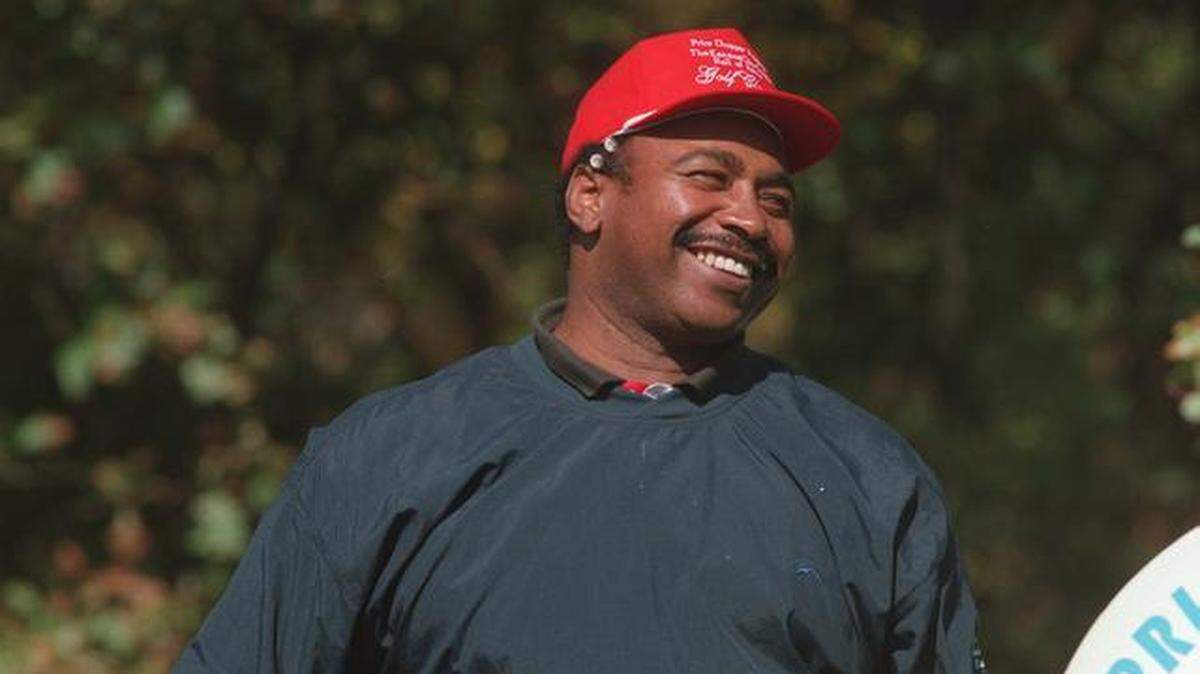
Willie Lanier entered the Pro Football Hall of Fame in 1986. He recently became one of five former Chiefs (along with Bobby Bell, Buck Buchanan, Tony Gonzalez and Jan Stenerud) recognized among the top 100 players in NFL history.
The first African-American middle linebacker in pro football, Lanier’s cerebral approach to the game was further reflected in a radical change to his tackling technique after a life-threatening injury his rookie year. He has been no less enterprising in life after the game, creating a thriving (ongoing) business career and becoming known for his philanthropy.
Among his numerous endeavors and adventures, he has shaken hands with five U.S. presidents, closed the New York Stock exchange and been a valued consultant to NFL commissioners.
Lofty stuff.
But as Lanier contemplates what he would call an autobiography he is considering writing, it would be about a far more basic and urgent point. It would be about “being equal” … and his ferocious desire to be educated and achieve self-determination and shine that light for others.
That’s what makes Lanier a man to salute as Black History Month comes to an end.
‘Quest’ for learning
That’s why a man who was instrumental in the Chiefs’ previous Super Bowl run before their return to glory for the first time in 50 years on Feb. 2 will tell you football was foremost a vehicle for his future. It became a bonus in what he called his “quest” for education, including at Morgan State as an undergraduate and UMKC for his MBA soon after arriving in Kansas City in 1967.
“Those words ‘all rights and privileges thereto appertaining’ that are said to you when you get your degree are not said to you when you win the game, sir,” Lanier, who lives in Virginia but frequently is in Kansas City, said in a lengthy interview with The Star.
That’s why, in stark contrast to the prodding and grilling that’s taken place for the past week at the annual NFL Scouting Combine, Lanier declined to even run sprints for pro scouts as they came to campus in the mid-1960s when opportunities for black men were considerably fewer.
“‘I don’t work for you. And if you want to see my skills, you watch the team or watch the film,’” Lanier, whose senior class paper was on the “monopolistic aspects of pro football,” recalled saying.
He added, “Imagine how ticklish that was for some on that side, seriously. Because what it did was start people wanting to use (terms) like, ‘He might not be easy to get along with. He might be difficult.’ ”
And that helps explain why Lanier over the years frequently has participated in events related to Martin Luther King Jr. Day, including in January at the Metropolitan Community College Martin Luther King Jr. Scholarship Luncheon.
Days before that event, Lanier, 74, reflected on King.
He thought about King’s 1963 “I Have A Dream” speech in Washington, D.C., less than 60 miles from the campus where Lanier arrived that week as a freshman. With most of the college football powerhouses still segregated, as were many of the institutions in his hometown of Richmond, Virginia, Lanier decided to attend the historically black college in Baltimore despite no scholarship being immediately available.
He thought about arriving in Kansas City and a would-be landlord discouraging him from renting an apartment on “the other side of Troost,” telling Lanier he would “like to, but it might affect some of the other tenants.”
And he remembered armored carriers rolling on The Paseo amid rioting in the wake of the assassination of King in 1968.
Summoning King’s last speech before that wretched April day in Memphis, Lanier started saying “I’ve been to the mountaintop” … only to abruptly pause for 18 long seconds as he choked up.
When he resumed speaking, it was with a tremor in his voice.
“I didn’t know this was going to do that,” he said.
Figuring that it meant “that all of us carry at times a lot heavier heart than we care to share,” he added, “I think of where he was at that moment, as if he knew he was going to give his life for my people.
“It wasn’t just a discussion. It wasn’t just a writing, it wasn’t just a thought. … It was about the desire to present the case for equality at the risk of his life.”
Lamar’s touching speech
Lanier’s own striving for equality, his journey to becoming a role model from whom we can all learn, began in Clover, Virginia, where he was born in 1945.
“I want to say Clover in this case must have meant the four-leaf kind, because it was indeed a lucky day for the football fans of America,” Chiefs founder Lamar Hunt said as Lanier’s presenter in Canton, Ohio.
That speech still touches Lanier because of such flourishes as Hunt knowing that his high school (Maggie Walker, also the alma mater of tennis great Arthur Ashe) was named after the first black female bank president in America.
Hunt and his family, Lanier added, have “wonderful values … They have ‘equal’ in their souls.”
To this day: He is grateful that the family invited him to be in the “fascinating” post-Super Bowl parade along with others who missed the 1970 version because of the AFL All-Star Game.
Despite the inherent inequity of discrimination and racism that persisted in Virginia long after Brown vs. Board of Education in 1954 and prevailed through Lanier’s childhood and beyond, Hunt also was right about Lanier’s fortune at birth.
His loving parents weren’t college-educated (his mother was a beautician, his father a clerk for an electrical supply company). But they instilled in him curiosity and a passion for education that was reinforced in the examples of relatives who had doctorates.
He became a newspaper carrier at 12, reading everything he could then … and still getting five papers a day now. He developed a love of language, calling it “a joyous thing” even now when he comes across new words.
A lifelong tone was set, one that he says still enables him to “retain a tremendous volume of data.”
“It was about awareness; it was about advocacy,” he said, noting the medical journals they had in their home. “And what that did was to protect me in certain ways to have my own advocacy and to question anyone about anything medical.
“I’m going to challenge, I’m going to push … I’m not going to take the easy answer because reading does that for you.”
That mindset proved essential to Lanier’s career, including his profound resolution of a harrowing episode his rookie year.
Arrival in the pros
After the Chiefs lost 35-10 to Green Bay in the first Super Bowl, they drafted Lanier and Jim Lynch in the second round to shore up their defense.
With Lanier, Lynch and Bell forming one of the premiere linebacking trios in the history of the game, a defense that ultimately produced six Hall of Famers proved crucial to the 23-7 defeat of Minnesota in Super Bowl IV — the last Super Bowl before the AFL merged into the NFL.
In an era when the NFL was only haltingly welcoming black players, the AFL had no such qualms. Hunt and Chiefs coach Hank Stram were at the forefront of creating opportunity and had hired pro football’s first full-time black scout, Lloyd Wells — whom Lanier had told off when he approached him with a lowball offer and the suggestion he could go play football in Canada if he didn’t like it.
He added, “‘I am a college student, and I’m about to get my degree in business administration. Secondly, you will not tell me I have to take your offer or go to Canada. I will sue you for making that statement. I am done with you here.’”
Once that was reconciled, Lanier credited Hunt and Stram for arriving to a more harmonious situation than he had anticipated for his first major integrated experience.
“We might have had whites from the South who might have been (George) Wallace supporters; we might have had some (blacks) from the West who might have been Black Panthers, we might have had some elites from the East,” said Lanier, who roomed with Lynch, a white man who attended Notre Dame. “But what the mix would do is that nobody’s trying to change it. You just had to let it be held somewhere else in abeyance for those next five months, because we’ve got work to do. And you respected the right of that individual to be.”
The team that beat Minnesota reflected that forward progress as the first pro champion to have a starting lineup featuring more than 50 percent black players, including many others who had been conscious of their education. Like Bell, whose graduation at Minnesota at age 72 in 2015 was attended by Lanier.
A “grand experiment,” Lanier calls it now.
“Taking nothing away from the other young men … we all had something else to prove,” he said. “And the ‘something else to prove’ was … that you come with a lot more than maybe some had expected.
“And the work product that you were going to produce was going to be extreme in quality and be refined in a way that would give credit to you and your organization.
“So you’re just really trying to say thank you by delivering something that’s important to the organization.”
But Lanier might never have been part of that if he hadn’t taken drastic measures his rookie year.
Health concerns
At San Diego on Oct. 15, 1967, Lanier took a knee to the head tackling a Chargers running back. Since he didn’t have any pain, he stayed in the game. But a week later against Houston, he was getting ready to make a defensive call on the field when he collapsed. He was out for two hours, he said.
Decades later, he asked former teammate and fellow Hall of Famer Emmitt Thomas what he was thinking when he saw him keel over.
“‘I thought you were dead,’” Lanier recalled Thomas saying.
It wasn’t until a decade later, on the return flight from Oakland after his last game, that team physician Albert Miller told Lanier he had lost his pulse three times on the way to the hospital that day, Lanier said.
Even without that information, Lanier understood that something “seriously neurological had happened.” But with nothing specific evident after three days of testing in the hospital, symbolic of the era in the game, he soon returned to the field.
Never mind that he was then suffering from double vision.
“The eye doctor said that if the vertical double vision happened during the game to tackle the clearer image,” he said.
In a rematch against the Chargers, Lanier recalled moving to tackle quarterback John Hadl only for Hadl “to become two. So I grab the image.”
Thus ended Lanier’s rookie year. He took himself out of the game and a week later was diagnosed with a subdural hemotoma at the Mayo Clinic.
“So I decided if I’m going to play again, ‘90 percent safe’ is my risk profile,” he said. “So what I had to do was to craft a way where, first, I could never have any head impact at any time, anywhere.”
Physics guided his technique change from head-first to body-on-body, from being known as “Contact” for his vicious hits to “Honey Bear.” The head, he tells anyone who will listen, is for thinking, not tackling.
“I found that you could play the game efficiently safer,” he said. “The quality of the game became better. It became better for me and the others that I played against.”
Case in point: At halftime of a preseason game in the early 1970s, Lanier recalled pulling aside Cowboys’ running back Calvin Hill and telling him he was “too tall and angular to be trying to dive across a goal line, because you can’t create a small target. …
“I was trying to have dialogue with someone else just about how they need to protect themselves.”
Champion of equality
It’s a way that Lanier continues to embrace long after a football career that included in 1972 being the first African-American to win the prestigious NFL Man of The Year Award, now named for Walter Payton, in recognition of his service to the community.
All derived from his drive for education and desire to spread that equalizing factor for opportunities, something he’s seen unite so many through sports even with more work to be done.
When he was asked years ago what could be done to increase minority hiring in the NFL coaching and administrative ranks, he thought of what he had once told a business associate seeking to do the same.
He pretended to give the answer deep thought, then simply said, “Hire them.”
“You’re not God. You can’t know (what will work out),” he said. “But you provide the opportunity.”
Something we’ve come a long way with, Lanier believes, but have much further to go yet.
“The equal has not been achieved and the efforts have to extend on both sides of that equation,” he said, “with a continuing belief, in my view, that we will be true to our founding fathers.”