
Chris Borland’s abrupt retirement from NFL another step toward enlightenment
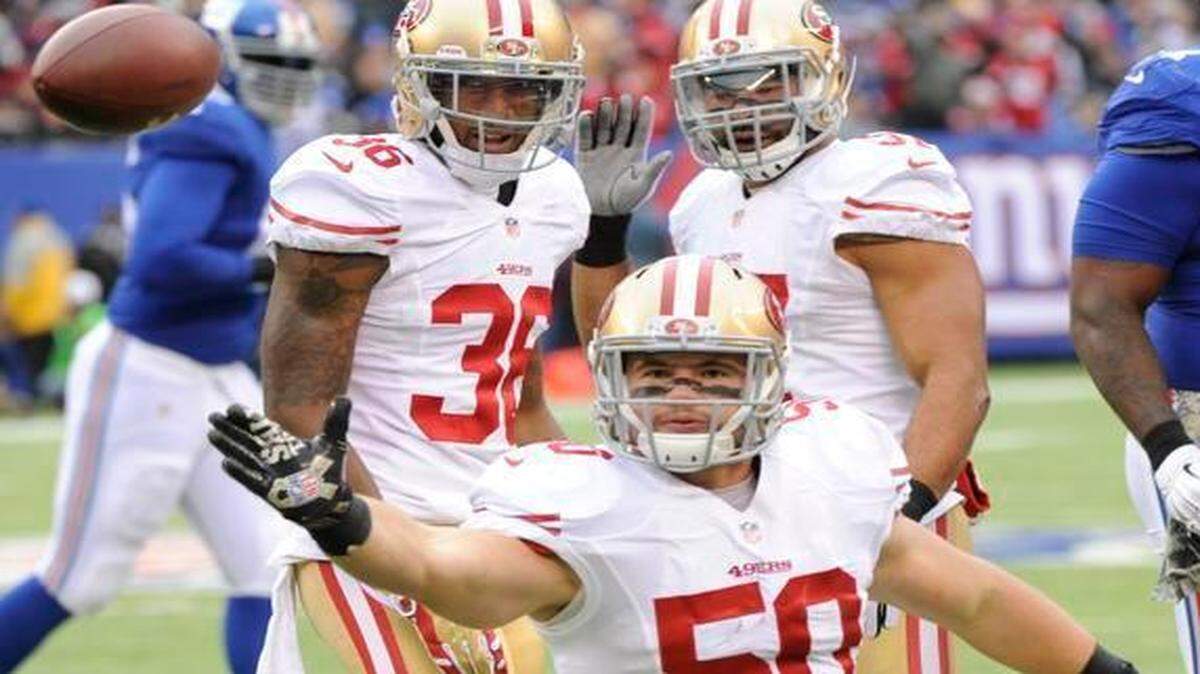
The abrupt retirement of linebacker Chris Borland from the 49ers is in itself no critical-mass moment for the NFL.
It’s not going to immediately lead to droves of players willingly walking away because of pre-emptive concerns about head injuries, and it’s certainly not going to compel the NFL to make radical reforms to make the game safer.
Besides, that would be impossible.
Don’t believe it?
Let the NFL tell you.
“We respect Chris Borland’s decision and wish him all the best,” NFL senior vice president of health and safety policy Jeff Miller said in a statement. “Playing any sport is a personal decision.
“By any measure, football has never been safer and we continue to make progress with rule changes, safer tackling techniques at all levels of football, and better equipment, protocols and medical care for players.
“Concussions in NFL games were down 25 percent last year, continuing a three-year downward trend. We continue to make significant investments in independent research to advance the science and understanding of these issues.
“We are seeing a growing culture of safety. Everyone involved in the game knows that there is more work to do and player safety will continue to be our top priority.”
Now, there is some truth in this.
But not the whole truth.
And that’s why Borland may one day be seen as a key link in a chain.
The NFL and college football have taken certain commendable measures, yes, but the thing is this:
In the wake of all that’s known now about brain injuries and the debilitating consequences, consciousness of the inherent risk of playing this game that revolves around high-speed collisions by turbo-footed and/or massive men whose helmets are more weapon than protection never has been higher.
That’s at least partly why Pop Warner youth football experienced a nearly 10 percent drop in participation from 2010 to 2012, as reported by ESPN, which quoted its chief medical officer, Dr. Julian Bailes, as saying concern about head injuries was “the No. 1 cause.”
That’s at least partly why a handful of NFL players have walked away from lucrative livings in the last few years.
That includes Borland, who was entering the second year of what was reportedly a four-year contract for $2.9 million that included a signing bonus of more than $600,000.
According to ESPN’s “Outside The Lines,” Borland made his decision after consulting with family members, concussion researchers and current and former teammates. He also studied the known relationship between football and neurodegenerative disease.
He concluded it wasn’t worth the risk … maybe most notably without experiencing any particular symptoms of trouble.
“For me, it’s wanting to be proactive,” he told ESPN. “I’m concerned that if you wait ’til you have symptoms, it’s too late. ...
“There are a lot of unknowns. I can’t claim that ‘X’ will happen. I just want to live a long, healthy life, and I don’t want to have any neurological diseases or die younger than I would otherwise.”
He’s encountered enough examples of that, citing the likes of the late Mike Webster (a fellow Wisconsin graduate), Dave Duerson and Ray Easterling — among dozens of former NFL players posthumously diagnosed with chronic traumatic encephalopathy (CTE).
Duerson and Easterling committed suicide.
Just how much Borland in turn will be an example others to follow is a matter of conjecture, and he is part of what still is a small sample size.
But this we know:
The sample size is increasing, and Borland’s stance enhances the dialogue about it.
Only good can come from that — both in terms of how it might guide the guardians of the game and how it might inform those trying to determine whether it’s worth it.
Consider the thought-provoking perspective via Twitter of former Ohio State running back Maurice Clarett.
“In regard to Chris Borland. They should do a study on his upbringing and education. See how he defines success. He probably has a backup plan. Lots of guys don’t have a backup plan. They get shuffled thru the college ranks and only see football as an option to succeed. They often tolerate the trauma for the paycheck …
“No one is right or wrong. It all comes down to quality of life for each individual.”
And even if it’s not a tipping point, it’s another step forward in a realm that can only benefit from more analysis and discussion.
To reach Vahe Gregorian, call 816-234-4868 or send email to vgregorian@kcstar.com. Follow him on Twitter at @vgregorian. For previous columns, go to KansasCity.com.
This story was originally published March 17, 2015 at 1:20 PM.