
An NCAA mess decades in the making, and a longshot solution that’s crazy enough to work
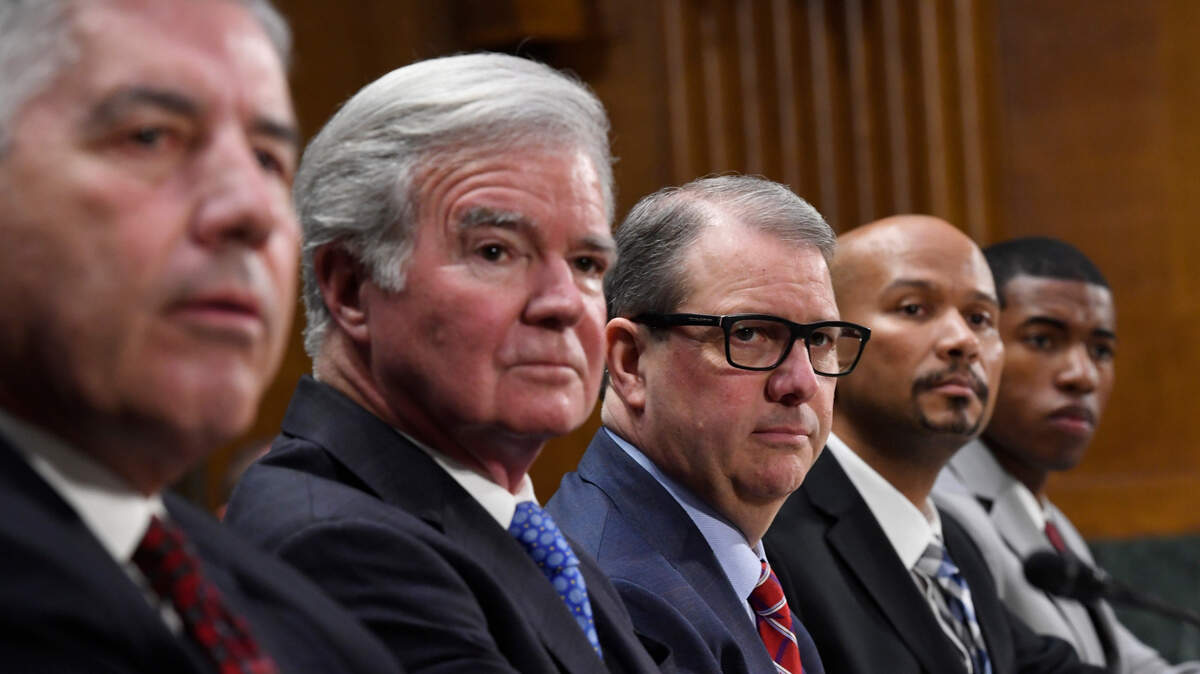
The college administrator is the type with a six-figure salary and closet full of ties and a job that never allows him to feel like he’s solved enough problems.
Lately, the bulk of those problems have centered on the NCAA’s painfully awkward and shamelessly overdue acceptance of allowing athletes to profit off their notoriety through social media, sponsorships, advertisements and other ways.
Officially, this is called Name, Imagine and Likeness.
In our administrator’s office, he’s taken to calling it something else.
“A (expletive),” he said, and whatever word you are imagining in those parentheses is probably pretty close. Our guy is not a fan.
Maybe you’re saying, OK ... sour grapes from a suit who is on the side of retaining power.
Except we have another voice here, this one from a lawyer who is not directly working with NIL issues but has a general personal and professional background that sides with the athletes. If nothing else, people like him will buy fancy scotch and boujee vacations with all the billable hours that will come from this.
“It seems to be chaos,” he said.
The Division I Board of Directors approved an interim NIL policy at a meeting on Wednesday. College athletes can now make money from endorsements and sponsorships without losing college eligibility.
This is a patchwork solution to a forever problem, and right now, as you read these words, states are scrambling to draft and pass legislation determining who is allowed what, when they can get it, and how. Missouri is moving along. Kansas has stalled, though Republican senator Jerry Moran is one of several to propose federal legislation that would provide uniformity for all 50 states.
This all comes as the Supreme Court essentially pantsed the NCAA with a unanimous decision last week that invites challenges to the fundamental idea and the NCAA’s long protection of amateurism.
“We’re celebrating,” said Ramogi Huma, executive director of the National College Players Association, a nonprofit advocacy group. “For us, the status quo was injustice. We’re in a transition period. There will be a lack of uniformity until Congress acts, and that’s a whole other process, of course. But there’s no question this is a great development for college athletes’ rights. Maximum freedoms are really close. Really close.”
The Supreme Court put a stick of dynamite to the NCAA’s argument that it could have antitrust protection and keep athletes from being paid. But even with NIL restrictions loosening, players could be paid for anything except playing, and what kind of sense does that make?
The easy thing is to blast the NCAA, which we’ll do here for two paragraphs. The bureaucracy has done more harm to its collective credibility than good, plugging its ears and closing its eyes and wishing for an alternate reality.
The NCAA is decades late to this, and even now hopped on board with inevitable progress only because administrators and coaches realized that athletes have power here, too. The options for universities became to either accept progress or be left behind. They did this not because it was fair or just or even smart business. They did it because they didn’t want their rival to have a better recruiting class.
But putting this off for so long — and give the NCAA credit for this: it made a LOT of money while putting off the inevitable — means rushed legislation that will almost certainly be a sieve of unintended consequences.
College administrators, coaches and lawyers could have spent months and even years crafting smart and fair ways to navigate these challenges. Instead, we now begin a series of hurried decisions that will overreact to the most immediate problem and create more issues in the future. The cycle will perpetuate itself. This is the NCAA.
To be fair, there may not be a satisfactory long-term solution.
The NCAA model is in obvious peril, but nobody knows what will or should take its place. Legal infrastructure has been built around amateurism and the taxability of university donations among other things.
NIL rights are a fine first step, but even that comes with complications — agents must register in order to set up deals, with reports required to states, and who has the time or need for any of that?
Stars with major followings and professional prospects have and will always be OK, but could or should something be done for the sort of middle class of college athletes? The three-year starter who tops out at honorable mention all-conference, but is an undeniable part of college sports’ appeal?
In 2014, Huma began work with the Northwestern football team to unionize under a new entity they called the College Athletes Players Association. The next year, the National Labor Relations Board declined to assert jurisdiction in the case, giving Northwestern and the NCAA a major legal victory.
In a statement, the NCAA called the decision “appropriate” and that “the NCAA continually evolves to better support college athletes.”
The great irony here — and this was pointed out by our lawyer friend — is that the NCAA’s survival might now depend on athletes forming a union.
Because as it stands at the moment, the NCAA has nobody to make a deal with. It can use guesswork to change rules that may or may not stand up under the precedent set by the Supreme Court, but that’s nobody’s idea of efficient, or the best scenario.
If athletes could form a union, negotiations could begin, and a deal eventually struck.
Huma said after NIL rights the priorities would be health care and then compensation. He called unionization “unlikely,” but is well aware of the potential benefits.
“You might be breaking something here,” he said.
The short version of is that the NCAA could avoid antitrust scrutiny and the expensive and inefficient path of patchwork legislation that may or may not hold up in court by striking a deal with a union.
Endless complications would come along for the ride, including that college athletes are not considered employees, and if they were legal questions would need answers including whether athletes should be taxed on their existing benefits.
The union’s membership would have vastly different personal interests, with little long-term motivation as athletes have just four years of eligibility. They would negotiate against seasoned lawyers who could generally follow the successful and established playbook of NFL team owners — drop crumbs of short-term benefits in exchange for long-term wins.
The challenges would be too numerous to get into here and go beyond mere compensation and how to fairly treat athletes from rowing to football. But it’s the NCAA’s own fault for denying reality for so long.
This is a mess the NCAA created, and earned. There is no way to know how this will play out, but it’s a fantastically telling thought that the most efficient way forward might be for the NCAA to accept what it has steadfastly fought against, and hope that athletes are allowed to unionize.
Who knows, it might save the NCAA another public shellacking in court someday.