
Mellinger Minutes: Britt Reid is charged, over-analyzing 9 Royals games, Chiefs draft
The worst story in Kansas City sports this year can never have a happy ending. The Chiefs can still do the right thing, though.
Britt Reid, the former Chiefs assistant coach and son of head coach Andy Reid, is facing jail time after a decision he can’t take back two months ago. A 5-year-old girl named Ariel is left with traumatic brain injury because of it.
Reid has been charged with DWI, Jackson County prosecutors announced this week. The probable cause statement is a tough read. So-called “black box” data from Reid’s Dodge Ram pickup indicated he was traveling 82.6 mph 5 seconds before crashing into a stalled Chevy Impala on the right shoulder of an entrance ramp, and 83.9 mph 1.9 seconds before the crash. Reid’s truck then crashed into a Chevy Traverse some 230 feet ahead.
Most troubling, Reid was by all appearances traveling directly home from the Chiefs’ practice facility. He told police he left work before entering southbound Interstate 435, and that he’d had “two or three drinks” and had a prescription for Adderall. Medical records indicated a serum blood alcohol concentration of .113 two hours after the crash. The legal limit is .08.
Those details are new, and the charges serious — DWI resulting in serious physical injury is a Class D felony, which carries a sentence of up to seven years in prison.
Already, the tragedy has entered the sports conversation ecosystem, with premature demands on Andy Reid’s job based on facts that may not exist but certainly aren’t yet known.
We don’t need to decide what happens to Andy Reid if he knew about his son’s drinking, for instance, because we don’t know that he knew about his son’s drinking. The speculation is counterproductive, and contributes to the general misunderstanding of addiction.
None of this is said as a defense of the Chiefs in general or Andy Reid in particular. The Chiefs have essentially done nothing. They placed Britt Reid on administrative leave, and then allowed his contract to expire, and released the following statement on the case:
“The Kansas City Chiefs organization remains steadfast in our concert for all who have been impacted by this tragic accident. Our prayers are focused on Ariel’s continued healing and recovery. The Chiefs are regularly in contact with the family’s designated representative during this challenging time.”
It is, essentially, a statement of emptiness. If done to protect the integrity of the investigation, fine. If done to protect Reid or his family, then the wrong priorities are in place where courage should be.
Because the Chiefs almost certainly know much more than they are letting on. NFL facilities are security fortresses, and the presence of cameras only amplified as the league attempted to enforce COVID-19 protocols.
Addicts can be stealthy in hiding their demons, but it is hard to believe that nobody in that building knew, or was in position to know.
Coaching in the NFL is high-stress, which requires different ways to cope. Every fall, coaches at all levels begin a new season noticeably thinner than they ended the last, knowing they’ll stress-eat their way back by the end. Some exercise, some meditate, some self-medicate.
NFL rules prohibit alcohol being provided in practice or office facilities. Have the Chiefs been compliant?
These are the questions that need to be answered, not muddied. The modern Chiefs’ rise in popularity was built in large part on community involvement. The team and players have long been involved, which the team has long promoted aggressively.
But part of that contract means providing answers in times like this.
Kansas Citians deserve to know more from the Chiefs. Public information does not need to get ahead of the police work, but the Chiefs owe it to their community to be fully transparent about how this happened.
This week’s reading recommendation is The Athletic’s written documentary* on Joey Votto, and the eating recommendation is the quest at Los Tules.
Thanks to everyone who’s listened to our Mellinger Minutes For Your Ears podcast, and here is a big warm invitation to start if you haven’t already. We’re out from behind the paywall and free on Apple or Spotify or Stitcher or wherever you get your shows.
Reminder: If you’d like to participate in the show — and I’d love for you to do that — please call 816-234-4365 and leave your first name, where you’re calling from, and almost literally any question.
Please give me a follow on Twitter and Facebook and, as always, thanks for your help and thanks for reading.

We’re all adults here, so we understand what grades mean nine games into 162 — we are basically at the equivalent of one game into a (man this feels weird to type but here goes) 17-game NFL season — but the deal we’ve made is that you ask the questions and I’m your Answer Monkey so here goes:
B.
That’s it. Not B-, not B+.
The grade would be higher if not for some concern about Brad Keller and spots of the relief pitching train, and lower if not for the bottom of the lineup and other bright spots.
The Royals are done with the training wheels, but particularly this early in a season I’m going to lean positive as long as they’re avoiding the types of drove-it-in-the-ditch Aprils and Mays we’ve seen too many times before.
For the most part, the Royals have been what we thought they’d be. They have obvious flaws and lack the high-level talent we’ve seen the last two series from the White Sox and Angels, but also possess a diverse set of skills that can win in different ways on different days, with an aesthetically and emotionally pleasing level of effort and passion.
The grade will fluctuate over the next 153 games. It’ll be hard to rise much if it turns out Keller is broken, and it’ll be hard to fall much if the Royals stay competitive. But I like this question because, finally, after (too many) seasons of the Royals being on a sort of big league pause they’re worthy of night-to-night scrutiny like this.
But you guys know me well enough to know I’m not going to make grand declarations based on two weeks, so I want to use this question to hit on something that we’ll probably come back to throughout the season.
If you get in now, you’ll be smarter than your friends and can school them when the Royals come up in conversation.
The Royals’ bullpen usage this year is going to be vastly different than anything you’re used to. The concept of “7th inning guy,” or “middle relief,” or even “closer” are largely archaic.
Mike Matheny’s re-brand with the Royals has been of an earnest, passionate baseball man obsessed with self-improvement. He has vowed to address what went wrong in his seven years as the Cardinals manager, and build on what went right.
He thinks about this stuff constantly. The shorthand anecdote has become that he was seen as an analytics dinosaur in St. Louis and upon being fired took an online college course on analytics. Who he was isn’t who he is, and who he is isn’t who he will be.
I don’t know if Matheny would use this term, but he’s approaching the job like a lifelong learner. He isn’t doing anything today simply because it’s what he did yesterday, and the most illustrative example is how he’s utilizing the bullpen.
Matheny is gifted with a deep and talented bullpen. The Royals’ relievers have different skills, too — Greg Holland is an entirely different pitcher than Josh Staumont, for instance.
So Matheny and his coaches are using the bullpen differently. Instead of having a sort of square-pegs-for-square-holes approach where (for instance) Holland is the closer with Staumont in the 8th, Barlow the 7th, Brentz to wipe out lefties and everyone else for depth, the Royals are going to be a bit more thoughtful.
If the starter is wobbling in the sixth, the score close, and Matheny feels the game could get away from him ... this is when you’ll see Holland or Zimmer or whoever Matheny feels is the best matchup.
The thinking goes a little like this: if the game breaks open in the sixth because you were saving your best reliever for the ninth, you’re never going to need your best reliever.
The approach will leave Matheny open to second-guessing when it doesn’t work, and a key will be to ensure that he has buy-in and general simpatico with that group. It’s a higher hurdle to clear than to simply predetermine roles, but if it’s operated correctly the group is better for the trouble.
The sample is small but not insignificant as we’ve been through the rotation twice now. The rotation was always a bit light on dependability beyond Keller, and if Keller isn’t dependable then the Royals have a big problem.
* A quick Keller tangent. His velocity is up, and the movement on his pitches seems to be normal, but he’s been barreled on 12.5 percent of batted balls through two starts — that’s nearly four times more than last season. I know I’m probably oversimplifying here, but using this pitch chart from FanGraphs it appears he’s simply leaving too many pitches in the middle of the strike zone, particularly against right-handed hitters:

Again, probably an oversimplification, and here it’s worth noting he’s been equally ineffective against lefties and righties. I can’t tell if there’s something mechanically wrong, or perhaps he’s tipping pitches. Who knows. Important start for him this afternoon.
But what they lack in high-end reliability they hope to make up for with options. Another way of saying it: what they lack in 2009 Greinke they hope to make up for by having as many as eight guys they feel relatively good about starting.
Honestly, I’d rather have eight guys I felt good about than one I feel great about surrounded by seven who frightened me.
But, that argument is harder to make if only one or two of the eight are justifying that confidence.
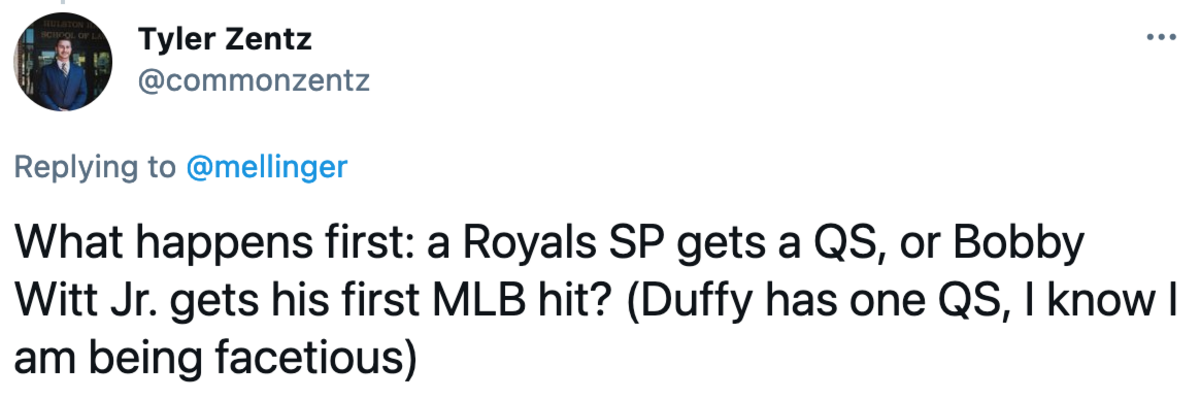
And Bobby Witt Jr. will be up soon, you guys.
He’s said to be performing well at the alternate site, and the Royals have a track record that emphatically rejects the service time game.
So, it’ll happen, but at the moment the Royals have a good problem: where does Witt Jr. play?
They sent him out largely so he could work at second base, which has always been his most likely big league spot, but right now the lineup is crowded and without an obvious hole.
The truth is someone will get hurt, and the good news is that Witt Jr. is athletic enough that he can probably fill that spot.

Would you believe they have the fifth-lowest strikeout total in the American League?
Jorge Soler and Salvador Perez are going to strike out a lot. That’s who they are, and it’s a trade you make in exchange for the power (and in Perez’s case the rest of the package). Adalberto Mondesi will strike out a lot when he returns, which is a trade you make for his collection of gifts.
Carlos Santana and Whit Merrifield are going to be tough to strike out. We know that. Nicky Lopez, too.
Kyle Isbel and Andrew Benintendi have track records that indicate strikeout rates above league average but less than extreme, but honestly, I don’t care about the strikeouts as much as I do the walks.
Those two things can work in tandem or against each other, and for all the positives with Isbel he’s just not going to make it as a big league hitter if he’s carrying a 14:1 strikeout to walk ratio forever.
There are times when those guys can change approach, particularly with two strikes, and I’m going to show you two examples of what I’m talking about here.
First, watch Isbel spit on this 0-2 curve from Cy Young:
Now, watch Soler adjust his swing on a 1-2 slider from a man who is both paid and deployed for this specific situation to be brutal for right-handed hitters like Soler:
These are small moments, and the numbers are what will tell the story at the end. But these are positive signs, at least.
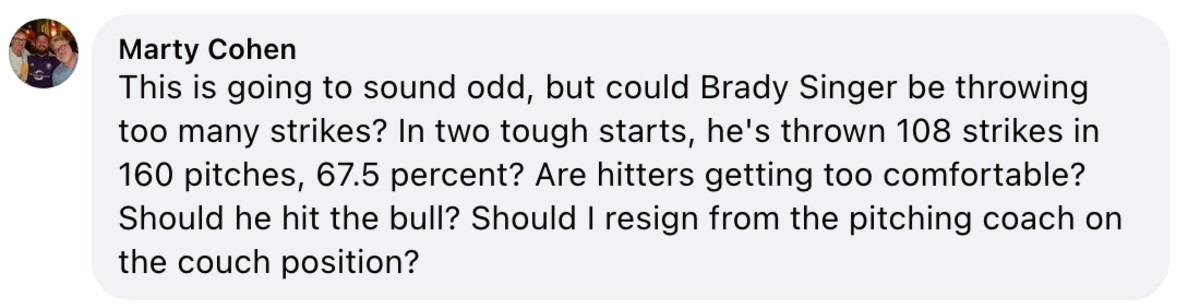
I’m not that worried about Singer. Not at the moment, anyway. His defense let him down on Monday, and even as we can acknowledge that he was part of it with a throwing error that let in a run I think his pitches were pretty good.
The problem with Singer isn’t too many strikes — the problem is the wrong kind of strikes.
This is a little counterintuitive because he’s a first-round pick and the headliner of the 2018 draft class, but Singer isn’t so talented that he can wipe out big leaguers with pure stuff.
He’s not a prodigy. He’s the kid you went to high school with who was smart enough, but ended up as valedictorian because he — or, just being honest here, more likely she — studied like a maniac.
He’s not gifted enough to get away with pitches at the belt, or over the middle third of the plate, but as long as he’s keeping it down and/or near the corners he can be dependable. Add in a next-level competitiveness, and you have the makings of a long-term starting pitcher.
But he’s got to keep the ball down in the zone.
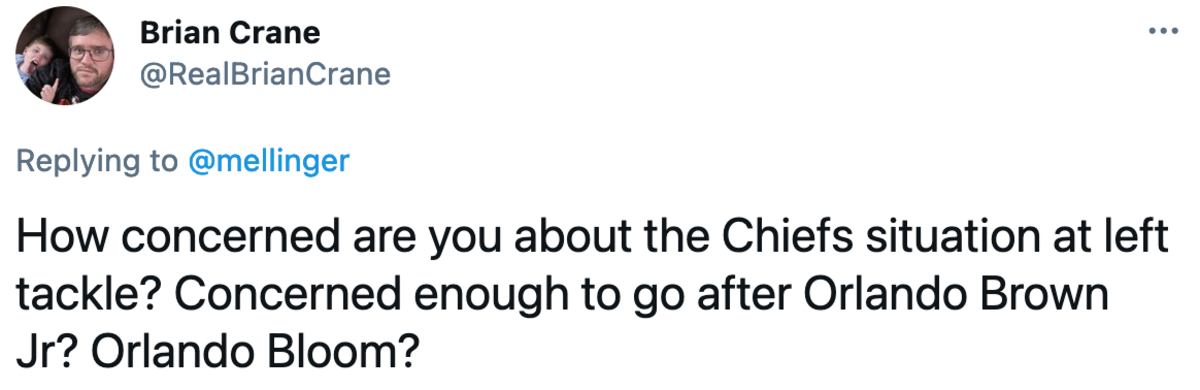
Writers want to be read, and I’m no different, so as much as I’d like to have an all-caps freakout like WYD VEACH YOU HAVE NO LEFT TACKLE I also have this self-defeating tic where I have to be honest with you guys so here goes...
I’m not concerned.
And I won’t be concerned unless the Chiefs go through the rest of free agency and the draft without adding a capable adult to play left tackle.
You don’t judge ribs halfway through a smoke, and you don’t judge an NFL offseason in the middle of April.
Veach’s front office has shown itself to aggressively attack roster weaknesses, and there aren’t many teams with a more glaring roster weakness than the one the Chiefs have right now at left tackle.
The Chiefs offered Trent Williams a boatload of money to solve that problem, which is very on-brand for Veach’s front office. Williams (understandably) gave the 49ers the chance to beat the deal, which they did, so now the Chiefs still need a left tackle.
This is not a crisis. This is the Chiefs’ clear top priority right now, but it’s not a crisis.
Not unless training camp happens and the Chiefs haven’t traded for Brown*, signed Russel Okung** or Alejandro Villanueva***, or somehow used their draft capital to address the issue****.
* Hard to see the Ravens trading with the Chiefs unless the return is outrageous.
** Not a big fan of the injury history, unless the Chiefs feel confident that Eric Fisher can be full strength by Thanksgiving or so.
*** Seems like the safest route especially...
**** ...if the Chiefs believe they can cover the position with a short-term free agent and Fisher this season while developing a left tackle for the future.
Look, if the Chiefs don’t improve the left tackle position it’ll be the easiest column of 2021 for me.
I don’t think Veach will make it that easy on me.
Yes, and I particularly enjoy this one:
Some of the Zack Is Just The Greatest Because He’s Often A Hard-Truth-Telling Vacuum Of Emotion stuff is overdone, but purely as a pitcher, he really is a fascinating follow.
Greinke’s career arc is incredible: he was a phenom, then a bust, then a hyper-talented and still-young guy figuring it out, then the best on the planet, then a careerist chasing rings while the team he left won one largely based on the return it got from trading him, then the highest-paid pitcher in the game, and at some point he’s evolved from getting people out with stuff to getting people out with brains and it’s just so dang interesting to watch.
Though, if we’re honest, if you’re going to throw one 51 you might as well take a little off next time and get into the 40s which, just for context, is basically what the 6-year-old was seeing in machine-pitch last summer.
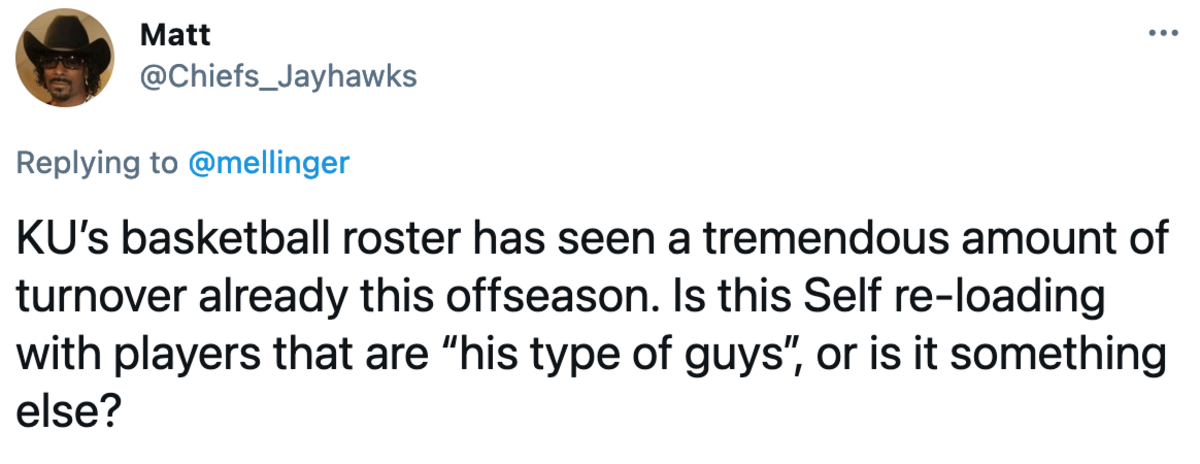
Maybe I’m not thinking about this stuff in depth enough, but more than anything else I think this is about Kansas operating a college men’s basketball program in 2021.
The transfers are everywhere, and they’re with guys who previously appeared happy and guys who got shots and would’ve had more shots next year. This has been building for years, and I know we can blame just about anything on COVID but consider this:
This year’s freshmen had the least amount of in-person contact with their college coaches and programs before signing in history. That meant less-informed decisions by coaches and recruits. Then the season happens, and there are fewer of the surface-level perks of playing big-time basketball than ever before — no fans in the stands yelling your name, no adulation around campus, less national attention available, etc.
Then on top of all that the NCAA is granting immediate eligibility.
Why wouldn’t we be seeing record transfer numbers?
Bryce Thompson is the only eyebrow-raiser with KU, but even here it’s not a shock. He was the No. 21 recruit in the country and never really found his place. That means expectations weren’t met on either side, and it’s easy to see why he’d want to give it another try somewhere else.
This is pure speculation, but Quentin Grimes had a similar profile and showed how a transfer away from KU could work.
It couldn’t help that Thompson was looking at a sophomore season that could come with a postseason ban or worse, and this is all pretty understandable.
Kansas men’s basketball is always going to be OK in the long-term. The program just has too much history, too much money, and too much importance to too many people to be down for long.
And even “down” is relative here, because a lot of programs would’ve loved to finish second in the Big 12 with a No. 3 seed in the NCAA Tournament.
But the next season or two for Kansas will be a lot more difficult than the last season or two, and this is part of what Self will have to navigate.
He’s got other things going on, obviously, but the transfer stuff just makes him a college basketball coach.
Look:
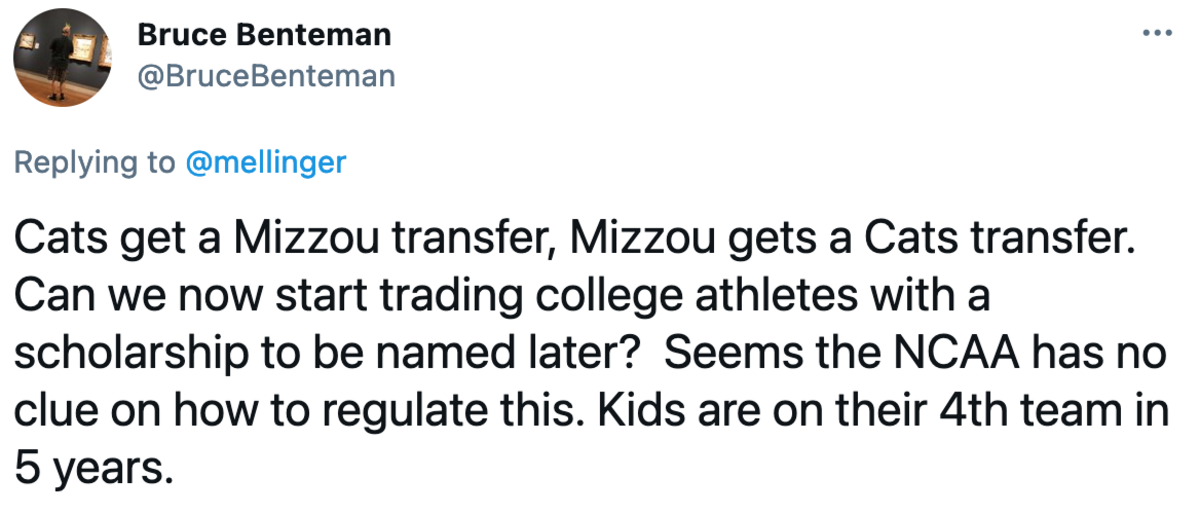
That was my reaction, too, like, man, shouldn’t K-State have been able to get a stretch-4 thrown in since Gordon is younger with more upside?
I am never going to have much sympathy for the NCAA, which means I’m not going to use the rest of this paragraph to make the case that this sort of hyperactive transfer market is what we’d get if the NCAA (did the reasonable thing and) allowed athletes to move around as freely as coaches.
Instead, I’m going to stubbornly stick with my narrative and say that the NCAA created these problems for itself.
There are a lot of places where amateurism works fine. It works for my friends who coach at or played Division II ball, or maybe baseball or volleyball or track at a bigger school.
These constitute the vast majority of opportunities in college sports, and we shouldn’t forget about them. For lots of kids, the opportunity to compete and earn scholarship money is a fair trade and complete.
But the structures break down when the money grows, and bless the NCAA’s heart for keeping up the charade this long, but when coaches can leave for more millions it is hard to criticize kids for wanting to leave for more shots.
I don’t have all the answers. I don’t know whether being more honest about things would solve this problem. I don’t know if signing, say, a four-star wing to a three-year contract that pays a few hundred thousand dollars would provide more roster stability and be better for all parties.
But it’s worth thinking about.
I’ve long thought the NCAA should develop a system in which basketball and football players are paid through a combination of professional prospects and academic progress.
Please don’t take these numbers as written in stone, but let’s say a kid finishes his freshman season doing well academically and the NBA consensus is that he’d be a late second-round pick but with another year could work his way into the first round.
Maybe that kid is offered $100,000 to stay in school.
Again, please don’t get caught up in the specific numbers. Maybe it’s $50,000. Maybe it’s $200,000. Whatever. But the idea would be to allow the kid to make a decision based on more than pure money. Make the money a risk- and interest-free loan if you want, with payment due only if and after he makes his first $5 million (or whatever) in the NBA.
Part of that process could include a requirement for players to stick with one school.
Would this not benefit players, college programs, and the NBA?
But, speaking of dollar figures...
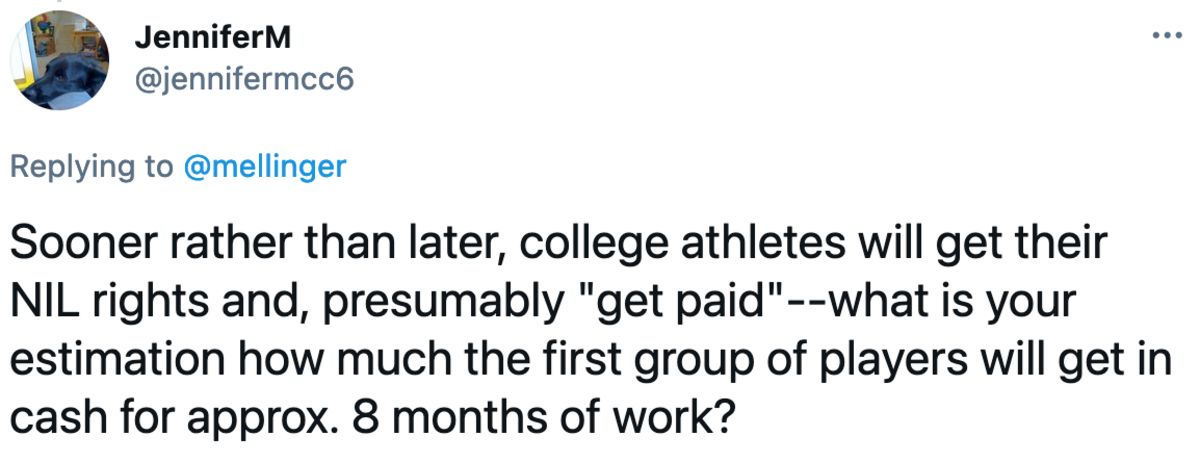
I know you don’t mean this literally, but it’s not eight months of work. Or, at least, it’s not for the level of talent that would drive NIL money. These are full-time jobs that require year-round training, not too dissimilar from professional athletes, which is sort of the point.
But I know I’m nitpicking a smart question, so apologies, and to make it up to you I’ll do better than giving my estimation. I’ll give you the estimate from a firm that specializes in this stuff.
This particular study is a few years old, and I can’t stress enough how much this is all just estimation. Whenever you’re projecting marketability based on Instagram followers and such, well, we’re all just doing the best we can.
But the study I linked above found that the most popular college athletes could earn $4,000 or so per Instagram post, and into the hundreds of thousands of dollars per year in endorsements.
A few things stick out once the numbers are run. One is that we tend to focus on the stars in money-making sports — Trevor Lawrence, Justin Fields, Jalen Suggs, etc. — but some of the most valuable college athletes are in gymnastics, softball, and women’s basketball.
The second thing that comes to mind is that (like everything in this world) unintended consequences are everywhere.
For instance: if marketability is more of the goal than competition, what does that do to the games?
You can argue that professional sports have dealt with this and thrived, and that’s true, but I’m not sure it’s the same thing. In professional sports, everyone understands that winning is fundamental to that marketability. You win, and you are marketable. You’re marketable, and you get paid.
But in college sports, by the time you win you’re probably ready to go to the next level, so which means your college earning window is over ... which means the college earning window is driven more by Instagram than championships.
I’m not arguing against athletes being able to get their worth. I’m just thinking out loud here about some of the ways things would be different.
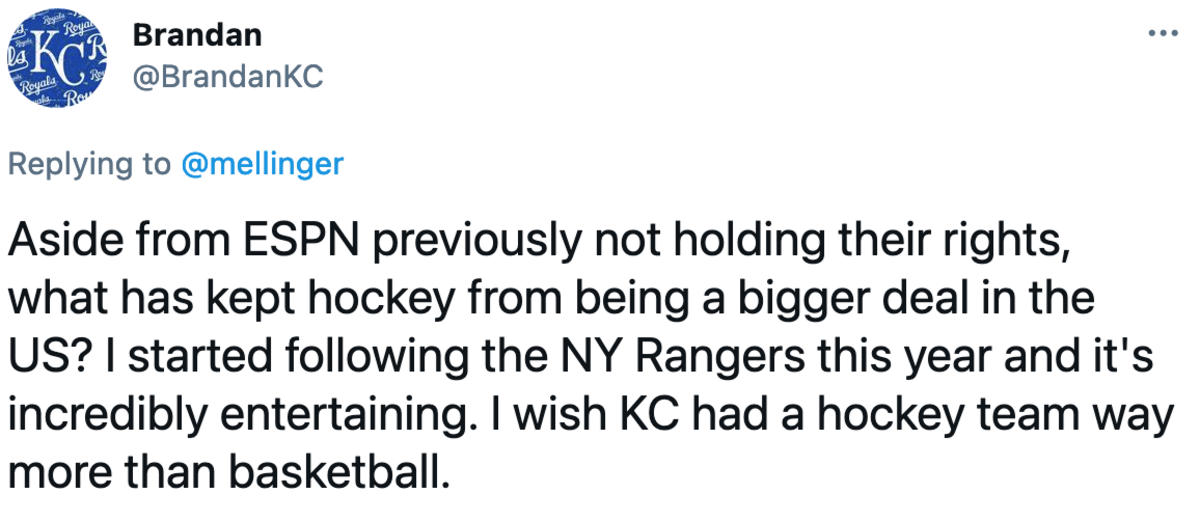
Major League Baseball has found that the single most powerful driver of adults becoming baseball fans is whether they played or were exposed to the sport as kids.
This is not a gratuitous shot at MLB’s outdated TV distribution system — we’ll get to that soon! — but a way to point out that relatively few kids are exposed to hockey in the United States.
There are pockets, sure, and the NHL has put a lot of effort into spreading the sport into the Sun Belt and West. But it’s very expensive, and requires a high level of infrastructure — the equipment, the ice, enough kids to practice or have a game, etc.
The other major thing I see is that it’s not a great TV sport.
Maybe that’s going to anger some who love hockey, but it’s the truth. The difference in how compelling hockey is on TV vs. in person is enormous. When you sit in the arena, it’s enthralling. The noise will captivate you. The action is constant. There are a million things to keep track of, and you need to be glued because the next blink might be when something big happens. It’s incredible.
But on TV, it just doesn’t translate the same. The puck is hard to follow. You usually need a replay to see how a goal was scored. You miss so much of the context of substitutions and the rest of the ice.
So if you’re not exposed to it as a kid ... and it doesn’t translate as well on TV as football or other sports ... it’s just hard to develop a following.
Hockey is a strange one for me. I love going to games, and have since I was a kid. When I intentionally sit down and watch a game, I’m usually entertained. I’m convinced that if I grew up in Canada or Minnesota or Michigan or Maine I’d love hockey the way I love baseball or football or basketball now.
But it was never around me as a kid. The culture wasn’t there. I got into other things. I’m sure there are quite literally millions like me.
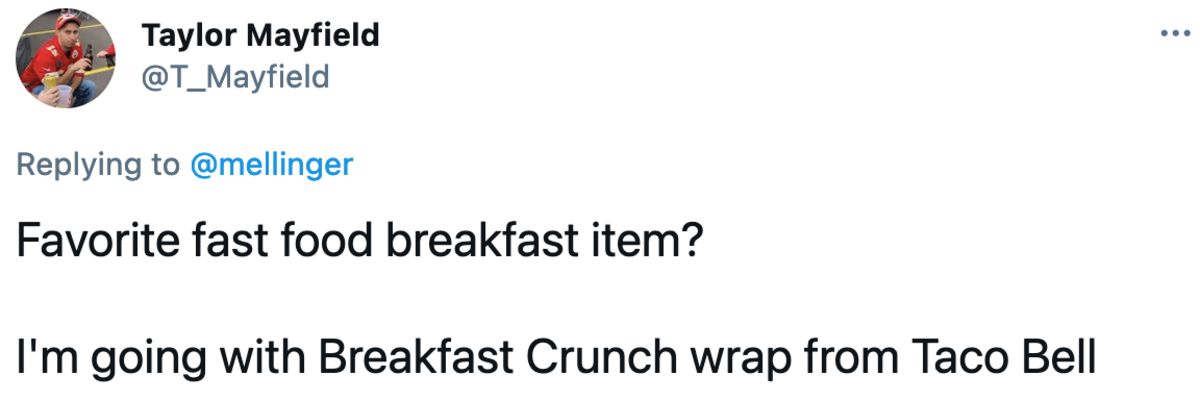
Fast food breakfast is a passion of mine, and I assume you’re not going to let me say the sandwich OR burrito at Mildred’s, so ...
All of the croissant sandwiches at Burger King are winners. I respect the breakfast crunch wrap, but prefer the toasted burrito with hash browns inside. Also, the sausage, egg and cheese biscuit at Chick-fil-A is nails, but now it feels like cheating.
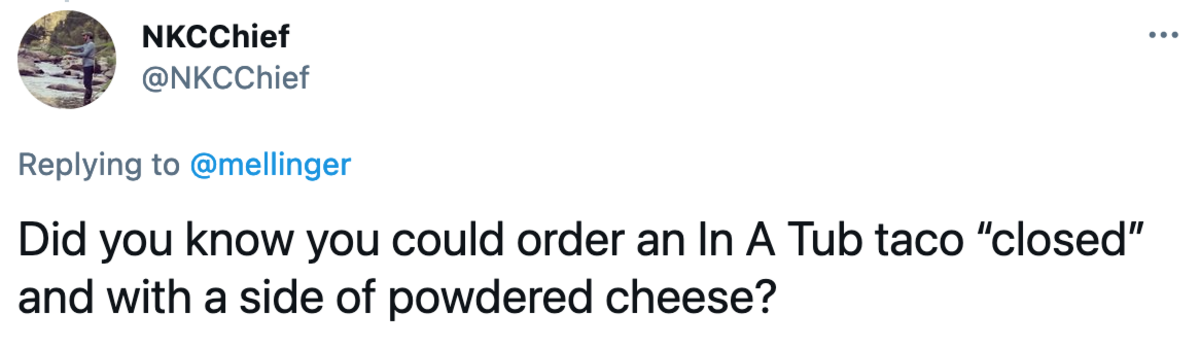
No, but why would you do this?
The tacos come out hot as a grease fire anyway, so if it’s closed, doesn’t that just guarantee you burn your tongue no matter how long you wait? Also, if it’s closed how am I deploying the powdered cheese? Do I have to crack it open and then distribute? If so, why have I created more work for myself?
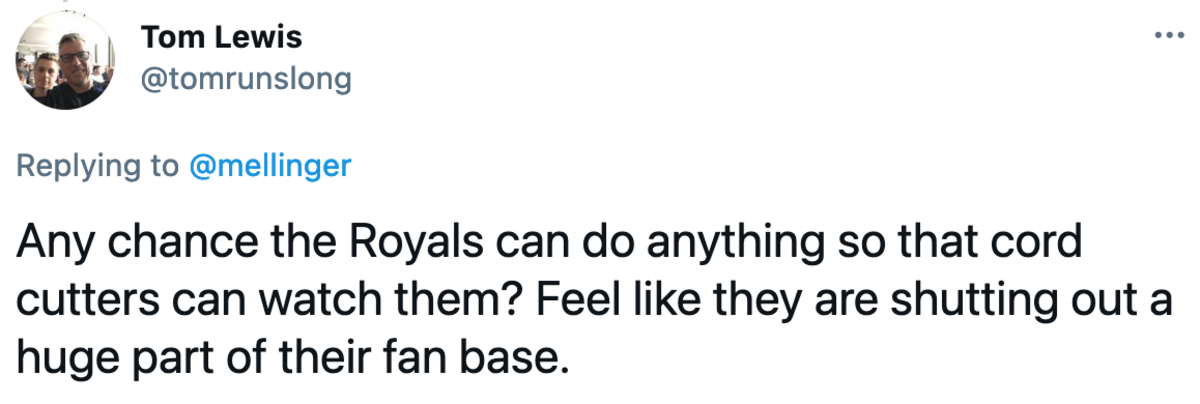
You feel that way because that’s exactly what’s happening, Tom.
The truth is the Royals’ situation is exposing a fundamental flaw in the regional sports network model of distribution. The model came to be in a time that is more outdated every year, when the way to get sports was through cable, and RSNs had a lot more leverage.
There are more choices now, and MLB, the NBA and NHL haven’t moved fast enough to fill the gaps with available technology.
My somewhat educated guess is that those gaps will be filled with direct-to-consumer options by next year, but there are at least two problems with that.
The first is that by then some fans will have had a year of a shortened and weird season followed by a year of not having easy access to games, so how many 2022 customers are being driven away in 2021?
The second is that requiring a standalone monthly subscription to games is a great way to monetize existing fans but a lousy way to grow new fans.
I’m not smart enough to know the best solution. But I’m not so dumb that I can’t see this ain’t it.
Brother, two days ago I was driving 11 hours back from Austin with two young kids in the car, thankful my wife cleaned up vomit from one and had the right book for the other to look through.
As for the question, I know what you mean, but I don’t think it’s silly at all. I know I’m luckier than I deserve to be able to say this, but yeah, there are parts of the last year that I’ll miss.
Most of those are personal — more time with the family, more simplicity, fewer frivolous requirements — but the line between personal and professional has always been a bit blurry for me.
You mention the travel, and I know that’s probably the first answer for a lot of people, but even there I have some conflicting feelings. Because I enjoy travel. I’m that weirdo who even likes the process — I like airports, I like looking out the window and reading on planes, I like seeing different cities, I even like hotels.
Having someone serve me a cheeseburger and a beer and then going to bed with blackout shades is not something I will complain about.
That said, I love being home, too. I know it’s corny, but every morning I wake up in a hotel is one fewer morning I have at home before the kids stop coming into our bed to lay with us for a few minutes. I love our house, our neighborhood, my wife, our kids ... I mean, I still like travel, but I’ve also never enjoyed being home more.
So, with the travel, either way I’m good.
You asked about the stuff I’ll miss, and really I can only think of two things. The first is that you’re no longer spending three hours of your day for a 30-minute press conference — leaving early enough to get set up, driving, parking, waiting for the thing to start 15 minutes late, getting caught for three different things afterward, etc.
The second is something I hope I don’t miss, actually, because I hope it’s something that sticks. I finally feel like I have the right work-life balance. I’m far from perfect, but I’m fairly consistent about getting some time for myself, more for my family, and enough for work.
The last 13 months or so have really crystallized this, and shown the importance, so I hope this isn’t the version of a New Year’s resolution in February.
I hope I can remember this, and take tangible steps to protect it — make sure you have at least one day a week fully clear from work, be completely focused on work long enough that you can be done and focus on family, etc.
This is all easier said than done, of course, because some of that time spent waiting around or getting to the ballpark early turns into the best conversations and relationships you have with people who know a lot more than you.
So I don’t have the best answers.
But I think we’re all missing an opportunity if we don’t at least try to have better answers going forward than we had before all this started.
This week, I’m particularly grateful for this spring break trip to Austin. The kids did some stuff I think they’ll remember when they’re grown, but more than anything else I’ll remember the sound of their deep belly laughs when they get going with each other. They have no idea how lucky they are to have that relationship.
This story was originally published April 14, 2021 at 5:00 AM.