
Mellinger Minutes: Potential Chiefs problems, plea for a Mahomes doc and more football
Maybe you’ve seen the video. Probably you’ve seen the video. It’s great, and it’s been going around the last few days.
Frank Caliendo, who has made a career of sports impersonations, does a bunch of NFL coaches reacting to the league’s recent schedule release:
The whole thing is funny, but — and I think I’d say this no matter where I lived — the best part is Andy Reid.
There’s so much beauty in those clips — passively aware of the schedule, looking at it, then dancing with his Mahomes jersey. You can imagine pretty much everyone who works in the organization having similar thoughts.
Business side struggling through the economic problems? Whatever. Mahomes.
Football side unsure how to best implement an offseason program over the computer? Whatever. Mahomes.
The 2020 Chiefs* are enviably positioned. They have more continuity than anyone, at a time when continuity has never been so valued. They have the league’s best offense, except better. The defense played so well over the last half of the season, and it makes sense to expect that to continue.
* PLEASE LET THERE BE A 2020 CHIEFS.
Got me thinking: what could go wrong?
I mean that literally. We know Super Bowl winners don’t often repeat and we’ve talked about some of the reasons why. Much of that has been with evolving motivations. But lately I’ve been thinking more about football reasons.
Basically: If the Chiefs fall in 2020, and it’s not because of some unpredictable factor like injuries or a bad break in a close game, then what will it be?
I have some ideas, two in particular.
1. The Chiefs remain vulnerable against the run. Only three teams gave up more yards per attempt last season. The Chiefs showed up against the Titans in the postseason (Derrick Henry had 69 yards on 19 carries) but it sure felt like the 49ers left some money on the table by not running more (122 yards on 22 carries). The Ravens are the league’s best running team by a laughable margin*. The Chiefs are going to need to figure that out.
* The Ravens averaged 5.5 yards per rush attempt, and totaled 3,296 rushing yards. That’s a better average than Jim Dang Brown. No team has had a better average OR more total rushing yards in the Super Bowl era.
2. The Chiefs’ offense remains potentially vulnerable up the middle. Theirs is a line built more for athleticism than bullying, particularly in the middle. They obviously have ways to counter that, including quick horizontal passes and hits over the middle, but still. If an opposing defense can slam the line with well-executed stunts it could clog the offense enough to make a difference.
One other thing about the defense. The pass rush had a weird season — more of an impact than the numbers or PFF rankings would suggest. They got to the quarterback when they needed to, in big situations, but that didn’t always show up the rest of the game. Was that by design? Did Steve Spagnuolo and his coaches use plays early to set up the rushes they needed? Did the players have an advanced feel for when to use the right move in the right situation? I don’t know the answer. But if that doesn’t happen again, a relatively thin secondary is going to be left in coverage longer in big spots and that could be trouble.
Now, of the three, the problems against the run are the most concerning and potentially troublesome.
I spent a lot of last season wondering why teams weren’t running the ball more against the Chiefs. The Ravens were one of the few, rushing 32 times for 203 yards. Their problems — and this is how it often goes for Chiefs opponents — came in defending the pass.
The Chiefs scored four touchdowns and two field goals on their first nine possessions before icing the final drive with a clutch conversion by Darrell Williams. The Ravens went three consecutive drives and about 20 minutes of game time without any points, and that’s no way to beat the Chiefs.
Because the Chiefs won the game, and because the Ravens lost (at home) to the Titans in the playoffs, it’s easy to downplay the threat.
Also, let’s be clear. This is not a prediction of Chiefs doom. They’re the favorites for a reason.
But it’ll be hard, and it’s worth considering the challenges that lay ahead.
Or, at least, it’s worth it while there’s no sports going on.
This week’s reading recommendation is Anthony Castrovince on the legend of Spike & Fat Boy, and the eating recommendation is the burger from Brewery Emperial.
If you haven’t already, please give our Mellinger Minutes For Your Ears podcast a try. The response and support has been great, and the guests fun.
If you have a question you’d like answered, please call 816-234-4365 and leave your first name, where you’re calling from and almost literally any question.
Please give me a follow on Twitter and Facebook and, as always, thanks for your help and thanks for reading.
OK, here’s the show:
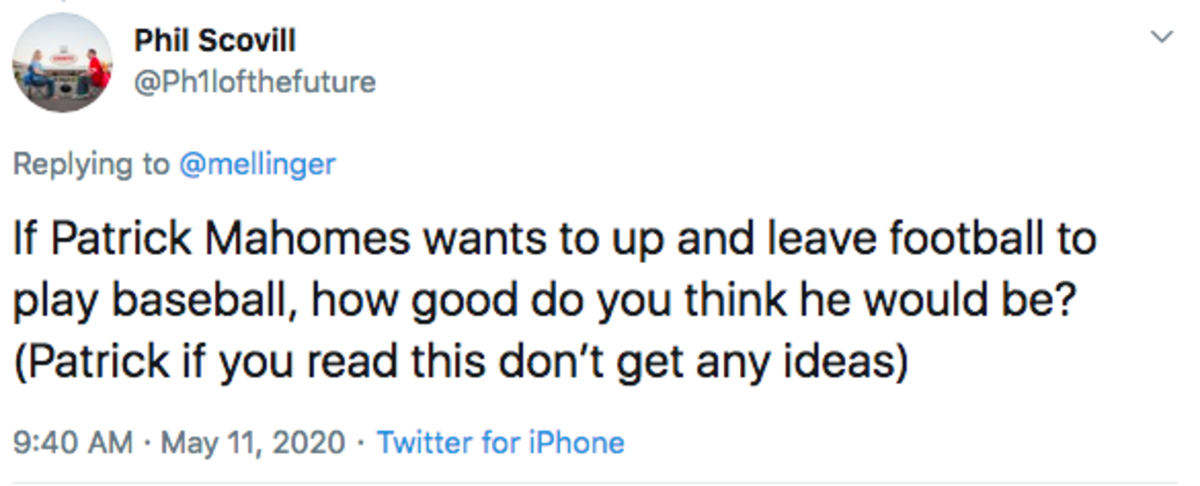
It should not surprise you that we’ve written about Mahomes’ baseball talent, and it should not surprise you that I’ve wasted a lot of time — mine and others’ — talking and thinking about this.
The general consensus: he was a second- to fourth-round talent, and good enough that teams scouted him as both a pitcher and outfielder. It’s been a few years, but when we talked about his baseball career I thought it was interesting that he seemed to talk about himself more as an outfielder, while scouts talked about him more as a pitcher.
It’s interesting on a few levels, including that Mahomes is very position specific. He fell in love with playing quarterback before he fell in love with football. As a kid, he told his parents he wanted to quit when a coach put him at linebacker.
It’s also interesting because of the reasons he’s given for pursuing football. You have to remember that Mahomes was assumed to be a baseball player. His dad was a big leaguer, and Kliff Kingsbury has said that’s a major reason Mahomes didn’t attract more attention and offers from college football coaches.
But — and I didn’t use the quote, so I’m paraphrasing here — Mahomes said part of the allure of football was that he wasn’t as good.
That’s counterintuitive, right?
But it’s a cool look into his thinking. Everyone else thought he’d play baseball for these surface reasons — his dad, he was better at the sport at the time, and he might’ve had a seven-figure bonus in baseball compared to beginning his college football career third on the depth chart and behind a sophomore starter with an NFL future of his own.
But to Patrick that was the whole point. He knew his body and he knew his talents. He felt like he’d already done what he could in baseball — even said he’d peaked in that sport — so he wanted to explore what he could be in football.
We talk all the time about people betting on themselves. This is a terrific example.
He was, in essence, betting that he’d be good enough in football to not regret giving up a million or so* in a baseball contract that also would’ve paid for his education. At the time he was a very well-regarded baseball prospect, and in football had a grand total of one Power 5 scholarship offer.
* The second-round slot values in 2014 started at $1.3 million. Wherever he was taken, teams often pay more than the slot value to buy prospects out of scholarships in other sports.
It’s a pretty cool thing, the more you think about it.
Anyway, that’s more than you’re asking for here. The money quote in the column about his hypothetical baseball career came from Michael Kopech, who was a high school rival of Mahomes’. Kopech was the 33rd pick of the 2014 draft and when we talked for the column he was the No. 10 prospect in baseball. He was promoted to the big leagues shortly after, but missed all of 2019 rehabbing from Tommy John surgery.
“We’d be pretty similar pitchers now,” Kopech said then. “He was just a bulldog. To be honest, I think anyone who ever played with or against Patrick would’ve assumed he would’ve been a pro in any sport he played.”
I know this is a long answer, so here’s the short version: everyone I know who scouted or shared a baseball field with Mahomes in high school believes he could’ve been a big leaguer.
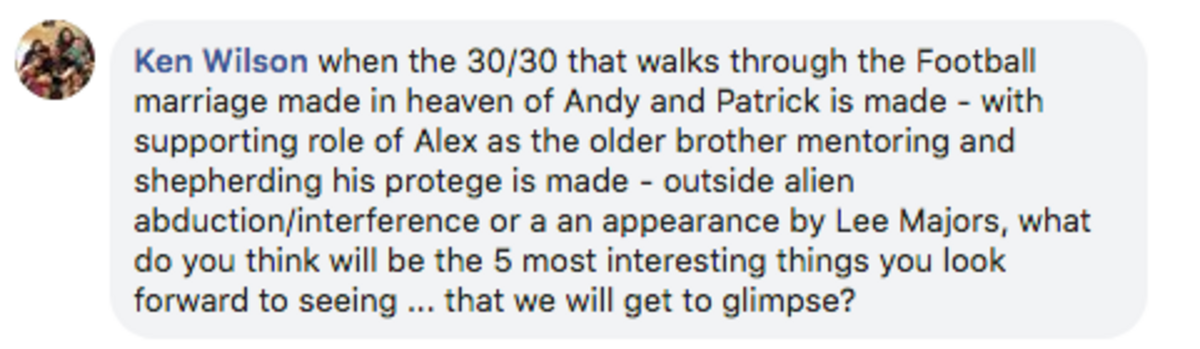
Off the top of my head:
5. Alex Smith talking openly and honestly about what must have been a deeply conflicted season of mentoring the guy he knew was there to replace him. Smith is a saint, and a pure pro, but man that had to be gut wrenching. I’m just curious at what point in that season he saw something that was like, “Oh, right. That’s the future.”
4. Inventory of everything that changed. The Chiefs were going to continue making postseasons without Mahomes, but he has put the franchise in a place that it has literally never been before. They won Super Bowl IV, sure, but that was a very different time. Football wasn’t what it is. The Chiefs are an international glamor team now, and the shine it puts on so many inside and out of the organization is in some ways life changing.
Organization employees are receiving postseason bonuses they never have before. There are job opportunities. Clark Hunt is making more money. Everyone associated with the team is being lifted.
Sam Smith, a Chicago writer, used to do an annual column about how much of their salaries all these people around Michael Jordan owed to him. It was a bit gimmicky, but funny, and a documentary could get into all the ways Mahomes changed lives around him.
3. Andy Reid talking openly and honestly about altering his coaching and play design around this unicorn talent. Reid has been winning games for two decades but never had anything close to this. I’d love to hear him, with his brain and history, get into specifics about what’s possible with Mahomes that wasn’t before.
2. Practice footage. This is sort of an empty calorie request, and I’ve seen and shared some practice film before. But I’ve heard enough stories about enough wild plays he’s pulled off to want the 2-minute montage of him dropping impossible 50-yard dimes and no-look sidearm lasers to Ric Flair Drip or something.
1. Patrick Mahomes talking openly and honestly about, well, everything. He’s good enough in the traditional media settings — he’ll shut down a bit with goofy personal questions, but is tremendous with specific football stuff — but if he opened up the way Michael Jordan has for The Last Dance it would be everything.
I want to know the craziest stuff he’s seen in public. I want to know when he gets sick of the celebrity side, and how he copes. I want to know the limits he feels he’s pushed the most effectively, and anything he tried that didn’t work. I want to know — and he hasn’t really faced this yet — what he did to get through the tough spots.
Jordan did it by, basically, being a tyrant. Mahomes’ style seems more naturally friendly, that he’s pushing his teammates to want to get to his level rather than putting fear into them about what happens if they don’t. Is that accurate? What’s the angriest he’s been at a teammate? I want stories. I want to know who his Scott Burrell is.
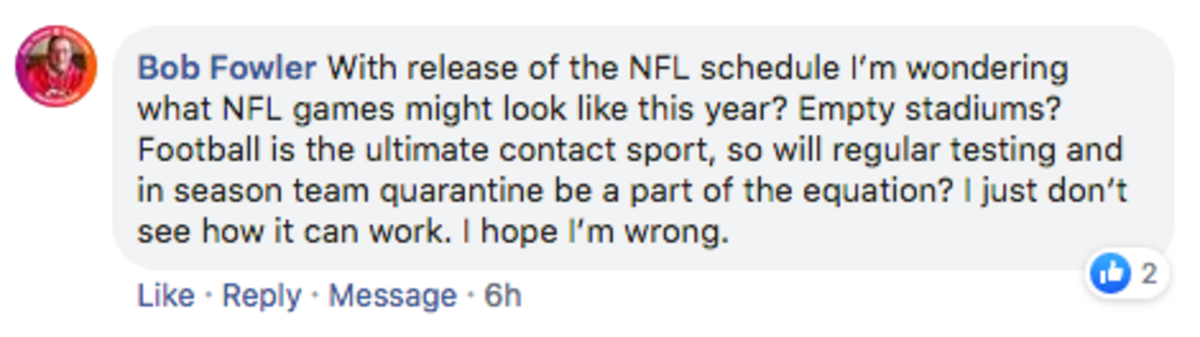
You and me both, hoping you’re wrong.
Predicting the future is always impossible, and particularly with COVID-19. We are now 121 days from Sept. 10, when the Chiefs are scheduled to host the Texans in the first NFL game of the season.
That’s a long time. Four months. Look the other way. Four months ago, COVID-19 was just this thing they talked about on the news sometimes.
Maybe four months is enough time for testing to vastly improve, or for reliable treatments to be developed, or for the virus’ spread to be slowed to the point that our lives are back to normal-isa.
Peter King’s Football Morning in America column is a weekly miracle of reporting, and this week’s was particularly interesting — an interview with Dr. Anthony Fauci centered on the feasibility of playing football games.
If you only have time for one quote, here it is: “The virus will make the decision for us.”
I’ve been saying a similar thing here and other places. The more we talk about commissioners and team owners and players, the more we can fool ourselves into believing we or the leagues are in control here. We’re not. The virus is in control.
If you have time for another quote, here it is:
“I keep getting back to that: It’s going to depend. Like, right now, if you fast forward, and it is now September. The season starts. I say you can’t have a season — it’s impossible. There’s too much infection out there. It doesn’t matter what you do. But I would hope that by the time you get to September it’s not gonna be the way it is now.”
Specifically, Fauci mentioned Antigen tests, which would be a major step in being able to have games and perhaps even with fans.
For now, let’s assume we’ll have games but without fans.
You’d need to be able to test all players and support staff multiple times per week, including just before games. You’d need the stomach to put anyone who tests positive — whether it’s a special teams gunner or Patrick Mahomes — in quarantine for two weeks.
To me, that seems to be the minimal cover charge of having games again.
It is notable that the NFL schedule was put together in a way that makes it highly malleable. They can push games back, they can chop the first four weeks and add them to the end, they can do a lot of things. They gave themselves options to read and react to the virus’ spread and the advice of health experts.
One other thing to keep in mind: the NFL would likely be the most agreeable of major sports entities to play games with empty stadiums because of the size of TV contracts. They have the most incentive.
So, I guess I’m choosing to be optimistic about games coming back while also recognizing the reality of where we are today and all the unknowns we’ll see between now and Sept. 10.
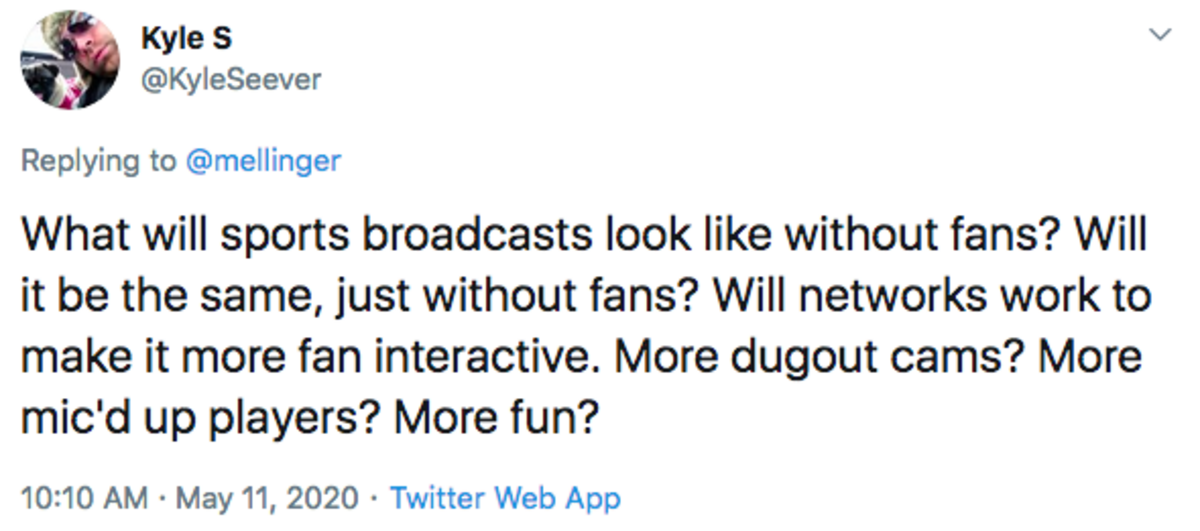
So, well, first let me be clear: this all sucks. Right? We can agree on that.
But I am rather fascinated at what these broadcasts would look like. Particularly with baseball, there has never been more reason or more appetite from both fans and decision makers for experimentation.
Maybe I’m being too much of a traditionalist, but I don’t like the idea of seven inning doubleheaders or jumpstarting extra innings with runners on base or other new gadgets intended to speed the game but that would tangibly change how the game is played.
But, I do love the idea of all players being mic’d up, including the ability for broadcasters to talk to them during the games.
I love the idea of fans being brought into dugouts to listen to players talk about what they’re seeing. Perhaps more than any other sport, baseball is seen so differently by players compared to an average or casual fan. They see things in real time, they anticipate so much better, they consider so many more outcomes.
Being able to see their world, through their eyes, could be amazing in a few different ways.
Baseball has long been behind on selling their players’ personalities, and this would also help sell the game.
The main thing here should — and, from what I hear from people inside the game, will — be a charge to be more innovative.
We’d all prefer normal, with packed stadiums and broadcasts done the same, but there is opportunity hidden inside the challenges.
It’ll be cool to see what they come up with.
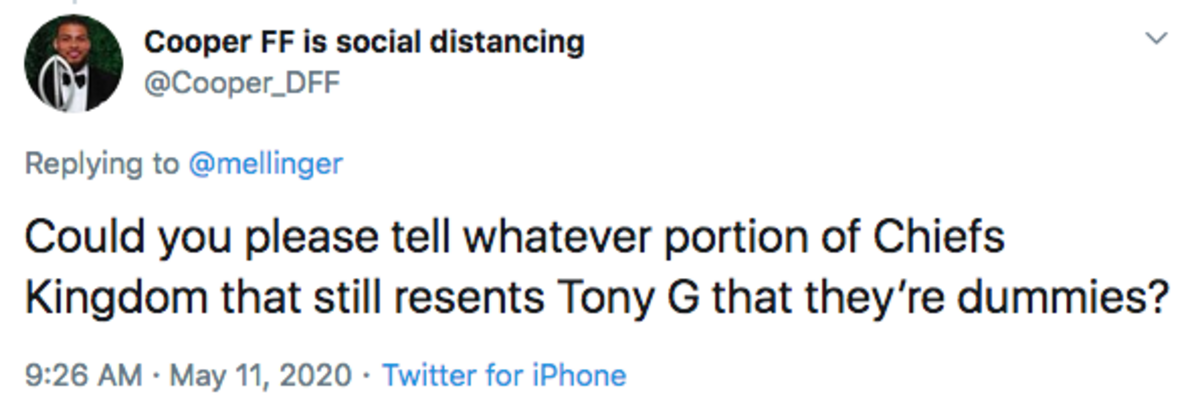
This is an evergreen topic, but here’s a hot take:
Tony Gonzalez gave more to the Chiefs than he got in return, and deserved better. When he demanded a trade he was about to play for his fifth coach, and had been in two postseason games in 11 years.
They’d won six games combined in the previous two seasons, and Gonzalez was 33 years old.
What was he sticking around for?
I get the emotions of it. Nobody likes to be left. Nobody likes to be told they’re not good enough. Gonzalez stepped in it a bit, too, when he talked about his time in Atlanta “made my career.”
He’s got some politician in him and thought he was complimenting Atlanta without considering how some (overly sensitive) Chiefs fans would hear that.
But especially now — 12 years, a spaceship quarterback and a Super Bowl championship later — can’t we see that Gonzalez had a point and that it worked out just fine for the Chiefs?
What are we holding onto here?
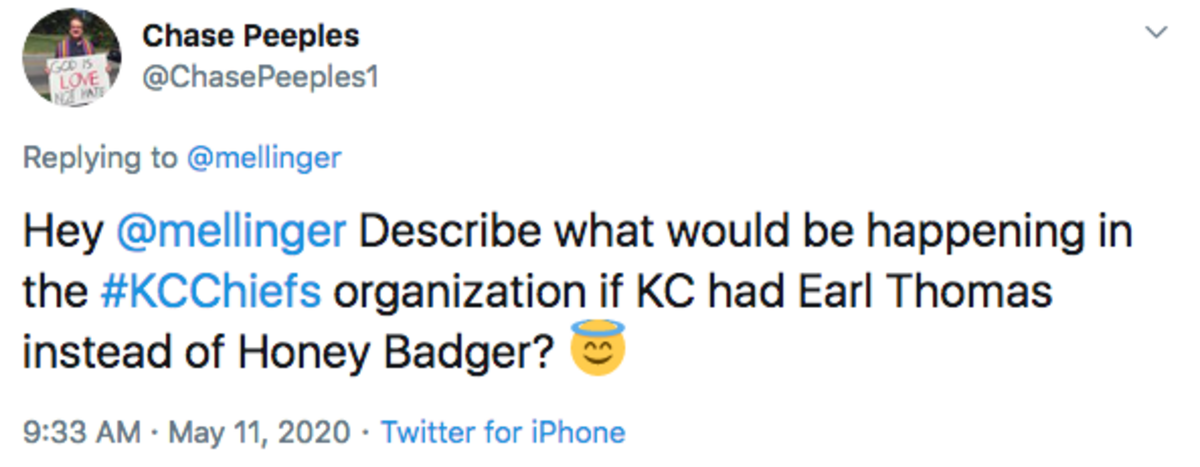
Oh, man, that’s a good one. Last week, I wrote a bit about all the good luck the Chiefs had in the 2019 season and it really is amazing.
But I didn’t include this, and maybe I should have.
The Chiefs wanted to trade for Earl Thomas in 2018, believed internally that a deal would’ve happened if he hadn’t broken his leg.
If they traded for him they would’ve signed him long term, which almost certainly would’ve meant they could not have signed Tyrann Mathieu.
Thomas was a good player last year — whatever it’s worth Pro Football Focus rated him 12th among safeties, ahead of Mathieu (17th).
But I believe Mathieu was the Chiefs’ second-best player last year, and further believe that he had an outsized impact on his teammates both functionally* and intangibly**.
* Charvarius Ward, for instance, said Mathieu taught him how to work and prepare like a pro.
** He and Frank Clark gave the defense some MUCH needed confidence.
So, all that together, it’s fair to wonder whether the Chiefs would’ve won the Super Bowl with Thomas instead of Mathieu. My guess is probably yes, because Mahomes, but reasonable minds can disagree.
Now, I also understand that none of that is why you’re asking this question. You’re asking this question because, as TMZ reported, Thomas was held at gunpoint by his wife who walked in on him in bed with his brother and other women.
Ahem.
There’s nothing in the reports that would demand a suspension, I wouldn’t think, but it is a hell of a juicy story.
You can imagine internet jokesters using Reid’s line about “let your personalities show” in a different way.
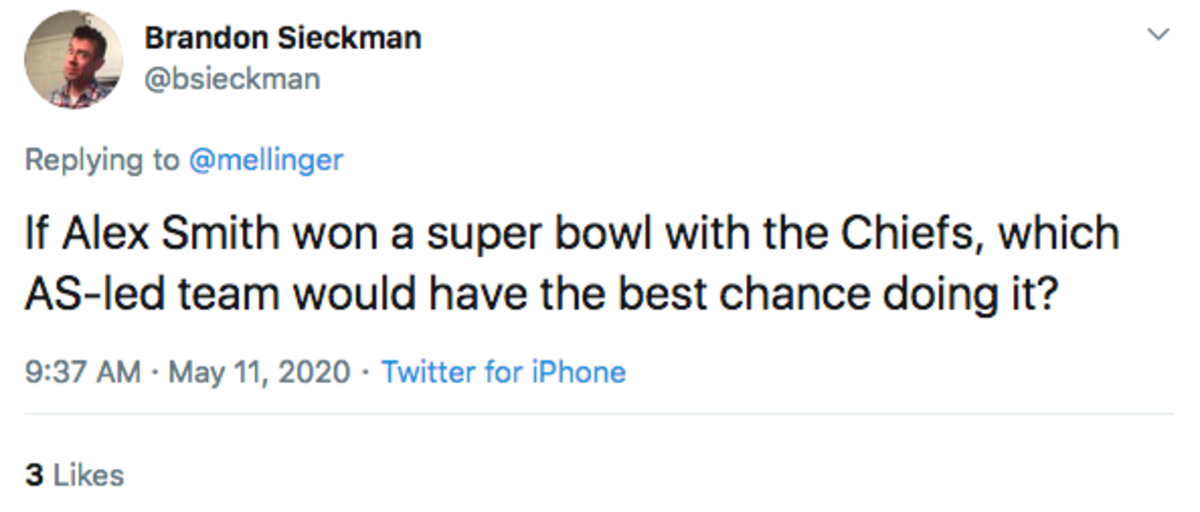
There’s a reasonable case to be made for any of the last three teams. A quick review:
2015: Eleven straight wins, including the first playoff win in 22 years. Lost Jamaal Charles to an ACL tear, but the Chiefs still finished ninth in points. The defense was terrific — Eric Berry and Derrick Johnson were at the height of their powers, Marcus Peters was great as a rookie, and they got enough pass rush from Justin Houston and Tamba Hali.
2016: Smith led the biggest comeback in franchise history in the season opener, and the Chiefs allowed 19 or fewer points in eight of the final 11 games, including the postseason loss to the Steelers. This was Travis Kelce’s breakout, and Dee Ford and his healthy back managed 10 sacks on defense. I will forever be convinced that losing a playoff game at home without giving up a touchdown is why Andy Reid became convinced they needed to upgrade at quarterback, no matter how much they loved Smith.
2017: This was Smith’s best offense — sixth in points, fifth in yards, Kareem Hunt led the league in rushing and Tyreek Hill became a full-time receiver. They had the horrid midseason stretch of six losses in seven games but were otherwise undefeated until Marcus Mariota threw a touchdown to himself.
I’m tempted to go with 2015, because that defense really was terrific, and 2016 has an interesting case with balance (Berry, Peters, Johnson all still good) but this is a scoring league so I’m going with 2017. That was the team that beat the Patriots on banner night, and Reid really was figuring something out with all these weapons.
They scored 26 or more in their last five regular season games, and if they didn’t collapse against the Titans I wonder how they may have fared against the Patriots in the postseason.
It was (by far) Smith’s best season, when he led the league in passer rating, adjusted yards per pass, and interception percentage.

The temptation is to draw a line between this and the KU case, and while there could be similarities in the realities of how everything went down there are worlds of differences in the mechanics for potential punishment.
Mostly: the Request For Admission that Zion was given is legally irrelevant.
It means nothing. Proves nothing.
Some legal experts are describing it almost like gamesmanship — it could be a bluff, or could be a way to provoke the other side in a related case.
If the lawyer who filed it has proof of payments, and that proof makes its way into a court case or the public, then our conversation here is different.
Believe me: I’m all for every under-the-table payment being made public because I believe it would embarrass the NCAA, give casual fans a better view of how the sausage is made, and expedite and enhance rules changes to better reflect the reality of the system the NCAA has created.
So I would love to say Duke is about to go through a long case and eventually face major punishments, but unless there’s actual and available proof behind the Request For Admission then I’m not sure what we’re talking about here.
And if there’s actual and available proof behind the Request For Admission then I’m not sure why you don’t just skip that step and get to the goods.
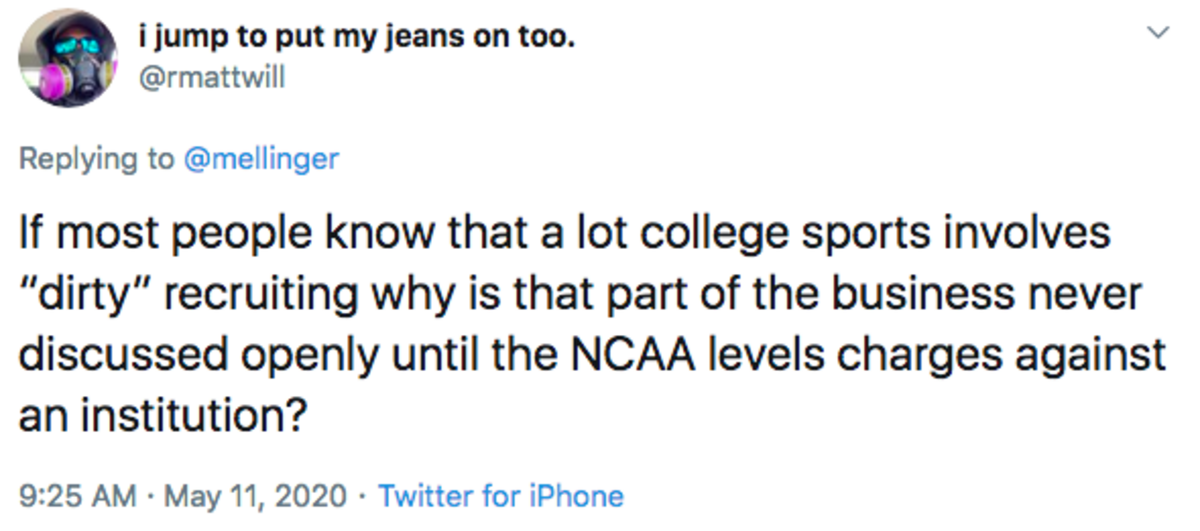
Well, it is discussed. I realize that I have different conversations than a casual fan with a real job but it’s discussed.
I can’t imagine there’s been a single year in the last 40 that hasn’t included some news coverage of rules being allegedly broken.
You’re right that the coverage or discussion often does not match the scale of what’s happening, and two potential explanations come to mind:
- these things are very hard to prove
- the appetite for “catching” this kind of thing isn’t what it used to be.
This might be off-topic a bit, but one part of KU’s case that jumps out is just how sloppy and unnecessary it all was.
You know about the Kurtis Townsend clip where he says “we’re going to have to do it some way” in a discussion about demands that Zion Williamson or someone close to him was making.
But the full context of that conversation falls short of any legal standard and, besides, I’m not sure it’s reasonable for any college coach to expect his phone conversations are being bugged.
But I am surprised that Bill Self put some of those text messages in a permanent digital record.
More than any of that, the work by Adidas just seems unnecessarily brazen and disorganized. Because there are ways to get families money. You can sponsor an AAU team, put a dad or mom or uncle in charge, and give them $100,000 more than it’ll cost to operate the team. That violates no rules.
There are better ways to accomplish the same goal, is what I’m saying.
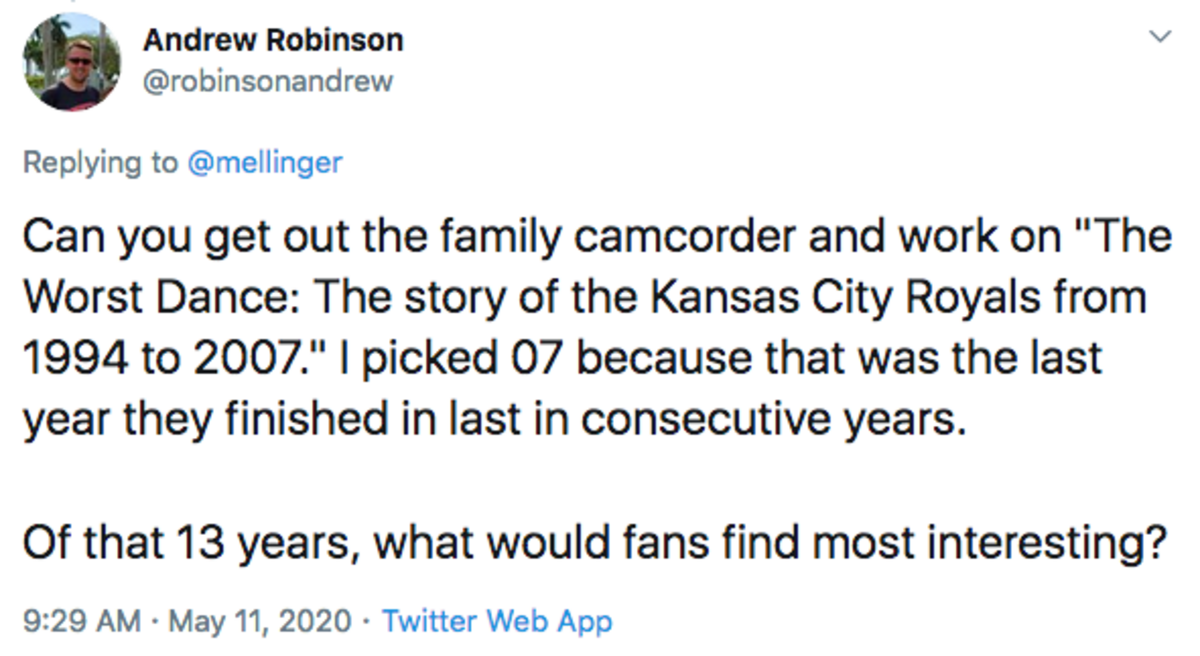
I’ve actually thought some about this before, and the 2003 Royals would make for a terrific documentary.
It’s hard to properly put in context how unlikely that season was, but the fact that they won 83 games and were in first place in August a season after losing 100 games and the season before they lost 104 comes decently close.
Darrell May led the Royals with 5.9 Wins Above Replacement, according to Baseball Reference. In the entirety of the rest of his career he was worth -0.1 WAR.
The Royals were so desperate for pitching that they signed Jose Lima, sight unseen, from an Independent League because they had a report his fastball was in the mid-80s.
Read that again.
The whole thing was utterly preposterous, and there were some terrific characters involved: Mike Sweeney, Joe Randa, Carlos Beltran, Raul Ibanez, Ken Harvey, Mike MacDougal, Jeremy Affeldt, Tony Pena, on and on.
The 2003 season was a blast, and sort of an island of fun in an ocean of despair. The show would do some time shifting to tell that story, with scouts and executives and coaches and players talking about all the problems the organization had before and after.
It’s obviously a local show and not a national one but I promise I’d be just as excited to watch this as I am The Last Dance.
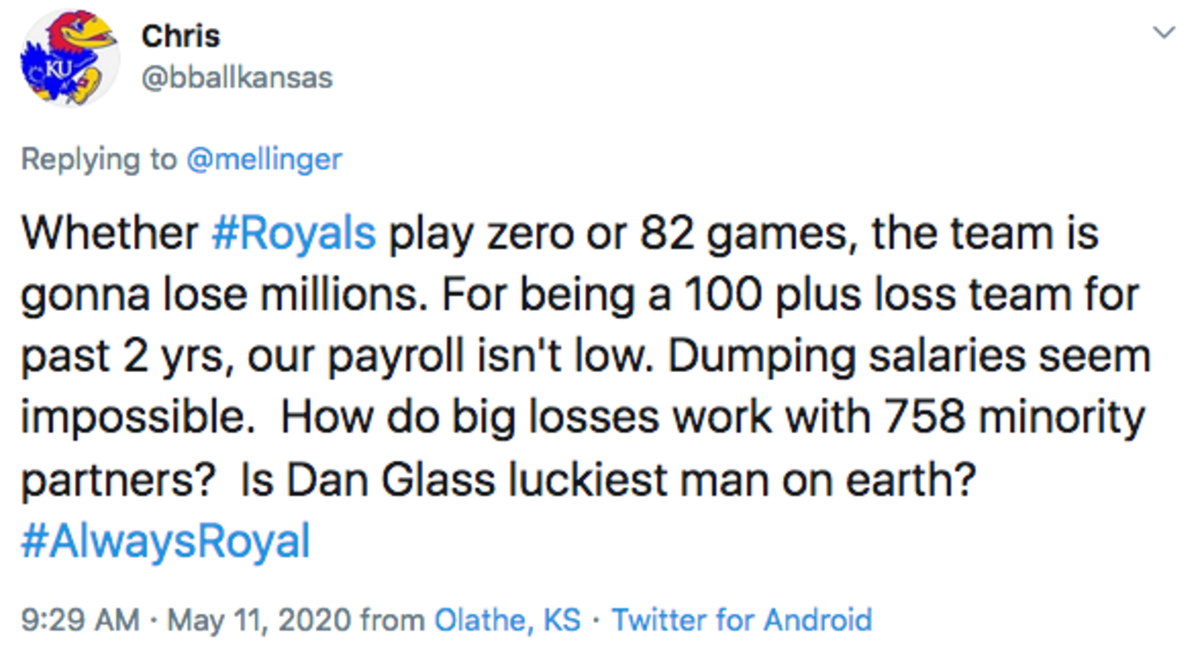
We can all agree on this: baseball and American life sure was better before John Sherman and his group bought the Royals.
Look, I don’t know the mechanics of how the ownership works with that, but I do know there are different tiers of ownership. Some are effectively silent partners, who are given information but have no real say in how things go. Some are more involved, with more input and weight on baseball decisions.
Sherman is the heaviest investor, and the one with final say.
This is a little reminiscent of the housing crisis, when wealthy boosters for college programs pledged millions when their net worth was a certain level and then had to pay it when their net worth was a certain level minus 25 percent or whatever.
It’s hard to imagine that sale taking place now or, if it did, being for the same price. These are generational decisions, with the long-term far outweighing the short, but buying a baseball team just before a global pandemic threatens to shut the sport down for a year is some of the unluckiest, most horrible timing imaginable.
The Royals’ 2020 payroll was scheduled to be around $73 million, which ranked in the bottom five of baseball. They’ll end up paying out significantly less than that with a shortened season, but obviously their revenues will crater.
Sherman and his partners aren’t going broke. They don’t need to worry how they’ll eat. They still might recoup their investment and more depending on what the other side of this looks like.
But, yeah. Man. Just awful luck.
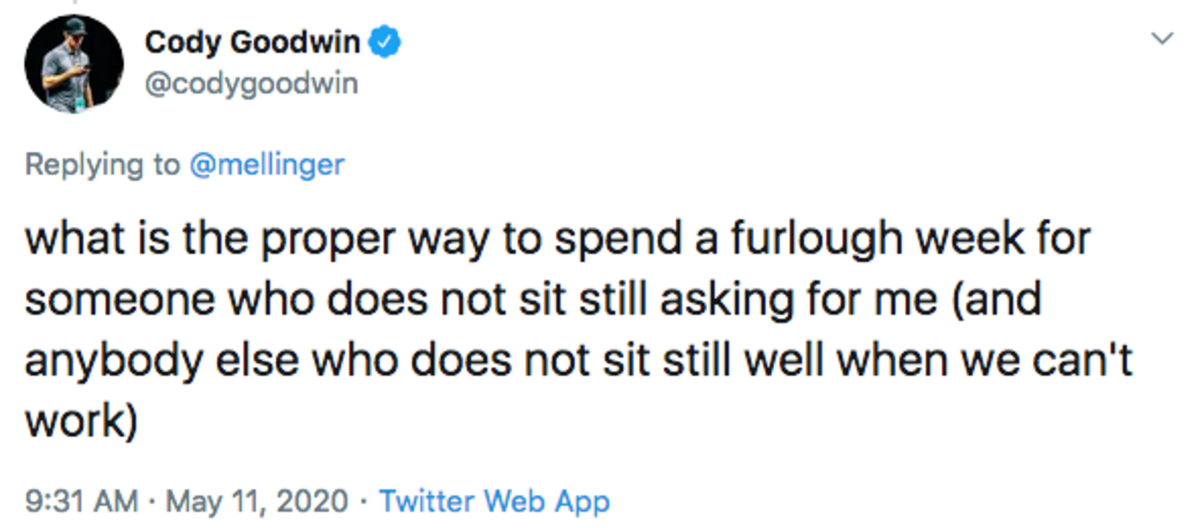
Well, first, sorry. That sucks. All of this sucks.
But if I were you, I’d make a list of things I wish I could do but haven’t had time. Maybe there’s a book you want to read, or a show you want to watch. Maybe there’s a pasta you’ve wanted to cook, or some project around the house you’ve been putting off.
Maybe you just want to get outside and run every day.
Furloughs are awful, and not just because you’re not being paid. You’re also forced to wonder how long you’ll be paid in the future.
So above all else I would suggest you spend your week doing as little news consumption as humanly possible.
I think we’ve all thought about this. If nurses and doctors and others in healthcare are being furloughed then the only ones safe are people who work at Netflix and Clorox.
I think I’d call it a win if I exercised four times, cooked two kickass meals and ran a week of homeschooling.
This week, I’m particularly grateful for an Instagram memory from last week. It was a picture of our second son, just a few weeks old, in my mom’s lap as she read him a story. Seeing it made my day. It’s been three years since she died — three years to the day, actually — and I’m not sure when this type of thing flipped for me.
Because in the beginning, all of it made me sad. Anything that reminded me of her. I couldn’t drive past the Kauffman Center without being bummed. After a while, the sadness slowed, making room for appreciating the good stuff. Like I said, I’m not sure when it flipped but now I’m grateful anytime she pops in my head. I really was lucky.