
Clark Hunt’s team and his father’s trophy ... that neither’s teams have ever won
Clark Hunt isn’t speaking publicly this week. The franchise his father founded on hope, built into perhaps Kansas City’s most beloved institution besides burnt ends and then made his own to run as chairman is the best it’s been in 50 years. We can only guess what that means to him.
Hunt and his father, Lamar, had a beautiful relationship. Even now, a month from Clark’s 55th birthday and 13 years after Lamar’s death, people often view Clark through the prism of Lamar. Goodness knows how often he’s heard the comparison: that he’s either just like his dad or will never be his dad.
Truth exists in both, actually.
Gone, but certainly not forgotten
Lamar is everywhere, especially for Clark. His statue stands outside the Arrowhead Stadium gates. His name is on the family suite, where Clark sleeps 50 to 60 nights a year. Lamar’s name is also on the trophy that will be presented to the winner of the Chiefs-Titans AFC Championship Game at Arrowhead Sunday.
For 49 years, the Chiefs made it this far in the playoffs just once. Now, they are here twice in a row, Arrowhead’s first AFC Championship Game followed 364 days later by its second.
“He would just have the biggest smile on his face,” Clark said a year ago, when asked what his dad would be feeling as the Chiefs prepared for the game whose winner advances to the Super Bowl.
“This is what he lived for. He lived for the Chiefs having success, for our fans being as excited as they are now, for big games at Arrowhead, for the chance to play in the Super Bowl — and this game has it all.”
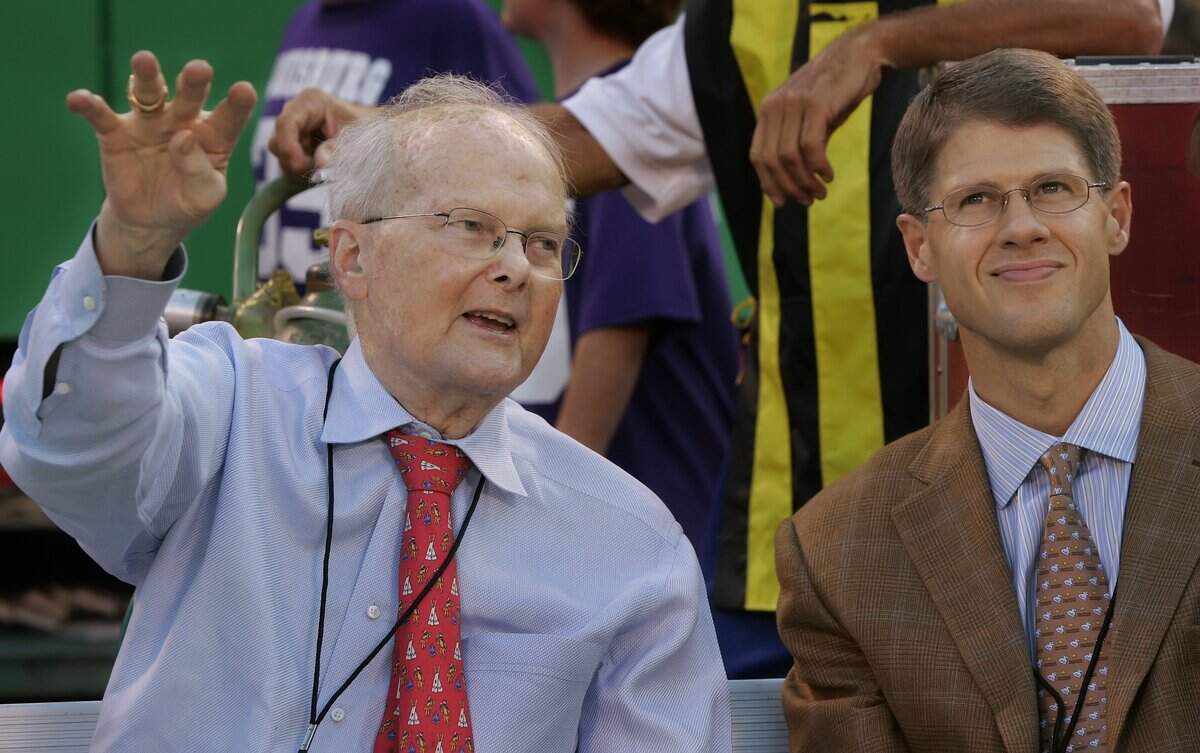
There’s something else going on here, too. Or, at least, that’s what a lot of us think. I can’t claim to know Clark well, and without him speaking publicly this week I can’t ask him about this directly.
But from interactions with him over 10 years now, and — perhaps more importantly — conversations with people who do know him well, a theory emerges:
Clark Hunt, accomplished in his own right but forever compared to his pioneering and beloved father, would take particular pride in winning this Sunday. Not just because the trophy is named for his dad, but because his dad never won it.
He’ll have done something, finally, that his father did not.
“There’s no question,” said Bob Moore, the Chiefs’ retired historian who worked for decades inside the organization for both Lamar and Clark. “I think it will be a seminal moment when that happens, and I certainly hope it happens this week. It’ll happen one day, in any case, and it’ll be so. It’ll be a seminal moment in the life of the Hunts.”
Son’s moment at hand, again
This is, in many ways, the job and moment Clark spent his entire life working toward. He was 6 years old when Arrowhead opened in 1972. He slept the night before its grand opening in the suite, even though it wasn’t quite complete. That stadium became like a home to him, in real ways, and that field became a playground.
Players from the 1960s and 1970s remember walking out to warm up before games and seeing Clark kicking field goals, with Lamar as the holder. A few times, Jan Stenerud — the first pure kicker in the Hall of Fame — gave Clark some tips.
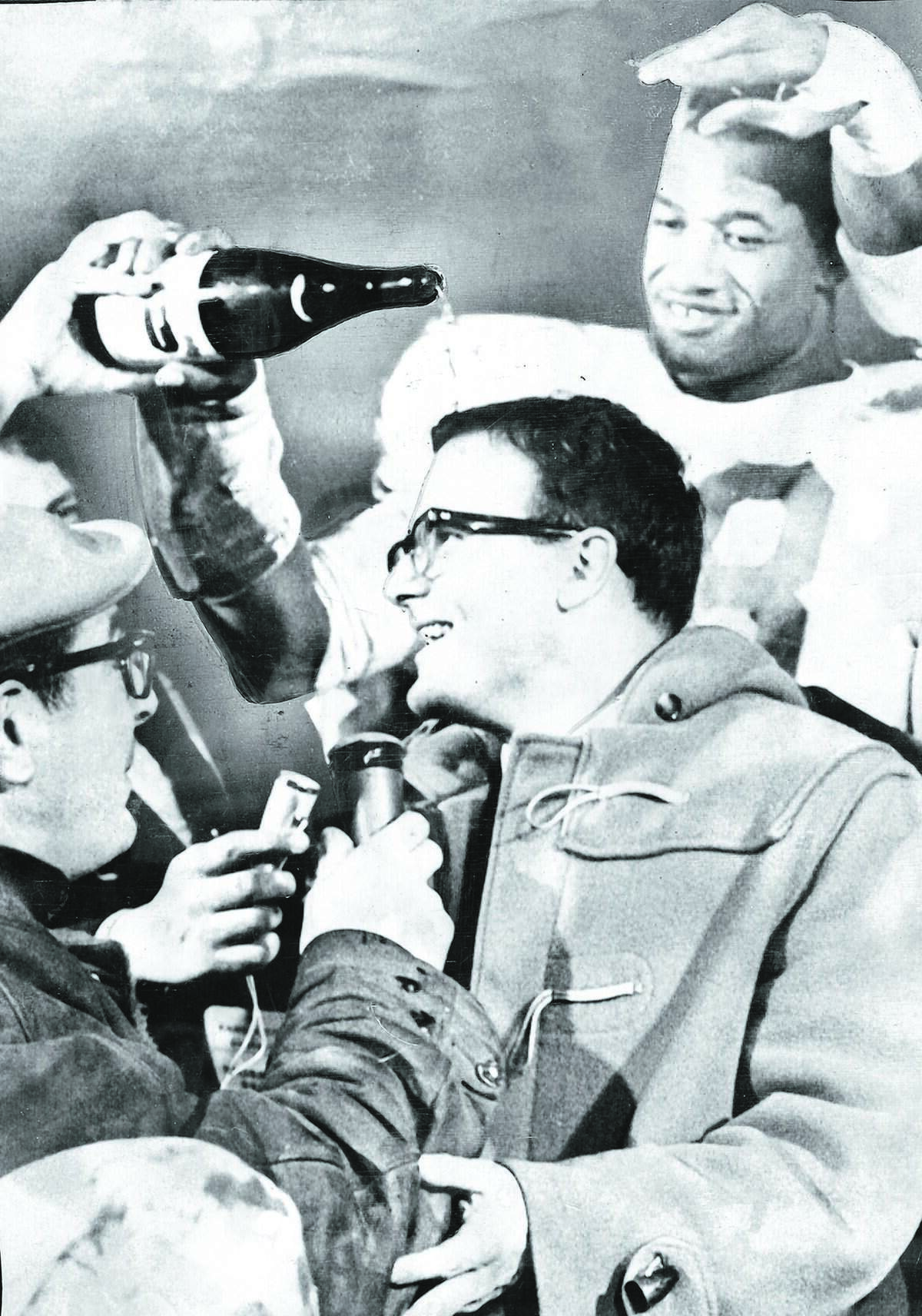
“Lamar would be really proud of his son,” Stenerud said. “(Clark) has had training for this as long as he can remember. He saw how his dad operated ... he grew up with this thing.”
Coincidence or not, one of Lamar’s deepest sports passions was soccer, and it’s the sport Clark played the most. Lamar invested time and money into growing the sport in America, even when he knew the research said it was wasted money. Clark played soccer at SMU, despite a childhood accident that left him with lifelong foot pain.
It’s interesting that Clark was born into one of the country’s richest families — Lamar’s father, H.L., traded poker winnings for oil rights, eventually owning much of the East Texas Oil Field. Clark took over a billion-dollar business from his father, then, but by all accounts he has tried to make his own way.
When he became a star at Goldman Sachs (pre-crash), nobody there knew where he came from, knew his background. His closest colleagues figured it out only because he kept insisting he had to find a TV in order to watch the Chiefs’ games on Sundays.
Growing into big shoes
Clark eventually became more aligned with the family business, that background in finance serving him well with both the Chiefs and his increased NFL duties within the league.
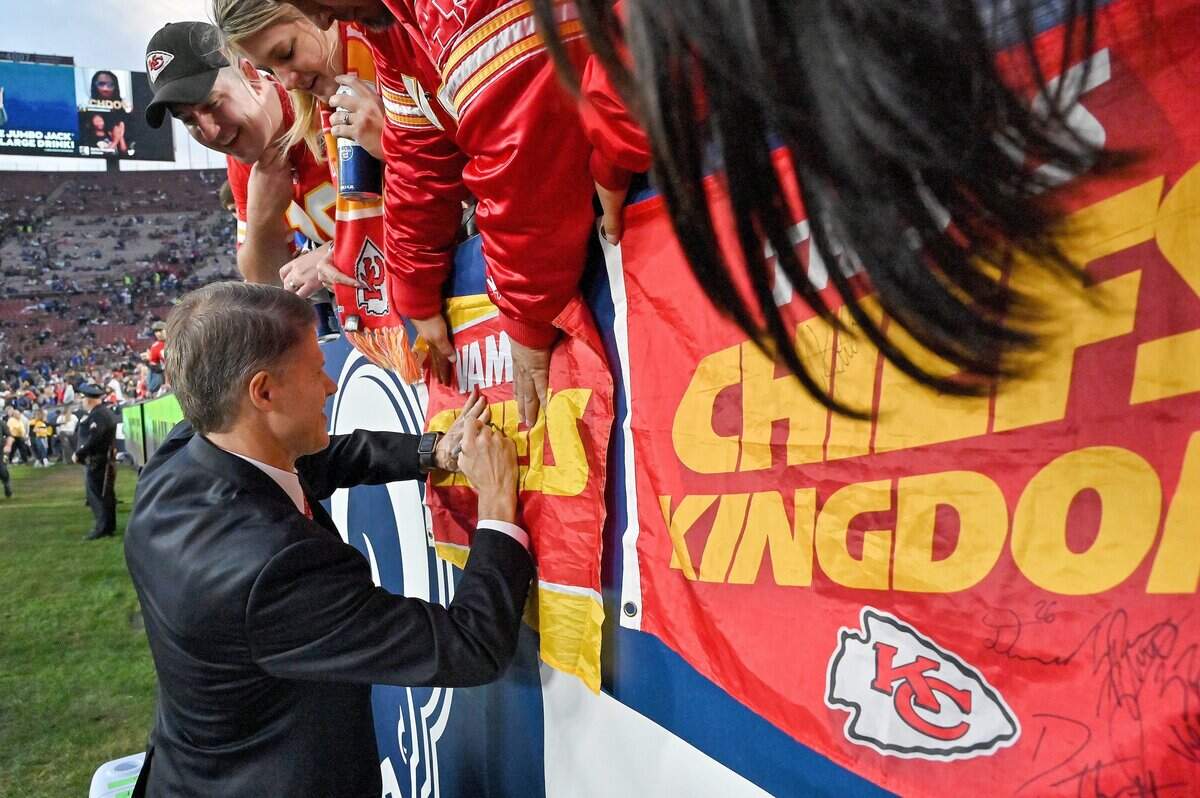
Lamar had a natural everyman quality, and the stories are famous. He’d drive himself around town with a stack of brochures, for instance, trying to sell sponsorships. Clark is naturally more reserved, less obviously comfortable and charismatic in front of groups, and often that superficial difference is enough for people to draw broader conclusions — you’ll never be your dad.
The two are strikingly similar in a lot of ways, though. They run meetings in a similar manner. They listen. They ask. They involve as many people around the table as possible, saving their own perspectives for last.
Lamar loved talking with people, but he also avoided the spotlight. He thought of the league first, the Chiefs second, himself some distance after that. Clark is much the same.
But the comparisons tend to make fuzzy one overriding truth: Despite the statue, despite the name on the suite, despite everything else, the Chiefs are very much Clark’s, and not Lamar’s, now.
That’s true in many ways on the surface — Clark led the Chiefs’ side of the Arrowhead renovation, for instance — as well as below. The Chiefs operated like a family business under Lamar; they run like a modern billion-dollar business under Clark.
The team’s marketing staff has grown exponentially, and connections with today’s fans are often made by deliberate design through technology. In some ways, Clark is the 21st century extension of his father — less about the sentiment and more about the business.
“Clark is his own man,” Moore said. “He feels pride where he came from, and this is a difficult comment, because sometimes all people do is ask about his father: But there’s no question that, to be able to do this, he’s his own man. The team operates in his image, it’s very different than it was with Lamar. It’s not just continuing the same old systems that used to exist in the past.”
The Chiefs are different now, in other words, and not just because of their unicorn quarterback named Patrick Mahomes. The franchise was created in Dallas by Lamar, then moved to Kansas City by Lamar. But they are the best they’ve been in 50 years — and maybe more (we’ll see) — with Clark.
And on Sunday, if the Chiefs do win the trophy they never could while Lamar was alive, the man to lift it will know he did something his father did not.
Finally.
This story was originally published January 19, 2020 at 5:00 AM.