
Andy Reid’s decision to go for fourth down wasn’t the biggest mistake. This was
AI-generated summary reviewed by our newsroom.
- Andy Reid chose an aggressive fourth-down attempt and defended the process.
- Chiefs previously have featured Kareem Hunt on 14 fourth-and-1 snaps and converted 13.
- Texans’ Will Anderson Jr. rushed the lane, erased the flat route and forced failure.
The fourth-down play was intended to spring wide receiver Hollywood Brown open in the flat.
Instead, one of the most aggressive fourth-down decisions of Chiefs head coach Andy Reid’s career fell flat.
The decision occupied most of the air in a postgame news conference late Sunday, half an hour after the Texans beat the Chiefs 20-10 and shrunk their postseason hopes to about the same odds as guessing a coin flip correctly three straight times. And it occupied most of the air on a follow-up Zoom call a day later.
Would Reid make a different decision if offered the opportunity?
Well, no.
“This is terrible to say in a situation like this, because we didn’t win, and we didn’t get that (fourth down), but I would probably do the same thing again,” he said Monday.
Actually, there’s one particular element within that line of thinking that isn’t terrible at all — Reid is prioritizing the process over the result. That’s a good place from which to operate on these decisions, even if I’m still struggling to find the rationale behind choosing a defensive battle as the game to suddenly flip a switch he left off in an offensive shootout a week earlier.
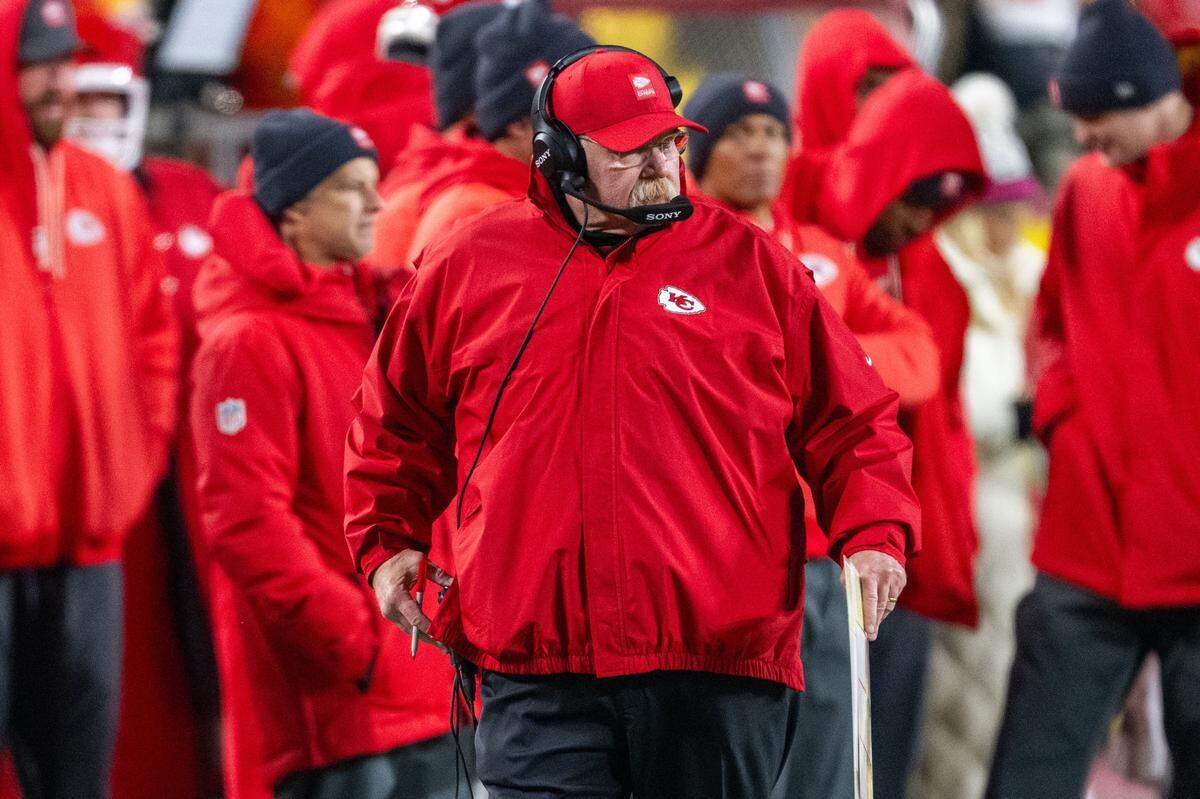
Anyway, we know the play didn’t work. Can we talk a little about why?
Because it offers a more obvious blunder than the decision itself.
As I said, the intention was to hit Brown in the flat, ideally running free, but the Texans erased that intention. More specifically, Will Anderson Jr. erased that intention when he sprinted off the edge and moved into the passing lane, forcing Patrick Mahomes to look elsewhere.
Mahomes scrambled within the pocket and eventually went to Rashee Rice, a throw Derek Stingley Jr. broke up.
The design of the action — Brown rolling across the line of scrimmage into the flat — mimicked a route the Chiefs ran a week earlier. In Dallas, on another fourth-and-1, Mahomes hit tight end Jared Wiley in the flat behind the line of scrimmage, and Wiley had enough space to run for a first down. It worked.
But there’s a key difference in those two plays.
Kareem Hunt.
Huh? I hadn’t mentioned him yet, right?
Exactly. That’s part of the problem.
The Thanksgiving Day conversion in Dallas finished with the throw to Wiley, but it started with a fake to Hunt in the backfield. And I’m telling you: All three Cowboys linebackers bit. That’s why Wiley was open. The linebackers were late covering him, because they were crashing downhill to stop Hunt.
On Sunday night against the Texans, the Chiefs moved Hunt out of the backfield a full seven seconds before the snap, instead lining him up light as a, uh, tight end on the left side.
That’s just hard to square.
Hunt is the best short-yardage back in football this season, even more successful than the Tush Push, I’ve pointed out in the past. Even earlier in that very game against the Texans, Hunt had carried the ball three times on short yardage. It resulted in three first downs and a touchdown. If you watch the touchdown run, you can see why. When he gets hit, he just keeps pushing.
Maybe the Chiefs felt they needed to do something different — that the Texans just might have a hunch Hunt would get the football on that fourth-and-1 from their own 31.
But so what?
Hunt has carried the ball 11 times on fourth-and-1 this season, four more than any running back in the NFL. He’s converted 10 of them, also four more than any running back in the NFL.
Trust me. Teams have long assumed it’s coming.
The Texans weren’t shocked when Hunt got the handoff for that touchdown run. They met him in the backfield. He got it anyway. That’s part of his brilliance. It works despite it being telegraphed, not because it’s well-disguised.
But even if the Chiefs were nervous about the Texans selling out to stop Hunt — to the point of needing to try something else — why wasn’t he involved as at least a decoy? Why was he lined up along the line of scrimmage as a tight end?
If the entire rationale for a different play call is that the defense is putting all of its attention on Hunt, use that attention to your advantage.
Just like they’ve done this year.
Twice.
The Chiefs have left the offense on the field for fourth-and-1 on 16 occasions this year.
• On 11 of those plays, they’ve handed the ball to Hunt. He’s converted 10 of the 11.
• On another play, they passed the ball to Hunt. It also worked.
• On two other plays, they put Hunt in the backfield before throwing the ball. They faked it to him each time, and then completed both passes — after the defense bit hard on the fake to Hunt, leaving receivers wide open.
Put those together, and that’s 14 times the Chiefs either gave the ball to Hunt or used him as a decoy on fourth-and-1. And that’s 13 conversions from it, a conversion rate of 92.9%. Pretty good.
The other two?
• The Chiefs kept Hunt out of the game on a fourth-down try against the Lions and threw the ball. The Lions hardly flinched after the snap and forced an incompletion. It failed.
• You know the other. It came Sunday. Brown actually started the play in the backfield before his route to the flat. The Texans weren’t fooled.
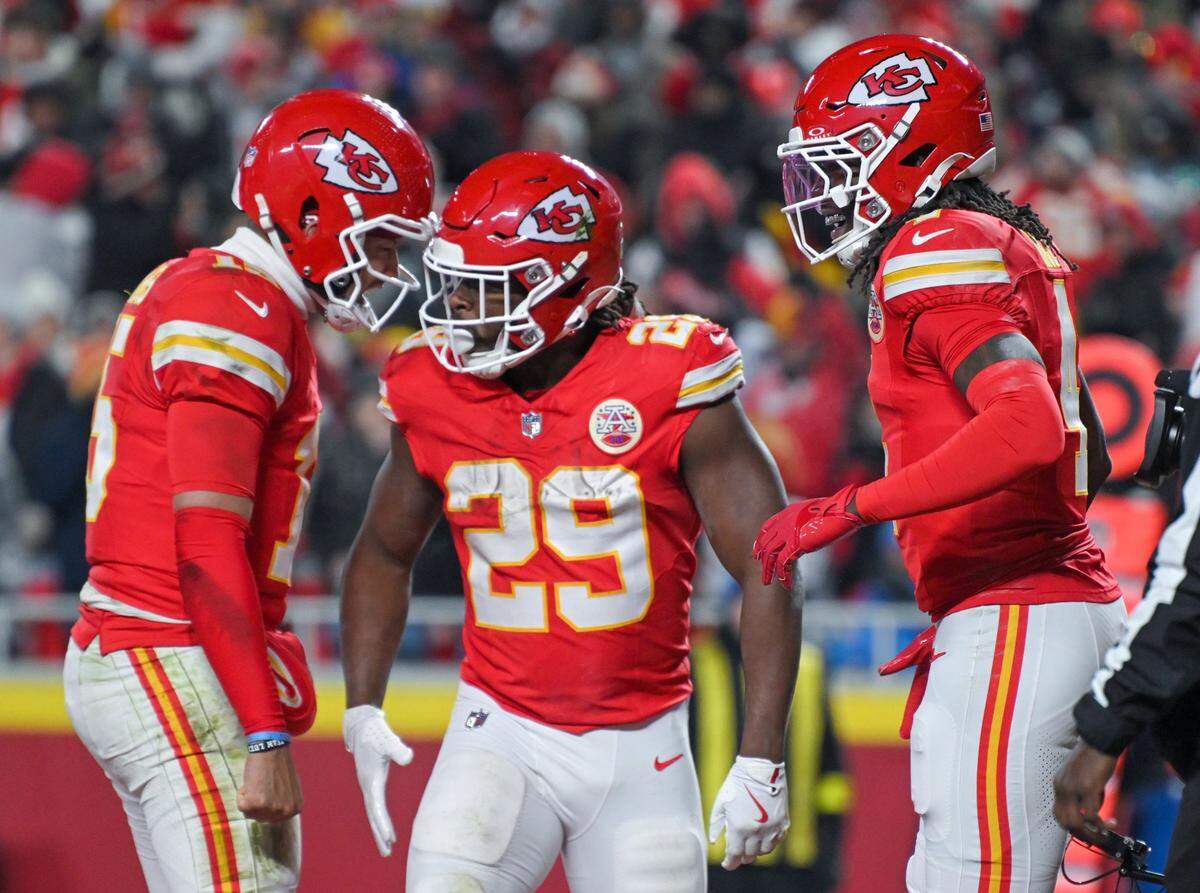
They’re 13-for-14 when they involve Hunt. They’re 0-for-2 when they leave him out of the picture.
“I thought we had a good play,” Reid said. “Some of the going for fourth (downs) is you’ve got to feel what you’ve got. And we thought we had a good one.”
Reid noted both after the game and a day later that the Chiefs have been good on fourth downs.
He’s right. At the moment they snapped the ball, the Chiefs had the No. 1 fourth-down offense in football. They’re still above 75%. They’re really good on fourth downs.
That ought to factor into a decision on whether to leave the offense on the field.
But something else should have factored into the next decision Sunday, the play they called into the headset:
Why they’re really good on fourth downs.